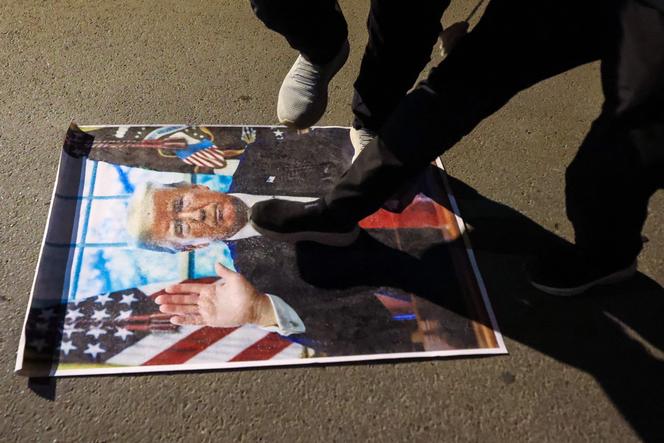
Following the intervention in Venezuela, the war against Iran launched by the US president signals yet another admission of weakness by the United States, observes the economist in his column. This military agitation primarily serves to bolster the US economy. Published today at 5:00 am (Paris), updated at 9:58 am3 min read Lire en français Let’s spell it out directly: The militaristic drift of the United States that we are witnessing with the war in Iran resonates above all as a terrible admission of weakness. US elites have become increasingly aware of the financial, commercial and political fragility of their country. The most nationalist among them have concluded that the only solution is to put weapons on the table. The stated goal of this warlike strategy is perfectly clear: It is not about promoting any kind of collective ideal, but rather about profiting financially from possessing the world’s largest military force. Trump’s words must be taken seriously: He is ready to strike deals with any mullah or Chavista on the planet, so long as US companies can lay their hands on the riches of Iran or Venezuela. The same logic applies to the minerals of Greenland, Ukraine or Russia. Business is business and Trump intends to use force to make lucrative deals wherever they may be found. His approach is reminiscent of the European colonial powers of the past. It is also important not to overestimate the impact of individual personalities. What has happened since early 2025 across the Atlantic has certainly exposed the limits of the US democratic model and the extreme risks associated with the personalization of power. No one anticipated just how easy it would be to govern the country by signing a cascade of executive orders, without any real checks and balances, not in Congress nor in the Supreme Court with no real counterweight, either in Congress or in the Supreme Court (or only very belatedly and very partially, as recently on tariffs). This shows just how much democracy must be continually reinvented and reconsidered in its institutional foundations, such as constitutions, electoral procedures, organization of parliamentary work, functioning of political parties, funding and governance of the media, and so on. Nothing should be taken for granted. But we must not delude ourselves: Beyond the Trump factor and the institutional flaws that need to be corrected as soon as possible, the Republican Party’s ideological drift toward extractivist nationalism is undoubtedly here to stay. First, because the Republican appetite for gunboat diplomacy is nothing new: Let’s not forget George W. Bush and the Iraq invasion in 2003. Second, because the country’s financial and commercial situation has sharply deteriorated over the past 20 years. For lack of sufficient investment in education and infrastructure, and for lack of adequate collective regulation, the US has lost ground and racked up trade deficits, with a net external debt that now reaches 70% of GDP. Even if interest rates remain low, which is far from certain, payments to the rest of the world will soon reach levels never before seen for a militarily dominant power. Hence the irresistible temptation to reach for weapons to shore up finances. It is as simple as that.
Historic responsibilities
This brutal, nationalist strategy is doomed to fail. First, because it is not commensurate with the economic forces at play and, second, because the US public will not tolerate it for long. The problem is that it can create a temporary illusion, one that can regularly resurface. It also allows Republicans to differentiate themselves from free-trade Democrats and to present themselves, at little cost, as the best defenders of the working class. IIn reality, all this is akin to a role-playing game between nationalist elites and liberal elites, who, at heart, agree to maintain their domination over the poorest and the rest of the world, causing considerable damage almost everywhere in the process. Above all, the fragility of the US is not just commercial and financial, but also civilizational and political. It is the elephant in the room. Everyone knows that the issue of global harm will dominate the 21st century, and that the US will one day have to face its historical responsibilities and respond to calls for economic justice and climate reparations from the Global South. Trump supporters can sink into denial and militaristic aggression as much as they want. This will not change the fact that the United States’ weight in the global economy will only decline and that the country will sooner or later have to accept these realities. In the face of this militaristic drift and looming disaster, Europe must equip itself to have global influence. Let’s be clear: The use of force against a regime that massacres protesters and oppresses its population can be justified. But only if it begins by building the broadest possible coalitions and, more importantly, by proposing a model of development and a democratic method for a process of transition, in Iran and elsewhere. Without a plan for what comes next, without attention to what happens on the ground once the bombs have been dropped, the joint French-British intervention in Libya [in 2011] was no more successful than the US intervention in Iraq.
To break out of the deadlocks of the past, the solution is not to keep increasing military budgets, which already reach considerable levels in Europe. What is urgently needed is the establishment of common structures that allow for democratic and pluralistic decision-making on both Iran and Ukraine. The saddest thing about the current situation is the inability of France and Germany to agree on anything. Even when the German chancellor advocates the seizure of Russian assets (an unusual stance for an economic liberal), the French president inexplicably chooses to oppose it. Faced with the militaristic drift of the United States, it is time for European leaders to rise to the occasion.
Thomas Piketty is a professor at EHESS and the Paris School of Economics. Thomas Piketty (Economist) Translation of an original article published in French on lemonde.fr; the publisher may only be liable for the French version.Vous pouvez lire Le Monde sur un seul appareil à la fois Ce message s’affichera sur l’autre appareil. Ajouter un compte Découvrir l’offre Famille Découvrir les offres multicomptes
Parce qu’une autre personne (ou vous) est en train de lire Le Monde avec ce compte sur un autre appareil. Vous ne pouvez lire Le Monde que sur un seul appareil à la fois (ordinateur, téléphone ou tablette).
Comment ne plus voir ce message ? En cliquant sur « » et en vous assurant que vous êtes la seule personne à consulter Le Monde avec ce compte.
Que se passera-t-il si vous continuez à lire ici ? Ce message s’affichera sur l’autre appareil. Ce dernier restera connecté avec ce compte.
Y a-t-il d’autres limites ? Non. Vous pouvez vous connecter avec votre compte sur autant d’appareils que vous le souhaitez, mais en les utilisant à des moments différents.
Parce qu’une autre personne (ou vous) est en train de lire Le Monde avec ce compte sur un autre appareil. Vous ne pouvez lire Le Monde que sur un seul appareil à la fois (ordinateur, téléphone ou tablette).
Comment ne plus voir ce message ? Si vous utilisez ce compte à plusieurs, créez un compte pour votre proche (inclus dans votre abonnement). Puis connectez-vous chacun avec vos identifiants. Sinon, cliquez sur « » et assurez-vous que vous êtes la seule personne à consulter Le Monde avec ce compte.
Que se passera-t-il si vous continuez à lire ici ? Ce message s’affichera sur l’autre appareil. Ce dernier restera connecté avec ce compte.
Y a-t-il d’autres limites ? Non. Vous pouvez vous connecter avec votre compte sur autant d’appareils que vous le souhaitez, mais en les utilisant à des moments différents.
Parce qu’une autre personne (ou vous) est en train de lire Le Monde avec ce compte sur un autre appareil. Vous ne pouvez lire Le Monde que sur un seul appareil à la fois (ordinateur, téléphone ou tablette).
Comment ne plus voir ce message ? Si vous êtes bénéficiaire de l’abonnement, connectez-vous avec vos identifiants. Si vous êtes 3 ou plus à utiliser l’abonnement, passez à l’offre Famille. Sinon, cliquez sur « » et assurez-vous que vous êtes la seule personne à consulter Le Monde avec ce compte.
Que se passera-t-il si vous continuez à lire ici ? Ce message s’affichera sur l’autre appareil. Ce dernier restera connecté avec ce compte.
Y a-t-il d’autres limites ? Non. Vous pouvez vous connecter avec votre compte sur autant d’appareils que vous le souhaitez, mais en les utilisant à des moments différents.
Parce qu’une autre personne (ou vous) est en train de lire Le Monde avec ce compte sur un autre appareil. Vous ne pouvez lire Le Monde que sur un seul appareil à la fois (ordinateur, téléphone ou tablette).
Comment ne plus voir ce message ? Si vous êtes bénéficiaire de l’abonnement, connectez-vous avec vos identifiants. Sinon, cliquez sur « » et assurez-vous que vous êtes la seule personne à consulter Le Monde avec ce compte.
Que se passera-t-il si vous continuez à lire ici ? Ce message s’affichera sur l’autre appareil. Ce dernier restera connecté avec ce compte.
Y a-t-il d’autres limites ? Non. Vous pouvez vous connecter avec votre compte sur autant d’appareils que vous le souhaitez, mais en les utilisant à des moments différents.
Parce qu’une autre personne (ou vous) est en train de lire Le Monde avec ce compte sur un autre appareil. Vous ne pouvez lire Le Monde que sur un seul appareil à la fois (ordinateur, téléphone ou tablette).
Comment ne plus voir ce message ? Si vous utilisez ce compte à plusieurs, passez à une offre multicomptes pour faire profiter vos proches de votre abonnement avec leur propre compte. Sinon, cliquez sur « » et assurez-vous que vous êtes la seule personne à consulter Le Monde avec ce compte.
Que se passera-t-il si vous continuez à lire ici ? Ce message s’affichera sur l’autre appareil. Ce dernier restera connecté avec ce compte.
Y a-t-il d’autres limites ? Non. Vous pouvez vous connecter avec votre compte sur autant d’appareils que vous le souhaitez, mais en les utilisant à des moments différents.
Parce qu’une autre personne (ou vous) est en train de lire Le Monde avec ce compte sur un autre appareil. Vous ne pouvez lire Le Monde que sur un seul appareil à la fois (ordinateur, téléphone ou tablette).
Comment ne plus voir ce message ? En cliquant sur « » et en vous assurant que vous êtes la seule personne à consulter Le Monde avec ce compte.
Que se passera-t-il si vous continuez à lire ici ? Ce message s’affichera sur l’autre appareil. Ce dernier restera connecté avec ce compte.
Y a-t-il d’autres limites ? Non. Vous pouvez vous connecter avec votre compte sur autant d’appareils que vous le souhaitez, mais en les utilisant à des moments différents.