Cannabis Wreaks More Havoc On Memory Than Scientists Realized
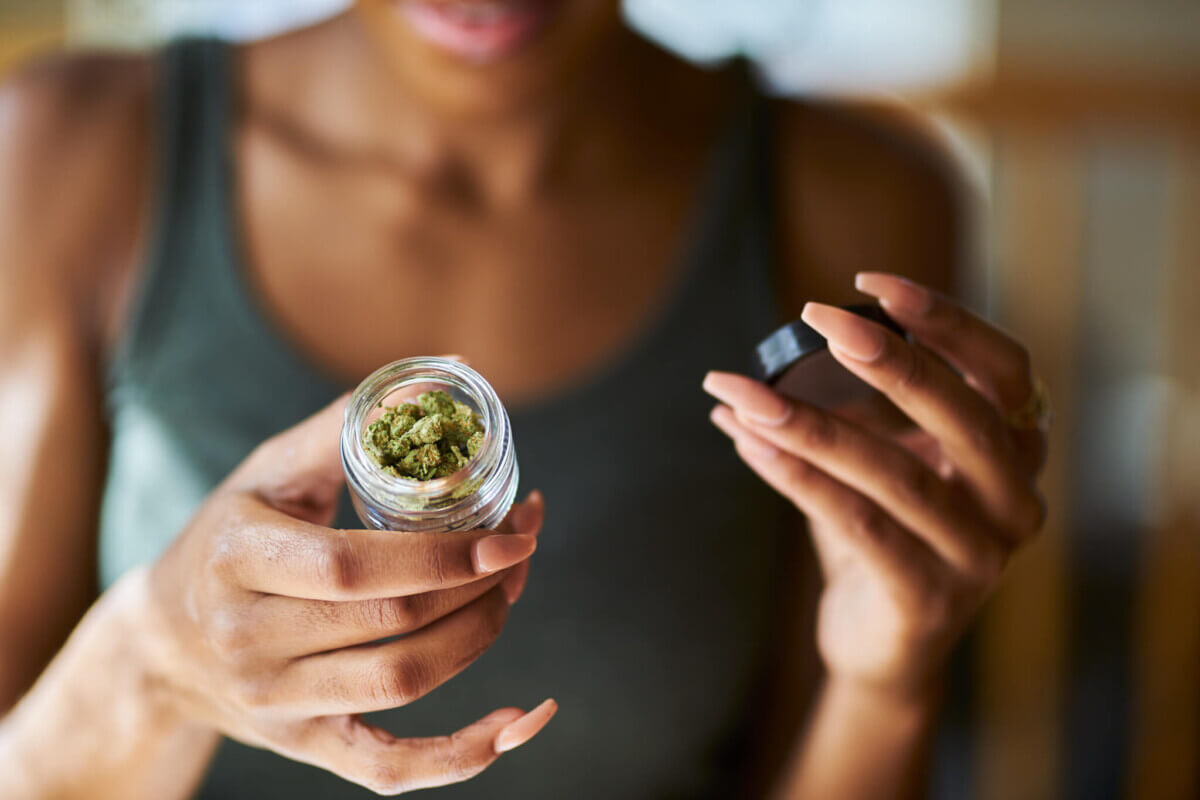 (© Joshua Resnick – stock.adobe.com)
Marijuana use is linked to having false memories, with people ‘recalling’ things that never actually happened.
In a Nutshell
- A placebo-controlled study found that cannabis impaired 15 of 21 memory measures, including the ability to remember future tasks, recall events in order, and resist false memories.
- There was no meaningful difference in memory performance between the moderate-dose (20mg THC) and high-dose (40mg THC) groups.
- Cannabis users were significantly more likely to “remember” words and information that were never actually presented to them, the study’s largest and most alarming effect.
- For the first time, researchers detected a reliable effect of acute cannabis intoxication on prospective memory, the type most tied to real-world daily functioning.
Does Cannabis Dosage Make A Difference In Memory Impairment?
Washington State University psychologist Carrie Cuttler and neuroscientist Ryan J. McLaughlin recruited 120 regular cannabis users, people who used at least once a week for at least a year, and randomly assigned them to one of three groups. One group vaped cannabis flower containing a moderate dose of THC (20mg). A second group vaped a higher dose (40mg). A third group vaped placebo cannabis with virtually no active THC. Neither the participants nor the lead researcher administering the tests knew who got what, a setup known as a randomized, double-blind, placebo-controlled study, considered the gold standard in clinical research. After vaping, participants spent about an hour completing a battery of memory tests. They were assessed on immediate and delayed verbal recall, the ability to remember geometric shapes and their locations, working memory, and short-term memory. Researchers also tested two types of prospective memory, the ability to remember to do something in the future. One task required participants to rate the difficulty of each test immediately after completing it, without being prompted. Another had them ring a bell every ten minutes entirely on their own, using a visible clock for reference. Rounding out the battery were false memory tests, which measure whether someone “remembers” things that never happened; source memory, which tracks whether someone can correctly recall where a piece of information came from; and temporal order memory, the capacity to place past events in the correct sequence. Out of 21 memory measures, cannabis impaired 15. Both dose groups performed significantly worse than the placebo group on immediate verbal recall, verbal working memory, immediate visual memory, source memory for pictures, and several false memory measures. The moderate-dose group also showed impaired delayed verbal recall, temporal order memory, and event-cued prospective memory, meaning they more often forgot to rate the difficulty of each task they completed, even though they had been told to do so at the outset. Notably, there were no meaningful differences between the moderate and high dose groups on any memory outcome, Both dose groups performed similarly, suggesting that once participants were strongly intoxicated, more THC did not make memory performance noticeably worse. “Most previous studies have only looked at one or two types of memory, like recalling lists of words,” said Cuttler, senior author of the study and an associate professor of psychology at WSU, in a statement. “This is the first study to comprehensively examine many different memory systems at once, and what we found is that acute cannabis intoxication appears to broadly disrupt most of them.”
Why False Memories Are The Most Alarming Finding
Among all the effects documented, the false memory and source memory results stood out as the largest and most consequential. In the false memory test, participants listened to word lists and were later asked to identify words from a recognition list. Cannabis users were significantly more likely to say they recognized words that had never actually appeared, particularly words loosely related to the original lists. They were, in effect, constructing memories of things that hadn’t happened. Source memory problems compound this. When someone cannot correctly remember where information came from, whether from a doctor or a random Facebook comment, they lose a key tool for judging its credibility. The authors point out in the paper that “the spread of misinformation is becoming increasingly prominent in today’s society, especially on social media,” and that false memories combined with source memory failures could make that problem worse for cannabis users specifically. Worth noting: this is the first study to detect a statistically reliable effect of acute cannabis use on prospective memory, the ability to remember to do things in the future. That type of memory, covering tasks like taking medication on schedule or showing up to an appointment, predicts real-world daily functioning better than the word-list tests that have dominated cannabis research for decades.What Weed Left Intact
Not every domain collapsed. Episodic content memory, the ability to recall personally experienced events, showed no significant effect. Participants could still describe roughly what they had done during the test session even after using cannabis. Short-term memory also largely escaped the most consistent effects, though the authors note those tests may not have had enough trials to catch smaller differences. The time-cued prospective memory task, which required participants to ring a bell every ten minutes while a visible clock sat in front of them, showed no significant group difference either. Researchers believe a ceiling effect is the likely explanation: all three groups performed so well that there wasn’t much room to detect impairment. Access to the clock probably helped intoxicated participants compensate for any internal timing disruption, and future research may need to use a harder version of this task to get a clean read. The absence of dose-dependent effects was also notable. The 40mg THC group did not consistently perform worse than the 20mg group on any memory outcome, which researchers suggest reflects the fact that both groups reached a similar plateau of intoxication. Interestingly, a number of participants in the higher-dose group stopped vaping before finishing the full amount because the effects felt too intense, yet their scores were still comparable to those who inhaled the full dose. All participants were experienced, regular cannabis users, and research has shown that frequent use can blunt some of cannabis’s acute cognitive effects. That raises a pointed question: if seasoned users showed this level of impairment, occasional or first-time users might fare even worse across the same battery of tests. As cannabis becomes part of everyday life for tens of millions of Americans, a clearer picture of what being acutely intoxicated actually does to cognition matters, both for public health guidance and for the personal decisions people make about when and where they choose to use it. Disclaimer: This article is based on a peer-reviewed study published in the Journal of Psychopharmacology. The study examined the acute effects of cannabis intoxication in regular users and does not assess the effects of chronic use, withdrawal, or use by non-regular users. Results may not generalize to all populations.Paper Notes
Limitations
The study recruited only experienced cannabis users who consumed at least once a week for a minimum of one year. Research suggests that long-term users may have developed some tolerance to cannabis’s acute cognitive effects, meaning the memory impairments found here could be even more pronounced in occasional or first-time users. The sample was also relatively young, with a mean age of approximately 28, and the authors acknowledge these results may not extend to older adults. A between-subjects design was used rather than a within-subjects approach, meaning participants were not tested before and after cannabis use; however, randomization produced groups that were statistically equivalent at baseline on all key measures. The study was not able to determine which phase of memory, whether encoding, consolidation, or retrieval, was most affected, since THC was administered before all tasks began. Some tests showed ceiling effects, particularly the time-cued prospective memory and critical lure false memory tests, which may have limited sensitivity to detect impairment on those specific outcomes. The study also fell short of its target sample size of 156 due to expired grant funds, though the final sample of 120 retained adequate statistical power to detect moderate-to-large effects.Funding and Disclosures
This research was funded by a grant from Washington State University’s Dedicated Marijuana Account (DMAc), a fund sourced from tax revenue generated by legal cannabis sales in Washington State under Initiative 502. The funder had no role in study design, data collection, analysis, or reporting. The vaporizer device used in the study (Volcano MEDIC 2) was donated by manufacturer Storz & Bickel. Cannabis and placebo flower were provided by the National Institute on Drug Abuse Drug Supply Program. Outside of this study, lead author Carrie Cuttler has received research funding from Huxley Health, Healer, CReDO Science, and Terra Matar Botanicals.Publication Details
Authors: Carrie Cuttler, Department of Psychology, Washington State University, Pullman, WA; Ryan J. McLaughlin, Department of Integrative Physiology and Neuroscience, Washington State University, Pullman, WA. Title: “Mapping the acute effects of cannabis on multiple memory domains: A randomized, double-blind, placebo-controlled study” | Journal: Journal of Psychopharmacology | DOI: 10.1177/02698811261416079 | Published: 2026 (online ahead of print) | Clinical Trial Registration: ClinicalTrials.gov, #NCT05488509Called “brilliant,” “fantastic,” and “spot on” by scientists and researchers, our acclaimed StudyFinds Analysis articles are created using an exclusive AI-based model with complete human oversight by the StudyFinds Editorial Team. For these articles, we use an unparalleled LLM process across multiple systems to analyze entire journal papers, extract data, and create accurate, accessible content. Our writing and editing team proofreads and polishes each and every article before publishing. With recent studies showing that artificial intelligence can interpret scientific research as well as (or even better) than field experts and specialists, StudyFinds was among the earliest to adopt and test this technology before approving its widespread use on our site. We stand by our practice and continuously update our processes to ensure the very highest level of accuracy. Read our AI Policy (link below) for more information.
Our Editorial Team
Steve Fink Editor-in-Chief
John Anderer Associate Editor
Source: Cannabis Wreaks More Havoc On Memory Than Scientists Realized