The exhibition’s title reads like a scientific protocol wrapped in mystery. “Portraits: 14–16 November”: a format and a date, certainly, but no year and no indication of place. Jack Davison, born in 1990 in Essex, has deliberately stripped his series of any chronological anchor. The ninety photographed faces were captured in the streets of London, with the help of casting director Coco Wu, then printed using the photopolymer gravure technique, an intaglio process that transfers the image onto a light-sensitive plate. The initial impulse was disarmingly simple: Jack Davison wanted to know how many portraits he could take in a single day. The target of one hundred morphed into a three-day marathon, during which he combed the city for faces possessed of that peculiar anachronistic quality. Spotted in 2016 by Kathy Ryan, the legendary photo editor of the New York Times, he has since worked for the New York Times Magazine, Le Monde, Vogue Italia, British Vogue and i-D, shot campaigns for Alexander McQueen, Hermès, Burberry and Bottega Veneta, produced a New York Times Magazine cover featuring Dwayne “The Rock” Johnson transfigured into a Greek statue, followed Timothée Chalamet and Zendaya for ten days on the set of Dune 2 in the Wadi Rum desert, and supplied the poster image for the 28th edition of Paris Photo 2025. With this series, the first chapter of a project he intends to pursue for the rest of his life, Jack Davison returns to the source. Portraiture is his first love as a photographer. The Cob Gallery, hosting his second solo exhibition after “Photographic Etchings” in 2022, presents all ninety prints, at a deliberately intimate scale of approximately 28 × 20 centimetres, arranged as an immersive constellation across the gallery walls. You do not contemplate these images; you step inside them. The reduced format compels you to lean in, to bend forward, to submit to a form of attention as much bodily as it is optical. Jack Davison initially considered prints the size of a postage stamp before deciding the device was too radical. Each portrait obeys a formal economy of monastic austerity. Tight framing on head and shoulders, exclusively black and white, light chiselled like a burin on stone. Hair, that garrulous marker of identity and era, is often concealed beneath a hood of conventual cut that functions as an equaliser: it erases everything that is not the face. No jewellery, no headphones. What remains is bone, skin, expression. The Cob Gallery places this approach within a precise lineage: “Uncovering the surreal and the sensual in everyday life, Davison’s use of chiaroscuro, framing and exposure as instruments of abstraction draws on the history of photography, extending through figures like Saul Leiter, Shoji Ueda and August Sander.” The connection with August Sander, whose encyclopaedic portraits of the 1920s are one of the series’ declared inspirations, is particularly illuminating.
But where Sander catalogued social types, Jack Davison hunts for the interstitial instant, that moment when the sitter forgets the camera, when the gaze drifts towards some indeterminate point. Of the ninety images, only one person looks directly at the lens. All the others gaze elsewhere, as though absorbed in reverie. The photopolymer gravure reinforces this eruption out of time. The process, which demands inking, pressure and physical contact with the paper, gives the prints a tactile texture that the digital file cannot possess. Each proof is unique, carrying its own ink accidents. The violent contrasts heighten the sculptural reduction of the faces; something that recalls Ingmar Bergman’s searching close-ups or the distorted visages of Francis Bacon. The most stripped-back portraits resemble stencils, icons carved in stone, close relatives of the medieval figures that adorn cathedral façades. Jack Davison, raised Catholic, no longer calls himself a believer, but acknowledges that the Sunday masses of childhood have left indelible traces on his visual grammar. “Meanwhile, Davison’s works draw aesthetic parallels with artists such as Max Ernst and Man Ray which key him to a Surrealist inheritance,” the gallery notes. The exhibition coincides with the launch of a book, self-published by Helions, Davison’s artisanal publishing house, and designed by Matt Willey. This first volume inaugurates an annual collection: each year, a different city, a new series of faces, a new book. Paris and New York are already on the list. Jack Davison has said he wants to continue for as long as his hands can hold a camera. That is to say, always. Like a copyist monk, until exhaustion. The “Portraits: 14-16 November” by Jack Davison are on show at Cob Gallery in London until April 2, 2026.
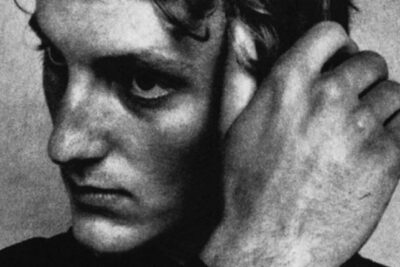 The exhibition’s title reads like a scientific protocol wrapped in mystery. “Portraits: 14–16 November”: a format and a date, certainly, but no year and no indication of place. Jack Davison, born in 1990 in Essex, has deliberately stripped his series of any chronological anchor. The ninety photographed faces were captured in the streets of London, with the help of casting director Coco Wu, then printed using the photopolymer gravure technique, an intaglio process that transfers the image onto a light-sensitive plate. The initial impulse was disarmingly simple: Jack Davison wanted to know how many portraits he could take in a single day. The target of one hundred morphed into a three-day marathon, during which he combed the city for faces possessed of that peculiar anachronistic quality. Spotted in 2016 by Kathy Ryan, the legendary photo editor of the New York Times, he has since worked for the New York Times Magazine, Le Monde, Vogue Italia, British Vogue and i-D, shot campaigns for Alexander McQueen, Hermès, Burberry and Bottega Veneta, produced a New York Times Magazine cover featuring Dwayne “The Rock” Johnson transfigured into a Greek statue, followed Timothée Chalamet and Zendaya for ten days on the set of Dune 2 in the Wadi Rum desert, and supplied the poster image for the 28th edition of Paris Photo 2025. With this series, the first chapter of a project he intends to pursue for the rest of his life, Jack Davison returns to the source. Portraiture is his first love as a photographer. The Cob Gallery, hosting his second solo exhibition after “Photographic Etchings” in 2022, presents all ninety prints, at a deliberately intimate scale of approximately 28 × 20 centimetres, arranged as an immersive constellation across the gallery walls. You do not contemplate these images; you step inside them. The reduced format compels you to lean in, to bend forward, to submit to a form of attention as much bodily as it is optical. Jack Davison initially considered prints the size of a postage stamp before deciding the device was too radical. Each portrait obeys a formal economy of monastic austerity. Tight framing on head and shoulders, exclusively black and white, light chiselled like a burin on stone. Hair, that garrulous marker of identity and era, is often concealed beneath a hood of conventual cut that functions as an equaliser: it erases everything that is not the face. No jewellery, no headphones. What remains is bone, skin, expression. The Cob Gallery places this approach within a precise lineage: “Uncovering the surreal and the sensual in everyday life, Davison’s use of chiaroscuro, framing and exposure as instruments of abstraction draws on the history of photography, extending through figures like Saul Leiter, Shoji Ueda and August Sander.” The connection with August Sander, whose encyclopaedic portraits of the 1920s are one of the series’ declared inspirations, is particularly illuminating.