Earths Days Are Getting Longer, And Humans May Be Why : ScienceAlert
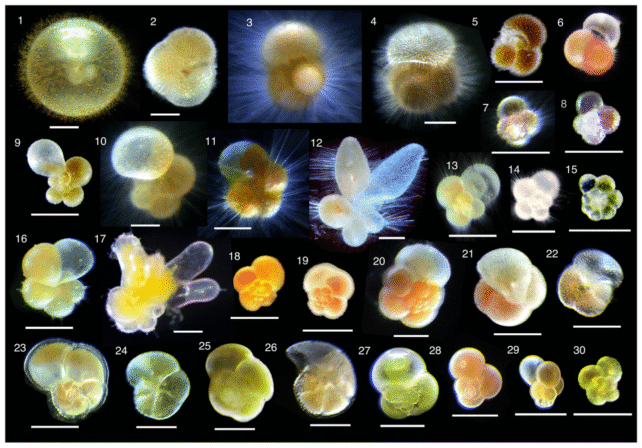
 Earth’s days are becoming longer as human-driven climate change melts glaciers and ice sheets, redistributing our planet’s mass and slowing its rotation, new research suggests. As a result, our days are currently lengthening by 1.33 milliseconds per century – a feat that has been largely unparalleled in millions of years. If this continues, the climate’s influence on day length may surpass the influence of the Moon by century’s end, marking a momentous, if undesired, anthropological impact. These findings are described in a recent paper published by geoscientists from the University of Vienna and ETH Zurich. In their first-of-its-kind study, the researchers analyzed fossilized marine organisms called foraminifera and developed a deep-learning algorithm to assess sea-level flux and calculate Earth’s changing day length across almost 4 million years.
 More specifically, the new research sought to determine how the current day-lengthening effect compares with the past. The analysis reveals that this effect hasn’t been matched in eons, save for a few abrupt climate events during which ice sheets grew or melted as Earth quickly cooled or warmed. “This rapid increase in day length implies that the rate of modern climate change has been unprecedented at least since the late Pliocene, 3.6 million years ago,” says Bendikt Soja, a professor of Space Geodesy at ETH Zurich and one of the study’s two co-authors. “The current rapid rise in day length can thus be attributed primarily to human influences.” If 1.33 milliseconds doesn’t sound significant compared to the other 86,400 seconds of each day, this change is more than enough to disrupt communications and space navigation technologies. Plus, more pessimistic modeling suggests that the trend may accelerate, producing a change of around 2.62 milliseconds per century over the last few decades of the 21st century, a value that would surpass the influence of the Moon on Earth’s length of day. Related: Earth’s Rotation Is Slowing Down, And It Might Explain Why We Have Oxygen “Only one time – around 2 million years ago – the rate of change in length of day was nearly comparable, but never before or after that has the planetary ‘figure skater’ raised her arms and sea-levels so quickly as in 2000 to 2020,” says Kiani Shahvandi. From a purely scientific, impassive perspective, being able to change the rotational mechanics of an entire planet is a testament of human capability. Unfortunately, it’s a net negative effect on our own planet, and one that leads to (slightly) longer workdays, to boot. This research was published in the Journal of Geophysical Research: Solid Earth.
Source: Earths Days Are Getting Longer, And Humans May Be Why : ScienceAlert