Trump threatens to obliterate Irans energy facilities if deal not reached shortly – BBC News
Iran says US demands to end the war ‘excessive and unreasonable’published at 12:52 BST
Ghoncheh Habibiazad Senior reporter, BBC Persian
Image source, Getty Images
We’ve just brought you the latest comments from Donald Trump, who says the US is in “serious discussions” with a “new and more reasonable” Iranian regime. Earlier today, a spokesperson for Iran’s Foreign Ministry said the points conveyed regarding US demands from Iran to end the war have been “excessive and unreasonable”. According to the report of his remarks by Iranian outlets, Baghaei says that Tehran has had “no direct negotiations with the US” and also that what has been discussed so far has been “messages through intermediaries about the US’s intention to negotiate”. He says that Pakistan’s meetings are within a framework “they themselves have established”, and Iran has “not participated”. Baghaei has also accused the US of “constantly” shifting its position. “I do not know how many in the United States take the claim of American diplomacy seriously,” Baghaei said.
Trump: US in ‘serious discussions’ with ‘new and more reasonable’ Iranian regime – but repeats energy threatspublished at 12:35 BST
BreakingImage source, Reuters
Donald Trump says the US is in “serious discussions” with a new Iranian regime which the president says could “end our military operations in Iran”. In a post on Truth Social, Trump writes: “The United States of America is in serious discussions with A NEW, AND MORE REASONABLE, REGIME to end our Military Operations in Iran. “Great progress has been made but, if for any reason a deal is not shortly reached, which it probably will be, and if the Hormuz Strait is not immediately ‘Open for Business,’ we will conclude our lovely ‘stay’ in Iran by blowing up and completely obliterating all of their Electric Generating Plants, Oil Wells and Kharg Island (and possibly all desalinization plants!), which we have purposefully not yet ‘touched’. “This will be in retribution for our many soldiers, and others, that Iran has butchered and killed over the old Regime’s 47 year ‘Reign of Terror’.”
Kharg Island – is it a bluff?published at 12:20 BST
Frank Gardner Security correspondent There has been so much noise made about a possible US ground assault on this island of Iran’s in the northern Gulf that you have to wonder if it’s all part of a cunning deception plan. There is no doubting its strategic value to Iran and the Islamic Revolutionary Guards Corps (IRGC). They rely on it for 90% of their oil revenues and although Iran claims it has other means of getting its oil to its customers, losing control of Kharg would be a definite blow. But, there are other islands in the Gulf that could also be in America’s sights. These include tiny Larak Island, just offshore from the key port of Bandar Abbas, which sits right on the Strait of Hormuz. Iran is currently making all tanker traffic pass by this island for checking and reportedly being forced to pay $2m per vessel. Then there is Qeshm, a vast island where Iran is suspected of housing underground missile and drone sites. And there are three islands, Abu Musa and the Greater and Lesser Tunbs, whose ownership is disputed between Iran and the UAE but all are occupied by Iran. Taken together, Iran’s Gulf islands form a protective shield that can threaten shipping and giving it a geographical advantage.
Smoke billows from fire at Israel oil refinery after reports of attackpublished at 12:07 BST
Image source, Reuters
We can now bring you more on the fire at an oil refinery in the Israeli city of Haifa. Israel’s Fire and Rescue Service says an industrial building and a fuel tanker were hit by debris from an intercepted missile at the Bazan oil refinery on Monday. In a statement earlier this morning, the fire service said no casualties were reported and firefighters were working to prevent the fire from spreading to additional areas while also searching for trapped individuals, Reuters reports. It’s not known where the missiles were fired from but Israel has been under regular attack from Iran and Hezbollah militants in Lebanon since the war began.
Do not expect new policy from Starmer meeting todaypublished at 11:50 BST
Henry Zeffman Chief political correspondent The businesses invited to meet the prime minister at Downing Street this afternoon displays the breadth of the economic impact of the war with Iran: energy companies including Shell and BP, the Lloyds insurance market, banking companies including Goldman Sachs and HSBC. This is not an emergency meeting. Do not expect new government policy to emerge afterwards. Instead it is an opportunity for the government to hear from these businesses about how they are affected, and for the businesses to hear the government’s perspective. A senior naval officer will brief those present on the situation in the Strait of Hormuz. We are told that Starmer will reiterate his view that de-escalation is the best way forward. As he knows, that is not something that those around the table this afternoon can influence. It feels highly likely, perhaps inevitable, that at some point in the coming weeks and months the government will begin to take measures to alleviate the cost of living here in the UK. Last week Rachel Reeves, the chancellor, outlined the principles she would apply to any bailout for household energy bills: a targeted scheme rather than a universal one like the Conservative package of 2022. Additionally, Starmer has suggested that the government is reviewing the planned increase in fuel duty this autumn. It’s hard to find anybody who thinks that will now proceed as planned. But the government is still for now taking its time and waiting to see how the conflict develops before getting into any more detail.
‘This is not our war and we’re not going to get drawn into it,’ says Starmerpublished at 11:47 BST
Image source, PA Media
Prime Minister Keir Starmer has insisted UK troops will not be on the ground in Iran. Asked by reporters this morning if he was considering deploying British troops to war in the Middle East, Starmer says: “This is not our war and we’re not going to get drawn into it.” The PM went on to defend his stance throughout the conflict, saying the UK is taking “defensive action” to defend “British lives, British interests and, of course, our allies in the region”. Starmer says the UK will continue to defend its interests and work to re-open the Strait of Hormuz, but adds: “We are not going to get dragged into this war.”
Stock markets stable as Brent crude oil remains around $115 a barrelpublished at 11:32 BST
Archie Mitchell Business reporter Investors appear to be waiting to see which way President Trump will take the conflict in Iran, with European stock markets flat on Monday morning and Brent crude oil hanging around $115 per barrel. That is a jump from the closing price of Brent crude on Friday, but still below a peak on 18 March of $119.50. London’s FTSE 100 was up slightly on Monday morning, by 0.5%, while France’s CAC 40 was flat and Germany’s DAX index was 0.2% lower. Stocks in Asia had suffered sharp drops on Monday morning after Iran-backed Houthi rebels in Yemen joined the conflict by striking Israel over the weekend.
Aftermath of Israeli strikes in Beirutpublished at 11:21 BST
These are some of the latest images coming to us from Beirut following Israeli strikes. Earlier this morning, the Israeli military said it was targeting Hezbollah’s infrastructure in the Lebanese capital’s southern suburbs. Lebanese health officials say more than 1,100 people have been killed since the escalation began. On Saturday, the BBC spoke to the mum of an 11-year-old boy who was killed in an Israeli air strike.
Image source, ReutersImage source, ReutersImage source, Reuters
Israeli oil refinery on fire after Iranian attack, state media reportspublished at 11:07 BST
Image source, Reuters
Iran’s state broadcaster says Iranian missiles have hit an industrial area in northern Israel. Footage aired on Israeli television and on Iranian social media appears to show smoke rising from an oil refinery in Haifa, which has been targeted previously in the conflict. The Israel Fire Service says a fuel tanker at the refinery was hit by debris from an intercepted missile, Reuters reports.
‘We are somewhat in danger – but you get used to it’: Life on the Israel-Lebanon borderpublished at 10:48 BST
Gabriela Pomeroy Live reporter
Image source, Gabriella Kopellowitz
As Israel advances into southern Lebanon, we’ve spoken to residents in the Israeli town of Metula, close to the border. Gabriella Kopellowitz is a 28-year-old social worker who works in the town. “It is so close to the border we can see the villages inside Lebanon from here,” she says. There are sirens five times day, warning of missiles or rockets on the way, she adds. “When missiles come from Iran, we have about five minutes to go into a bomb shelter, but when they come from Hezbollah – we have less than one minute.” As a social worker, Gabriella has been helping relocate people whose homes were damaged by missiles and driving around town taking meals to old people who won’t go out. She says the town is a lot quieter than usual. “A lot of families have left – it’s not the nicest feeling to know that Hezbollah want to hit you,” Gabriella says. “We are somewhat in danger here in Metula”, she says, but adds that “you get used to it. I’m not scared. Most of the time the missiles get shot down”.
Iran seeking to implement ‘new system’ to govern Strait of Hormuz and impose tolls – MPpublished at 10:24 BST
Ghoncheh Habibiazad Senior reporter, BBC Persian
Image source, Corbis via Getty Images
Iranian Member of Parliament (Majlis), Alaeddin Boroujerdi, has said that a new parliamentary plan concerning the Strait of Hormuz will be “approved as soon as possible”. Under the proposed “new system”, no passage would be allowed “without the permission” of Iran, Boroujerdi said. He also said that Iran is looking to levy transit tolls on the strait. “Given that maintaining security and providing services to vessels passing through involve costs, a framework must be established for collecting transit tolls through the strait,” he said. He also said that “the time has come” for Iran to withdraw from the Treaty on the Non-Proliferation of Nuclear Weapons (NPT) and said that it has lost its “relevance” following attacks on Iran’s nuclear facilities by Israel and the US.
Iraq airbase hit in missile attack – defence ministrypublished at 10:20 BST
Image source, Iraqi Ministry of Defence
Iraq’s defence ministry says missiles have hit its Mohammed Alaa airbase, destroying an aircraft belonging to the Iraqi Air Force. No casualties have been reported in the attack, which happened in the early hours of this morning next to Baghdad International Airport. In an update on its website, the Iraqi Ministry of Defence condemns what it describes as a “cowardly and criminal act targeting the military establishment and its defense capabilities”. Earlier this morning, the Syrian Arab Army said it intercepted a large-scale drone attack on several of its military bases near the Iraqi border, the country’s state news agency reported. The army’s operations command told Syria’s state-run news agency SANA that most of the drones were intercepted and shot down.
More Israeli strikes in Beirut as ground offensive continuespublished at 09:38 BST
Image source, Reuters
The Israeli military says it has begun striking Hezbollah’s infrastructure in Beirut. Pictures taken this morning show smoke rising from the Lebanese capital’s southern suburbs. The Israel Defense Forces (IDF) say it is targeting the Iran-backed group’s “terrorist infrastructures”. Lebanese media also report a new wave of Israeli strikes on southern Beirut. More than a million people have been displaced in Lebanon as the US-Israel war with Iran continues to impact the wider region. One child told the BBC he felt “ashamed” to be sleeping in the streets after his family were forced to flee their home in Beirut.
Media caption,’Our home is gone’: BBC speaks to displaced families in Lebanon
Iran confirms death of IRGC Naval commanderpublished at 09:04 BST
Ghoncheh Habibiazad Senior reporter, BBC Persian
Image source, Tasnim News Agency
Iran’s Islamic Revolutionary Guard Corps (IRGC) has officially acknowledged the killing of Alireza Tangsiri, the Naval commander of the IRGC four days after Israel had said that they have targeted him. In the statement by the IRGC published on the IRGC-affiliated Tasnim, it said that Tangsiri was “organising forces and strengthening the defence shield of islands and coasts” and died “due to the severity of his injuries”. The statement added the “IRGC Navy” forces, despite the “absence” of Tangsiri commander in the recent days, made “crushing blows and continued decisive control over the Strait of Hormuz”. The IRGC vowed in the statement “not to rest until the enemy is completely destroyed”. Tangsiri, one of the most senior IRGC commanders, was involved in overseeing the passage of vessels through the strategic Strait of Hormuz recently. His account on X said “no vessel associated with the aggressors against Iran has the right to pass through”. He was an outspoken commander, having made several statements against the US and Israel in the past. Tangsiri was sanctioned by the US Treasury along with other IRGC commanders in 2019 after Iran shot down a US surveillance drone near the strait.
The Gulf is vulnerable – and the implications for its people are massivepublished at 08:22 BST
Katy Watson BBC correspondent in Doha With talk from Donald Trump of wanting to “take the oil in Iran”, Gulf states will today be thinking through the repercussions of such an operation. There’s a clear tit-for-tat going on – when Iran’s energy infrastructure gets hit, the Gulf can expect missiles and drones on infrastructure here too. Earlier this month, Qatar’s Ras Laffan liquefied natural gas facility was attacked after Israel targeted Iran’s South Pars gas field. Overnight, an Iranian electricity facility was hit and then Kuwait reported an attack on one of its power and desalination plants, resulting in one Indian worker being killed and significant damage to the facility. Leaders from across the Gulf have condemned the attack. Escalation is a massive worry – this part of the world is hugely vulnerable to hits on its energy infrastructure. The Gulf is an arid desert where natural freshwater is scarce and so hundreds of desalination plants, which convert sea water into drinking water, make this part of the world liveable. With 90% of drinking water in the Gulf coming from desalination plants, it’s clear that if those facilities are inoperable, the Gulf is vulnerable – and the implications for its people are massive.
Image source, ReutersImage caption,QatarEnergy’s operating facilities in Ras Laffan Industrial City, seen earlier in March
Six Israeli soldiers injured in Lebanonpublished at 08:12 BST
Image source, ReutersImage caption,Smoke seen rising after an Israeli strike in southern Lebanon, amid escalating hostilities between Israel and Hezbollah
Israel’s military says six of its soldiers have been injured in Lebanon in separate incidents. Two soldiers were severely injured after an anti-tank missile was fired towards them in southern Lebanon yesterday afternoon, the Israel Defense Forces (IDF) says. Three IDF soldiers were injured, one severely, after a drone fell near to them, the military says. One more soldier was injured after an “operational accident”, it adds. The troops have all been taken to hospital. Israel’s renewed offensive in Lebanon began after Iranian-backed Hezbollah fired rockets into northern Israel in retaliation for the killing of Iran’s supreme leader and near-daily strikes on Hezbollah. Since then, Israeli attacks have killed more than 1,000 people in Lebanon, according to the Lebanese health ministry. Israel has also said it intends to take control of a large part of southern Lebanon as part of its ground campaign against Hezbollah.
Image source, Getty ImagesImage caption,A motorbike passes a destroyed building in southern Beirut on Saturday – Israel has carried out regular air strikes on the city in the past month
Even in 1988, Trump was discussing the seizing of Kharg Islandpublished at 07:57 BST
Long before he was the US President, Donald Trump had Iran’s Kharg Island in his sights. As he tells the Financial Times he is considering taking the crucial island, here’s a snapshot of what he previously said:
1988: Trump said “I’d do a number on Kharg Island” in an interview with The Guardian. “I’d go in and take it. Iran can’t even beat Iraq, yet they push the United States around. It’d be good for the world to take them on”
13 March, 2026: In an interview with Fox News radio, Trump was asked about his 1988 comments. He said taking the island was “not high on the list”. He went on to say he could change his mind “in seconds”. “Let’s say I was gonna do it, or let’s say I wasn’t gonna do it. What would I say to you?”
On the same day: Trump said on Truth Social he had directed bombing raids that had “totally obliterated” military targets “Iran’s crown jewel, Kharg Island”. He said he had “chosen NOT to wipe out Oil infrastructure on the island” but said he would reconsider this if Iran interfered with the Strait of Hormuz
30 March, 2026: In the interview with the Financial Times published today, Trump said the US “had a lot of options” in relation to the island. “Maybe we take Kharg Island, maybe we don’t,” he said. “It would also mean we had to be there [in Kharg Island] for a while”
Food price warning as Starmer meets business leaderspublished at 07:21 BST
As we’ve been reporting, Keir Starmer will gather business leaders in Downing Street today to discuss the economic impact of the Iran war. Ahead of this, we’ve had a reminder that it’s not just oil prices that have risen since Iran blockaded the Strait of Hormuz, with a shipping analyst saying we should also be watching fertiliser costs. Lars Jenssen, the founder and chief executive of shipping consultancy Vespucci Maritime, says 20 to 30% of the world’s seaborne fertiliser originates in the Gulf. “This will mean rapidly escalating food prices, especially in poorer countries,” he tells BBC Radio 4’s Today programme.
Image source, EPAImage caption,A market in Dalston, east London, pictured last week. The National Farmers’ Union has also warned that fuel and fertiliser spikes will mean an increase in food prices
Kuwait intercepts five drones after earlier attack on power plantpublished at 07:16 BST
The Kuwait National Guard says it intercepted five drones, the country’s state news agency reports this morning. It follows the death of a worker from India in an Iranian attack on a power and desalination plant in Kuwait, Kuwait’s Ministry of Electricity and Water said in a statement overnight. Yesterday, Kuwait’s armed forces said 10 of its members were injured in Iranian attacks on military camps, and a warehouse belonging to a private logistics company was also targeted, in missile and drone attacks during the previous 24 hours.
Image source, Getty ImagesImage caption,A picture taken last week after an Iranian drone hit a fuel depot at Kuwait International Airport
Even if US seized Kharg Island, Iran could still attack tankerspublished at 06:53 BST
Nick Marsh Business reporter, Singapore Markets in Asia have fallen sharply after the price of oil jumped in morning trade – reaching $116 (£88) for a barrel of Brent crude. At the same time, Donald Trump says he wants to “take the oil in Iran” – as the United States did when it removed Venezuela’s president Nicolas Maduro in January. Trump told the Financial Times the US could do this by seizing Kharg Island in the Persian Gulf, the hub on which 90% of Iran’s oil exports are loaded. Taking Kharg Island may be possible, but it would not be the relatively straightforward operation the US enjoyed in Venezuela. It would involve considerable manpower – and would not change who controls the Strait of Hormuz. Any tankers leaving a US-controlled Kharg Island would still be at the mercy of Iranian attacks, as they are now.
Image source, GetImage caption,The oil terminal on Kharg Island, around 25km off the coast of Iran, pictured in 2017
 Ghoncheh Habibiazad Senior reporter, BBC Persian
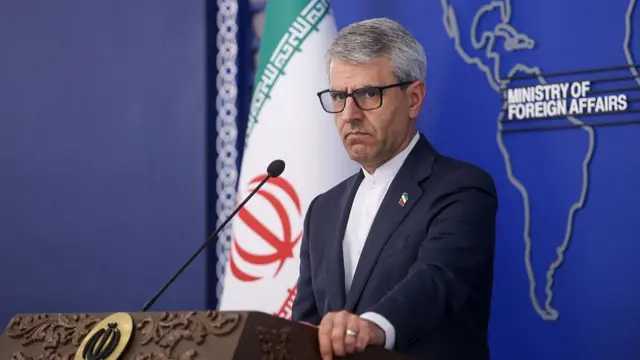 Image source, Getty Images
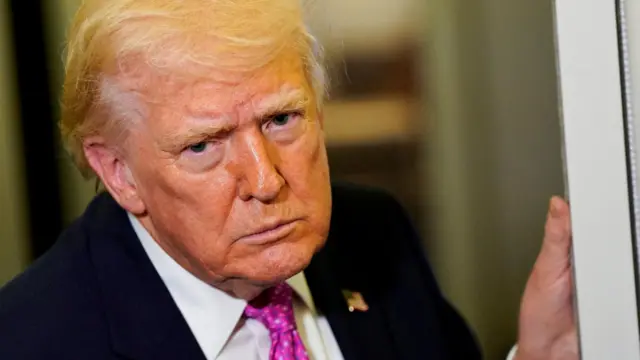 Image source, Reuters
 Frank Gardner Security correspondent There has been so much noise made about a possible US ground assault on this island of Iran’s in the northern Gulf that you have to wonder if it’s all part of a cunning deception plan. There is no doubting its strategic value to Iran and the Islamic Revolutionary Guards Corps (IRGC). They rely on it for 90% of their oil revenues and although Iran claims it has other means of getting its oil to its customers, losing control of Kharg would be a definite blow. But, there are other islands in the Gulf that could also be in America’s sights. These include tiny Larak Island, just offshore from the key port of Bandar Abbas, which sits right on the Strait of Hormuz. Iran is currently making all tanker traffic pass by this island for checking and reportedly being forced to pay $2m per vessel. Then there is Qeshm, a vast island where Iran is suspected of housing underground missile and drone sites. And there are three islands, Abu Musa and the Greater and Lesser Tunbs, whose ownership is disputed between Iran and the UAE but all are occupied by Iran. Taken together, Iran’s Gulf islands form a protective shield that can threaten shipping and giving it a geographical advantage.
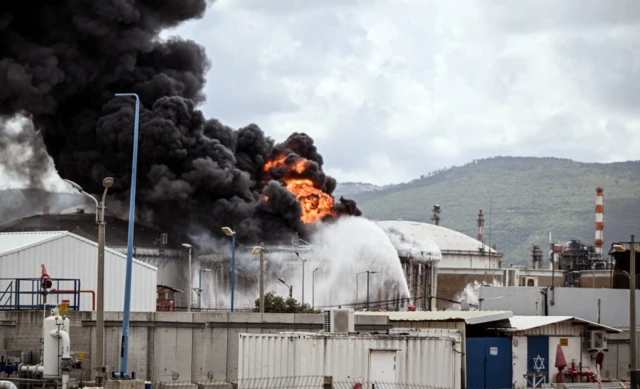 Image source, Reuters
 Henry Zeffman Chief political correspondent The businesses invited to meet the prime minister at Downing Street this afternoon displays the breadth of the economic impact of the war with Iran: energy companies including Shell and BP, the Lloyds insurance market, banking companies including Goldman Sachs and HSBC. This is not an emergency meeting. Do not expect new government policy to emerge afterwards. Instead it is an opportunity for the government to hear from these businesses about how they are affected, and for the businesses to hear the government’s perspective. A senior naval officer will brief those present on the situation in the Strait of Hormuz. We are told that Starmer will reiterate his view that de-escalation is the best way forward. As he knows, that is not something that those around the table this afternoon can influence. It feels highly likely, perhaps inevitable, that at some point in the coming weeks and months the government will begin to take measures to alleviate the cost of living here in the UK. Last week Rachel Reeves, the chancellor, outlined the principles she would apply to any bailout for household energy bills: a targeted scheme rather than a universal one like the Conservative package of 2022. Additionally, Starmer has suggested that the government is reviewing the planned increase in fuel duty this autumn. It’s hard to find anybody who thinks that will now proceed as planned. But the government is still for now taking its time and waiting to see how the conflict develops before getting into any more detail.
 Image source, PA Media
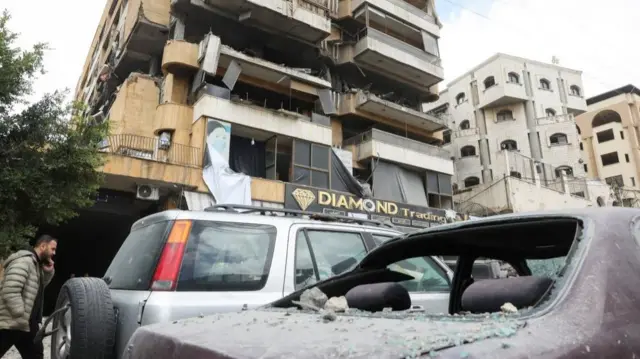 Image source, Reuters
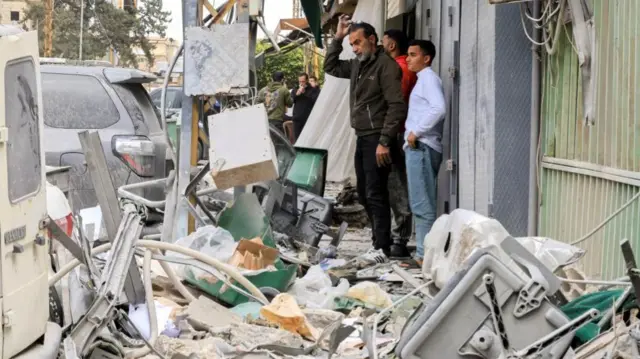 Image source, Reuters
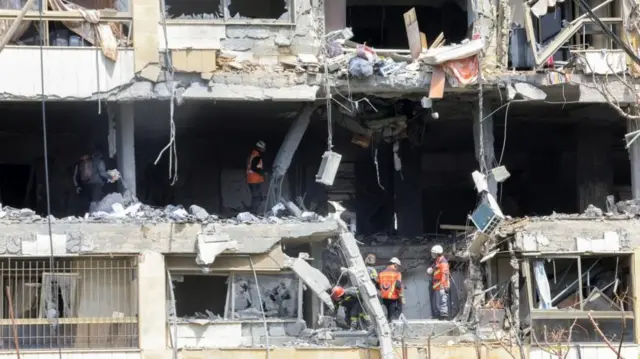 Image source, Reuters
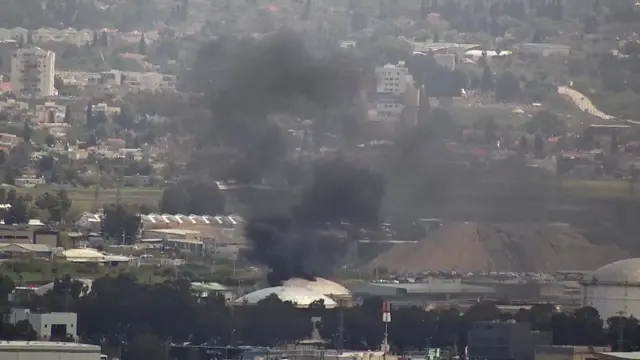 Image source, Reuters
 Gabriela Pomeroy Live reporter
 Image source, Gabriella Kopellowitz
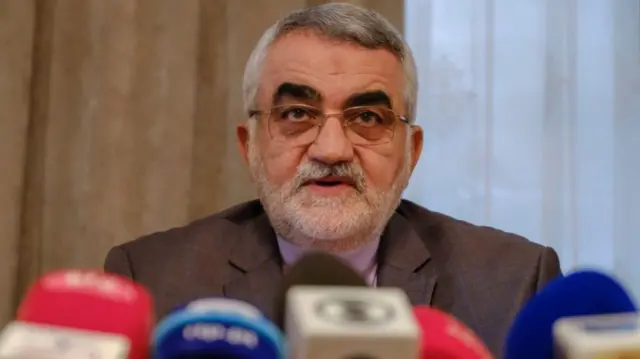 Image source, Corbis via Getty Images
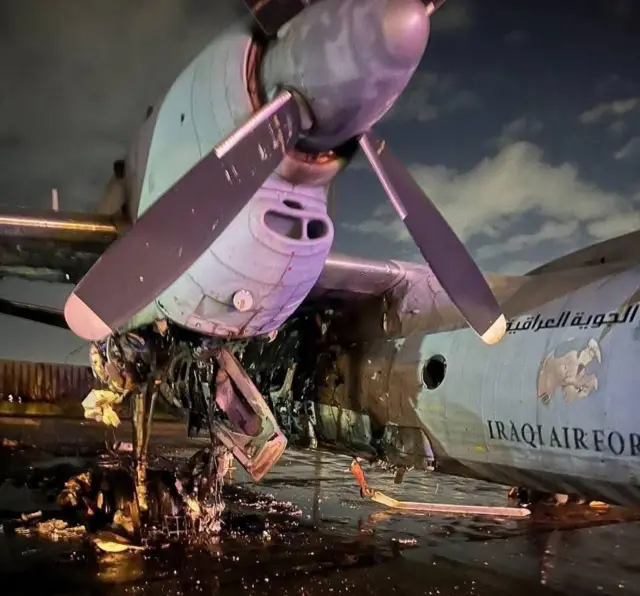 Image source, Iraqi Ministry of Defence
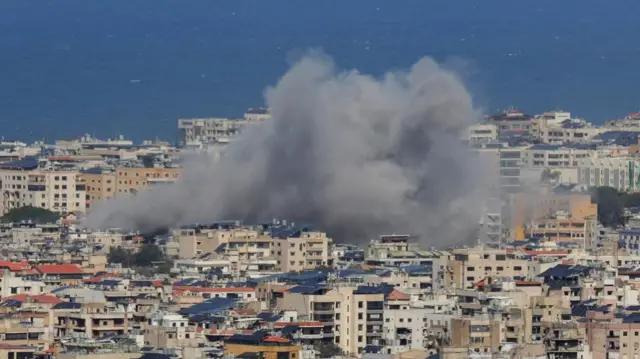 Image source, Reuters
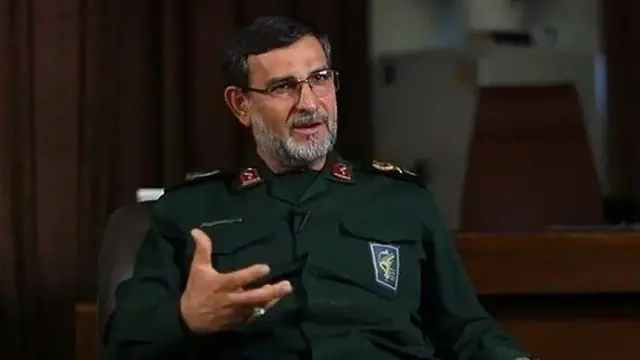 Image source, Tasnim News Agency
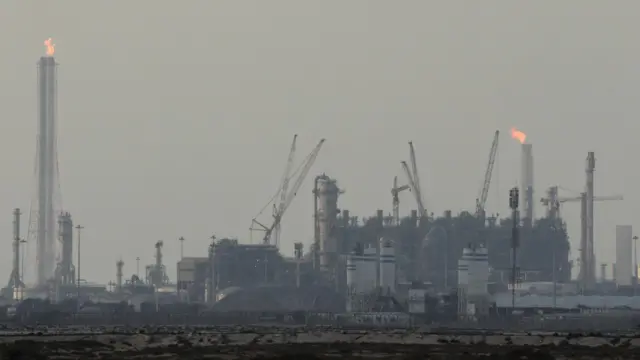 Image source, Reuters
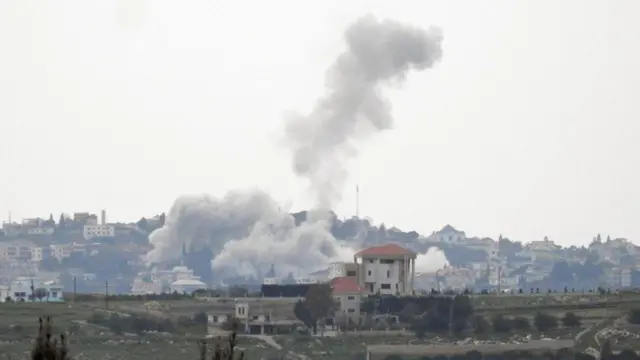 Image source, Reuters
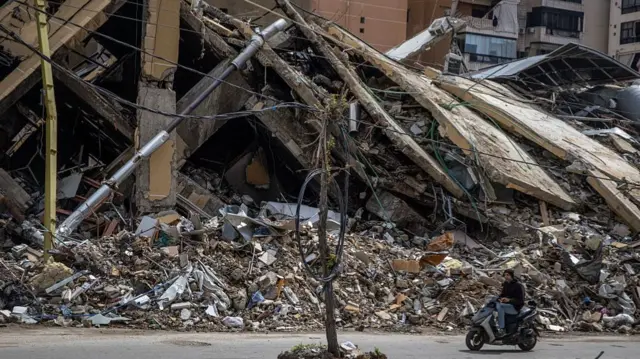 Image source, Getty Images
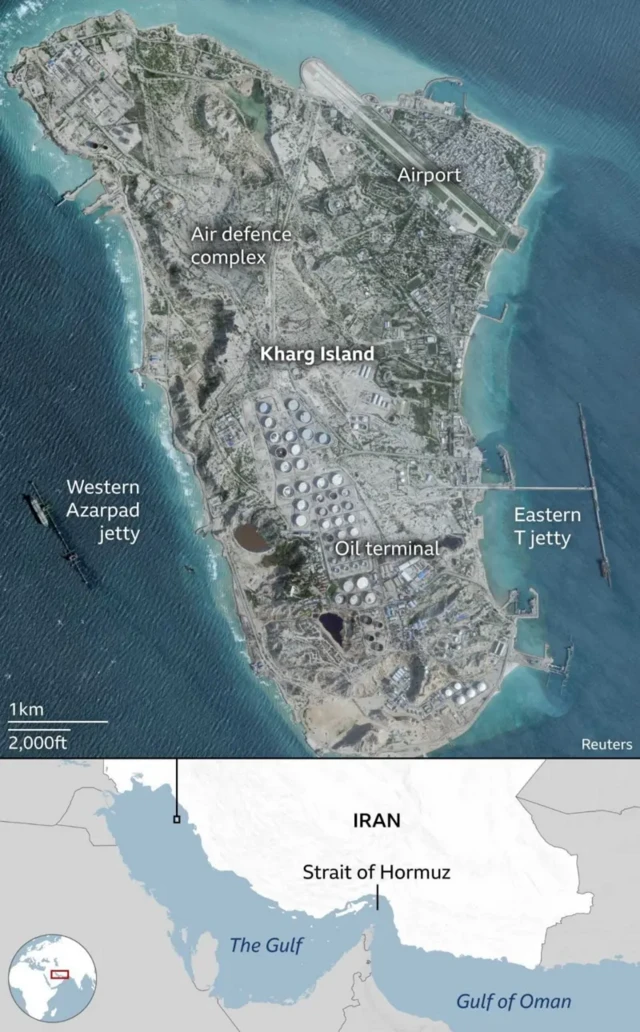
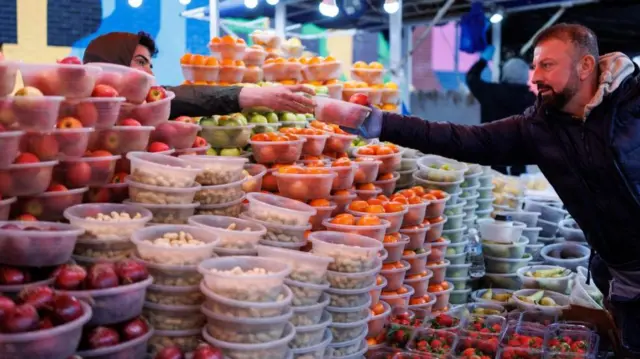 Image source, EPA
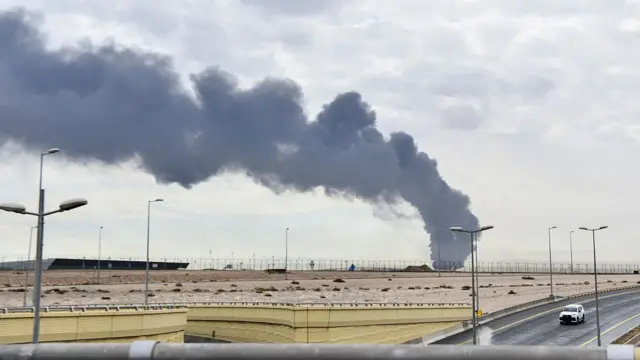 Image source, Getty Images
 Nick Marsh Business reporter, Singapore Markets in Asia have fallen sharply after the price of oil jumped in morning trade – reaching $116 (£88) for a barrel of Brent crude. At the same time, Donald Trump says he wants to “take the oil in Iran” – as the United States did when it removed Venezuela’s president Nicolas Maduro in January. Trump told the Financial Times the US could do this by seizing Kharg Island in the Persian Gulf, the hub on which 90% of Iran’s oil exports are loaded. Taking Kharg Island may be possible, but it would not be the relatively straightforward operation the US enjoyed in Venezuela. It would involve considerable manpower – and would not change who controls the Strait of Hormuz. Any tankers leaving a US-controlled Kharg Island would still be at the mercy of Iranian attacks, as they are now.
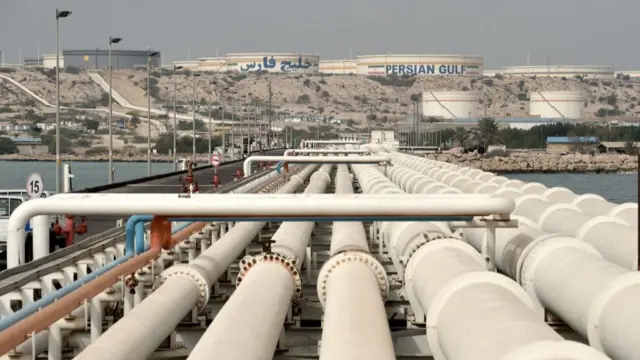 Image source, Get