Why the US is Ramping Up Attacks on Cuba’s Medical Brigades Inkstick
 As the United States and Israel continue to deepen their joint war on Iran, showering the country with deadly airstrikes, President Donald Trump’s administration is meanwhile ratcheting up threats against Cuba. US officials have reportedly ordered Cuba, a country that has lived through six decades of an American-imposed embargo, to dismiss its president. For his part, Trump has boasted of his belief that he will have “the honor of taking Cuba.” In January, the US president went as far as to threaten tariffs against any country that sent oil to Cuba, describing the island as “an unusual and extraordinary threat” to national security. As part of Washington’s campaign to isolate the island nation and topple its communist government, the US is now targeting Cuban medical brigades. In March, Politico obtained a State Department memo detailing the Trump administration’s strategy to eliminate the Western Hemisphere’s reliance on these medical brigades. Dated Feb. 23, the memo to Secretary of State Marco Rubio lays out a plan to pressure countries to evict Cuban doctors in exchange for “infrastructure modernization” and assistance in what it calls “ethical third-country recruitment” of medical personnel. An estimated 19,000 Cuban medical professionals work in some 16 countries across the Western Hemisphere. In some of those countries, Cubans account for one-in-five medical professionals. The State Department has dubbed this plan “Freedom Framework for Self-Sufficient Healthcare in the Americas.” Politico cited an unnamed source, supposedly close to the White House, who described the effort as a plan to “remove the regime without having to bomb anything.” The pressure plan comes at a time when the Trump administration is already escalating aggression in the Western Hemisphere, especially in Latin America. After months of deadly strikes on boats in the Caribbean under the excuse of combating narcotrafficking, Trump dispatched military forces to kidnap Venezuelan President Nicolás Maduro and his wife, Cilia Flores. As Trump ditches anti-interventionist rhetoric and bombs countries on several continents, the president has also threatened Colombia, Mexico, and Panama. Since 2018, Cuba’s medical brigades have been under increasing pressure. Across South America, contracts with Cuba have been terminated or fallen apart for a range of reasons including right-wing political shifts, payment disputes, and pressure from Washington. In 2018, then president-elect Jair Bolsonaro framed his opposition to the program in humanitarian terms: “We cannot allow Cuban slaves in Brazil,” he said, “and we cannot continue to feed the Cuban dictatorship.” Bolsonaro also echoed the US criticism that the Cuban government holds onto 75% of these medical workers’ salaries, though Cuba adjusts payment schemes according to where they work and the percentage of the wage they earn remains higher than the Cuban salary. When Cuba responded to Bolsonaro’s demands about altering contracts by pulling its medical workers out of the country, it left Brazil with more than 8,300 fewer medical professionals, most of whom had served in impoverished areas where locals already had limited access to healthcare. Ecuador followed suit in November 2019, cancelling an agreement with Cuba that former president Rafael Correa had signed in 2009. That same month, a US-backed coup toppled socialist president Evo Morales in Bolivia, and interim president Jeanine Anez later suspended diplomatic relations with Havana, eliminating decades of bilateral medical cooperation with Cuba. Now, as the Trump administration escalates hostility against Cuba, more Latin American and Caribbean countries have put bilateral medical cooperation agreements in their crosshairs. In February, Guatemala announced plans to cancel the Cuban medical program in order to strengthen its own national healthcare system and replace Cuban doctors with locals. That same month, Honduras’s right-wing, US-backed president, Nasry Asfura, answered Washington’s call to also eliminate its medical cooperation with Cuba, sending 168 Cuban medical workers back home. Earlier this month, Jamaica also ended its own three-decade relationship with Cuba doctors, citing disagreements over the terms of salaries. Likewise, Guyana said it would only hire Cuban doctors if it could pay them individually, leading Havana to recall its medical brigade after nearly five decades of working in that country. Even on the other side of the Atlantic, Washington dispatched Mike Hammer, its charge d’affaires to Cuba, to ask Italy’s Calabria region to send Cuban medical brigades packing. Regional governor Roberto Occhiuto dismissed the request, explaining that Calabria’s hospitals depend on Cuban medical personnel because of severe staffing shortages. Although Occhiuto said he would look to recruit hundreds of foreign medical workers from other countries, he insisted that the Cuban doctors would stay on. Beyond isolating Havana and taking valuable medical treatment from people all over the world, the pressure campaign on Cuba’s medical brigade also attacks a core pillar of the philosophy behind the Cuban revolution. While on trial for the Moncada Barracks attack in 1953, Fidel Castro delivered an infamous speech in which he listed healthcare as one of the six primary issues his coming revolutionary government would tackle. Castro’s revolutionary movement toppled the US-backed dictatorship of Fulgencio Batista six years later. Within a year of the revolution’s success, the Cuban government began delivering healthcare services to rural areas that had long had limited or no access to services. Early efforts prioritized disease prevention, achieving remarkable success in lowering infant mortality rates and increasing life expectancy. An estimated 2,800 doctors left the island during the decade following the revolution — out of some 6,000 — but the government trained an additional 5,000 medics between 1963 and 1973. By then, the country had around 8,000 doctors across the country. All doctors were required to spend two to three years in remote areas. Rather than starting “from the center and work[ing] outwards,” World Health Organization observers noted in 1975, Cuba “started where there was nothing.” This revolutionary approach to medicine reflected the country’s history and dated back to the 1790s, during the Spanish colonial period. In 1797, Tomás Romay Chacón introduced smallpox vaccination and was also the Cuban pioneer physician of disease prevention — a concept which Cuba has prioritized since the revolution. Later, in 1881, Cuban epidemiologist Carlos Juan Finlay became the first to recognize that mosquitoes transmitted yellow fever. In 1925, the Cuban Medical Federation was established with a focus on preventative medicine — and joined the resistance against dictator Gerardo Machado. In August 1960, Argentine revolutionary Ernesto Che Guevara, a trained physician, reflected on his years of traveling Latin America and his belief in the concept of a “revolutionary doctor,” or someone who harnessed “the technical knowledge of his profession in the service of the revolution and the people.” Medicine, he argued, “will have to convert itself into a science that serves to prevent disease and orients the public toward carrying out its medical duties.”
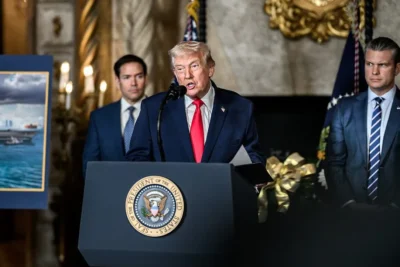
“An estimated 19,000 Cuban medical professionals work in some 16 countries across the Western Hemisphere.”After the revolution, Cuba eliminated the system of elite privilege that had marked healthcare under the Batista dictatorship by nationalizing the health system, including private clinics and pharmaceutical companies. Healthcare services expanded into the most remote parts of the island, and the Ministry of Health Care centralized all services. In the 1970s, the government prioritized planning that aimed to meet the needs of the entire population, dividing the country into health zones. Each zone was placed under the administration of a polyclinic. The results speak for themselves. By 1980, most epidemiological diseases had been eradicated. Preventive medicine expanded as general practitioners became the first point of reference for patients across the island. Meanwhile, Cuba also pursued endeavors in biotechnology and vaccine production. In 1989, James F. Grant, then the executive director of the United Nations Children’s Fund (UNICEF), said that if the entirety of Latin America had adopted Cuba’s medical approach, 700,000 fewer children would have died the year prior. Cuba has never solely prioritized healthcare within its own borders. Since 1960, the country has been at the forefront of medical internationalism and humanitarian aid. That year, the Cuban medical brigade traveled to Chile after a massive earthquake struck the country, killing and injuring thousands. Its formal medical collaboration began in May 1963, when 55 medics deployed to Algeria as part of a mission to help the country rebuild its healthcare system after the end of French colonialism. Between the 1960s and the 1980s, Cuban medical teams worked in countries including Angola, Ethiopia, and Nicaragua. In keeping with the ideology, these teams both boosted medical systems and worked in solidarity with anti-colonial resistance movements. At the same time, Cuban medical brigades also prioritized teaching medicine and providing human resources training, opening schools in South Yemen, Guyana, Ethiopia, Guinea-Bissau, Uganda, Ghana, Gambia, Angola, Equatorial Guinea, Haiti, and Eritrea. Yet, when the Soviet Union collapsed, the United States began tightening its longstanding sanctions against Cuba. The Torricelli Act of 1992, for instance, targeted Cuban imports of food and medicine, a devastating measure for the island. Before that act, Cuba had imported $719 million annually in goods — a tally that, between 1992 and 1995, plummeted to $300,000. Naturally, access to medical products from abroad reduced drastically. The island, however, hung onto its commitment to medical solidarity. In November 1998, Fidel Castro introduced a plan to provide free medical training to students from Central America and the Caribbean. The following year, the Latin American School of Medicine, known as ELAM, opened its doors to nearly 2,000 students from some 19 countries. Between 1999 and 2003, Cuba’s Barrio Adentro program sent doctors to remote areas of Venezuela where few doctors worked. Under President Hugo Chavez, Venezuela modeled its own healthcare system off Cuba’s, and by 2010, more than 83% of the population had access to free healthcare in a country that had previously failed to provide such care to around half of its citizens. In 2004, Cuba and Venezuela launched Operacion Milagro, providing free ophthalmology medical treatment to millions of people in South America. In 2007, Cuban doctors restored the eyesight of Mario Teran, a former army sergeant who executed Che Guevara in 1967 at the behest of the CIA. Over the decades since the revolution, Cuba made inroads at home and across the region, but the ever-present threat of US pressure loomed. In 1962, President John F. Kennedy attempted to persuade member countries of the Organization of American States (OAS) to align with Washington against Cuba. Argentinian President Arturo Frondizi replied by insisting that any move to discredit Cuba should come from within the framework of the OAS and urged Kennedy to launch the Alliance for Progress, a program that would provide financial assistance to Latin American countries in a bid to further isolate Havana. The US lobbied for Cuba’s suspension from the OAS. In turn, Castro took to the Plaza de la Revolución square in Havana, blasting the OAS as “the Yankee Ministry of Colonies and a military bloc against the peoples of Latin America.” The OAS suspended Cuba in January 1962 when 14 member countries voted in favor of the move. An undated US government memo from that period details another five anti-Cuba resolutions that all aimed to halt Havana’s influence in the region. Decades later, when the OAS finally voted to lift Cuba’s suspension in 2005, Castro insisted the island would not return to the organization so long as it, in his words, continued to function as an instrument of US imperial designs in the region. For its part, the United States has a far different record on internationalism in the medical sphere. In 2006, then President George W. Bush created the Cuban Medical Professional Parole (CMPP) program to encourage the defection of Cuban doctors working abroad. The scheme was terminated by Barack Obama in 2017 before leaving office. Across two Trump administrations, the US has ratcheted up the attacks on Havana. In 2019, the first Trump administration imposed visa restrictions on Cuban officials, arguing that doctors from the island were exploited and urging countries where they worked to put in place “safeguards” against their treatment. During the early period of the COVID-19 pandemic, Trump’s Secretary of State, Mike Pompeo, made the claim that the medical brigades amounted to human trafficking that pumped funds to Havana. Marco Rubio, then a US senator, introduced the Combating Trafficking of Cuban Doctors Act in 2020 and 2021. It requested the reestablishment of the Bush-era CMPP program and would have required the US State Department to document Cuba’s medical missions to consider “whether such conditions qualify as severe forms of trafficking,” though it never passed into law. Since returning to office last year, the Trump administration has extended visa restrictions to government officials in Central America, as well as their families, for employing the Cuban medical brigades and ostensibly serving as accomplices in forced labor and exploitation. Caribbean governments rejected the US claims, while Cuba’s ambassador to St. Vincent and the Grenadines argued that the US threats would deprive millions of people from accessing healthcare. These tactics, of course, are not new. For more than six decades, Washington has attempted to crush Cuba through economic isolation. Across the last 20 years, the US has more narrowly focused on Cuban medical brigades as part of an assault on the principles of the Cuban revolution. As part of this campaign, the attacks on medical cooperation do not solely harm the Cuban government — after all, hundreds of thousands of Cuban medical professionals have helped provide healthcare in countries the world over. With each cancellation of medical cooperation with Cuba, the US takes away healthcare from untold numbers of people in the name of ending the Cuban revolution. Top photo: Donald Trump announces a so-called ‘Golden Fleet’ of US battle ships during a press conference at Mar-a-Lago in Palm Beach, Florida, in December 2025 (Daniel Torok/White House/Wikimedia Commons)
Ramona Wadi
Ramona Wadi is a freelance journalist and book reviewer writing about Palestine and Latin America, with a focus on Chile and Cuba.Hey there!
You made it to the bottom of the page! That means you must like what we do. In that case, can we ask for your help? Inkstick is changing the face of foreign policy, but we can’t do it without you. If our content is something that you’ve come to rely on, please make a tax-deductible donation today. Even $5 or $10 a month makes a huge difference. Together, we can tell the stories that need to be told.Source: Why the US is Ramping Up Attacks on Cuba’s Medical Brigades Inkstick