Factory work in America
We often romanticize the American industrial era—the “Arsenal of Democracy,” the sheer scale of production, and the promised opportunity. But for the millions of men and women who clocked in daily, the reality of factory work was a far cry from the glossy public image. It was a world defined by the unrelenting heat of the smelter, the deafening rattle of machinery, and the grit and grime that never quite washed off. These nine photographs aren’t filtered through nostalgia; they are raw windows into the heart of American manufacturing, showing the long hours, the dangerous conditions, and the profound human effort it took to build a nation—one assembly line, one shift, and one life-altering machine at a time.
Getty Search Gateway
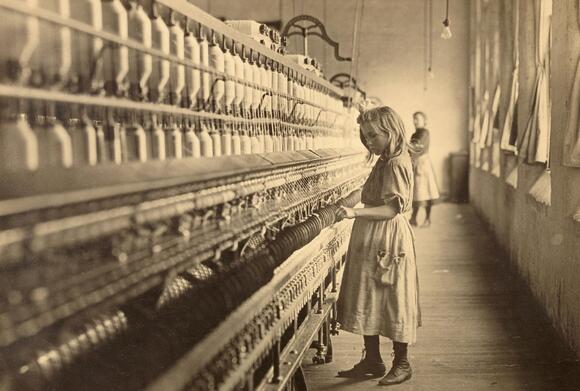
Sadie Pfeiffer, Spinner in Cotton Mill, American
Sadie Pfeiffer, Spinner in Cotton Mill is a gelatin silver print photograph taken by Lewis W. Hine in South Carolina, United States, with the negative created in 1908 and the print produced around the 1920s-1930s (Source: J. Paul Getty Museum).
Getty Search Gateway
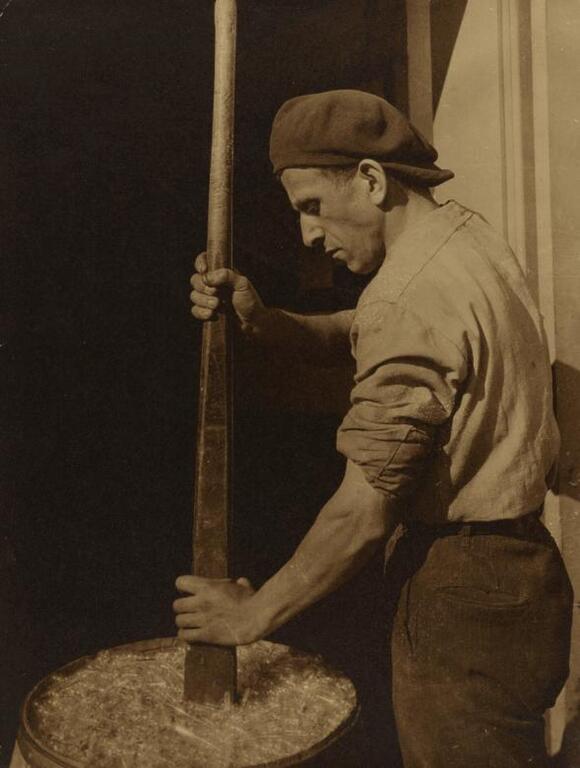
Factory Worker
Factory Worker is a gelatin silver print photograph taken by Lewis W. Hine in the United States in 1931 (Source: J. Paul Getty Museum).
Getty Search Gateway
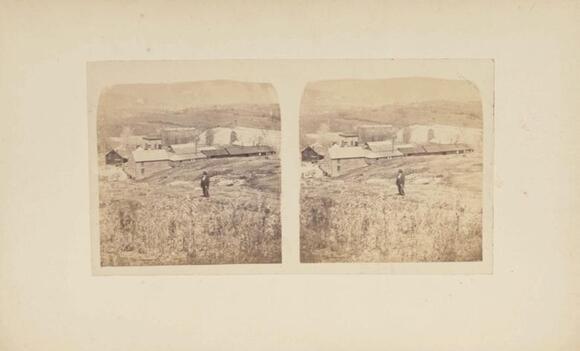
Nitro-Glycerin factory
Nitro-Glycerin factory is an albumen silver print photograph taken by Leo Daft in North Adams, Massachusetts, United States, in 1872 (Source: J. Paul Getty Museum).
Getty Search Gateway
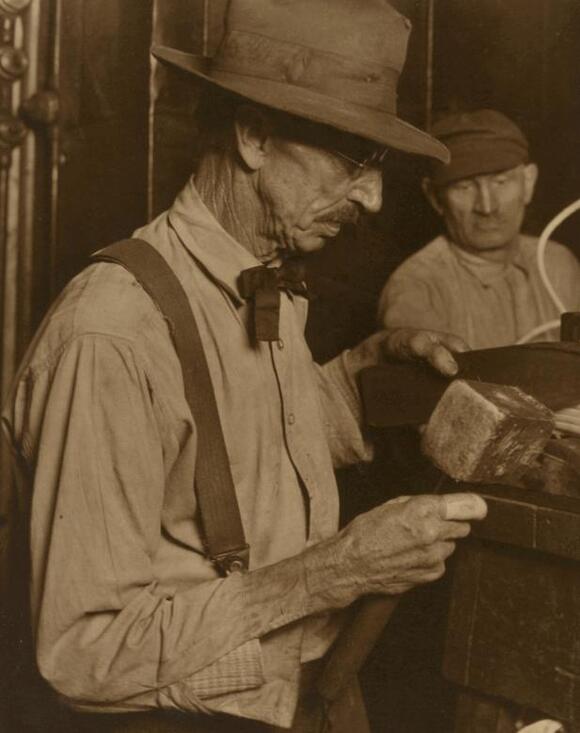
Furniture Factory Worker or Printer?
Furniture Factory Worker or Printer? is a sepia toned gelatin silver print photograph taken by Lewis W. Hine in the United States around the 1930s (Source: J. Paul Getty Museum).
Getty Search Gateway
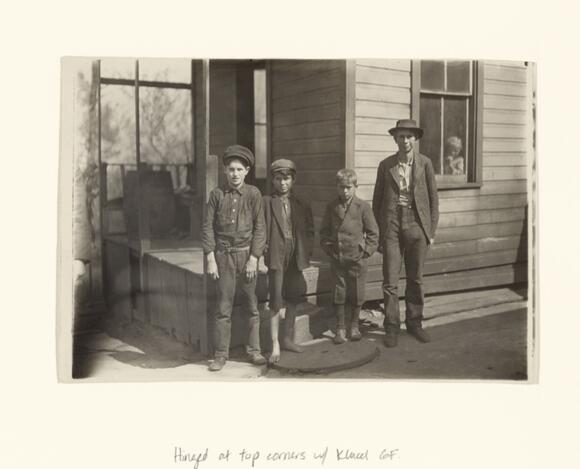
Four Workers, Glass Factory, West Virginia
Four Workers, Glass Factory, West Virginia is a gelatin silver print photograph taken by Lewis W. Hine in West Virginia, United States, in 1908 (Source: J. Paul Getty Museum).
Getty Search Gateway
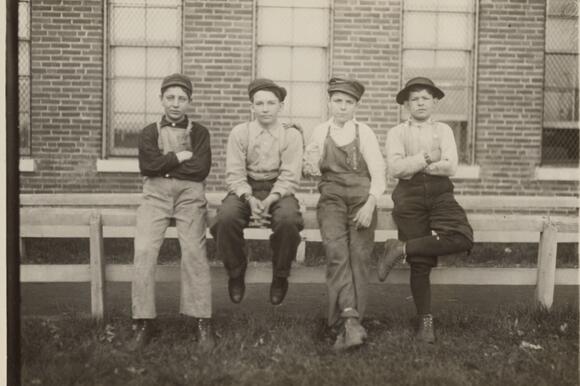
Group of boys who work at the Brown Shoe Factory, Moberly, Missouri
Group of boys who work at the Brown Shoe Factory, Moberly, Missouri is a gelatin silver print photograph taken by Lewis W. Hine in Moberly, Missouri, United States, in October 1910 (Source: J. Paul Getty Museum).
Getty Search Gateway
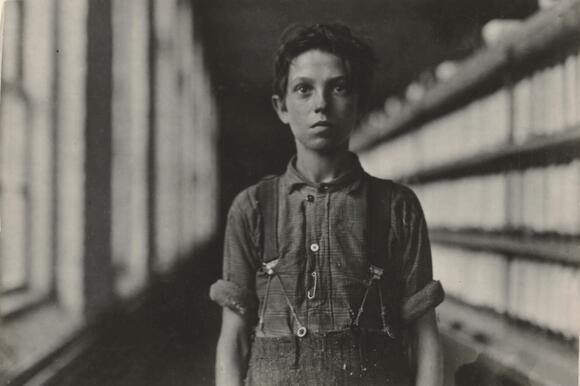
Jo Bodeon, a “back-roper” in mule room. Chase Cotton Mill, Burlington, Vermont
Jo Bodeon, a “back-roper” in mule room. Chase Cotton Mill, Burlington, Vermont is a gelatin silver print photograph taken by Lewis W. Hine in Burlington, Vermont, United States, on May 7, 1909 (Source: J. Paul Getty Museum).
Getty Search Gateway
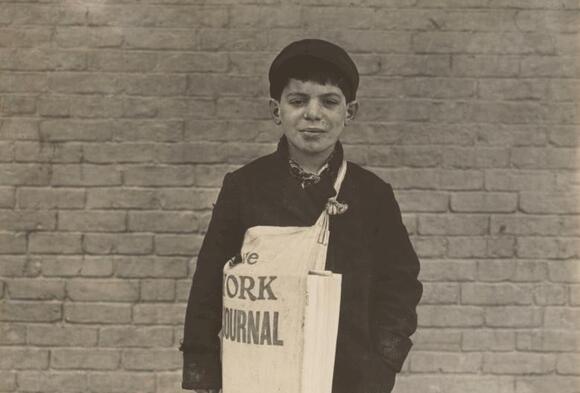
Tony Casale, Newsboy, Hartford, Connecticut
Tony Casale, Newsboy, Hartford, Connecticut is a gelatin silver print photograph taken by Lewis W. Hine in Hartford, Connecticut, United States, in March 1909 (Source: J. Paul Getty Museum). While technically not factory work itself, many print shops did employ children in their factories as well.
Getty Search Gateway
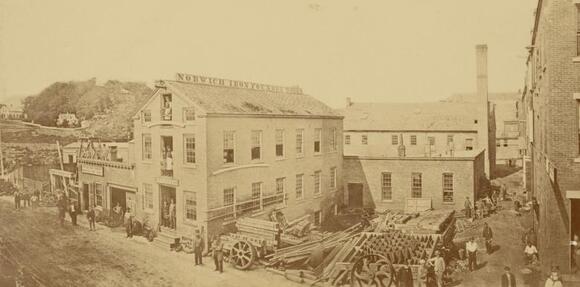
Alfred H. Vaughn’s Iron Foundry
Alfred H. Vaughn’s Iron Foundry is an albumen silver print photograph taken by F. Hacker, depicting Norwich, Connecticut, United States, around 1885 (Source: J. Paul Getty Museum).
Related:
- From 10k steps a day to brushing your teeth for 2 minutes: Everyday habits that are pretty arbitrary
- Earn extra income from home: 10 legitimate online jobs perfect for retirees
Like MediaFeed’s content? Be sure to follow us.
This article was syndicated byMediaFeed.org.