
New research links same-sex behaviors in nonhuman primates to the evolution of complex social structures
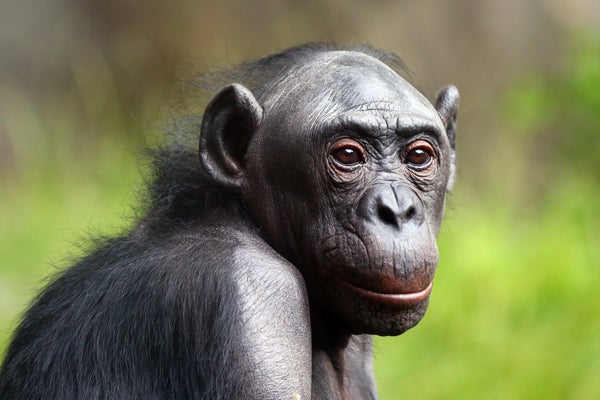
Tom Applegate/Getty Images
Same-sex behavior is common across the animal kingdom—more than 1,500 species are estimated to have been observed engaging in same-sex behavior, from spiders and nematodes to bonobos and fish. Still, scientists suspect that such behaviors are massively underreported and consequently far less understood than others exhibited by animals.
A new study by researchers at Imperial College London and published on Monday in Nature Ecology & Evolution could help shed some light. The research homes in on same-sex behavior in nonhuman primates and describes how it may have evolved to bolster these species’ nuanced social systems.
“If you want to understand the behavior of wild, complex animals, you must take into account same-sex [behavior],” says Vincent Savolainen, a professor at Imperial College London and senior author of the paper. “It’s, I believe, as important as reproductive sex, looking after kids, fighting, eating, and so on.”
In other words, same-sex behaviors in these animals is part of a “repertoire of behavior” that helps nonhuman primates navigate their societies, Savolainen explains.
The research adds to the growing body of evidence that suggests that same-sex behavior in nonhuman primates builds and reinforces social connections—meaning that these behaviors are likely evolutionarily beneficial, Savolainen argues. Importantly, in the new study, the authors emphasize that their results shouldn't be applied to humans or be used to interpret LGBTQ+ experiences.
Savolainen and his colleagues analyzed more than 1,700 past research publications to look for data on same-sex behavior in nonhuman primates. They identified 59 species with documented evidence of mounting, ejaculation, genital stimulation or other sexual behavior among individuals of the same sex.
They also looked at where these species lived, considering the climate, the number of predators in the area and other environmental factors. Certain conditions—harsh weather and higher likelihood of predation, for example—appeared to be associated with same-sex behavior in nonhuman primates. Longer-lived animals were also more likely to engage in such behaviors, as were members of species in which males and females look very different.
The study takes a “very rigorous analytical approach” to determining which traits may directly influence same-sex behaviors, says José María Gómez, a professor at the department of ecology at the University of Granada, who was not involved in the research. The findings suggest that species that live in dry environments show more sexual dimorphism and that species with more sexual dimorphism tend to live in larger groups with more complex social structures, where same-sex behaviors might be most beneficial, he says.
Savolainen hopes the research will encourage more studies of how same-sex behaviors arise in nonhuman primates and what role they play in these animals’ lives.
“There was a time where people would think this is only happening when you put two baboons in a zoo that can’t do anything else,” Savolainen says. “So, yeah, things are changing.”
It’s Time to Stand Up for Science
If you enjoyed this article, I’d like to ask for your support. Scientific American has served as an advocate for science and industry for 180 years, and right now may be the most critical moment in that two-century history.
I’ve been a Scientific American subscriber since I was 12 years old, and it helped shape the way I look at the world. SciAm always educates and delights me, and inspires a sense of awe for our vast, beautiful universe. I hope it does that for you, too.
If you subscribe to Scientific American, you help ensure that our coverage is centered on meaningful research and discovery; that we have the resources to report on the decisions that threaten labs across the U.S.; and that we support both budding and working scientists at a time when the value of science itself too often goes unrecognized.
In return, you get essential news, captivating podcasts, brilliant infographics, can't-miss newsletters, must-watch videos, challenging games, and the science world's best writing and reporting. You can even gift someone a subscription.
There has never been a more important time for us to stand up and show why science matters. I hope you’ll support us in that mission.