 Getty Images
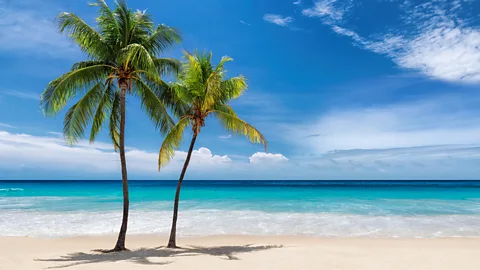
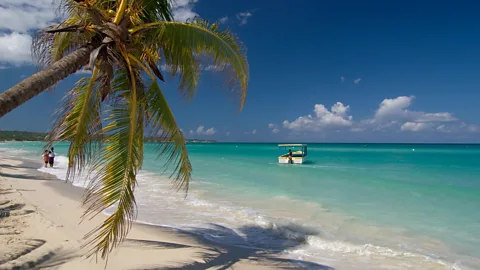
Famous for its white sand and gin-coloured waters, Jamaica is the quintessential Caribbean beach destination. But less than 1% of the island's coastline is accessible to residents.
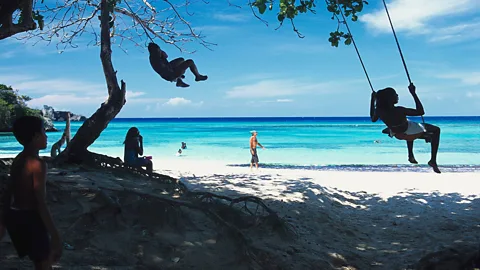
On a road trip across Jamaica's northern coast back in 2014, I stopped for lunch at Mammee Bay Beach. The broad sweep of white sand lining an iridescent, turquoise-coloured sea stopped me in my tracks. But it was the local scene that I recall the most: fishermen's boats docked after a day's work and children playing in the sand.
In 2020, that same sandy stretch was sold to a private developer to become a multimillion-dollar luxury resort and residential development. A cement wall went up and the beach was closed to the locals. Fishermen living in the nearby community of Steer Town were suddenly cut off from the waters where they had launched boats for generations. Access to the popular local swimming hole, the Roaring River, was also blocked when the government sold the surrounding land to the China Harbour Engineering Company to build private residences.
"How can you use a beach or a river for [hundreds] of years, and within a matter of days, you no longer have access to it?" said Devon Taylor, co-founder of the grassroots organisation Jamaica Beach Birthright Environmental Movement (JaBBEM).
 Alamy
Alamy
The battle for Jamaica's beaches
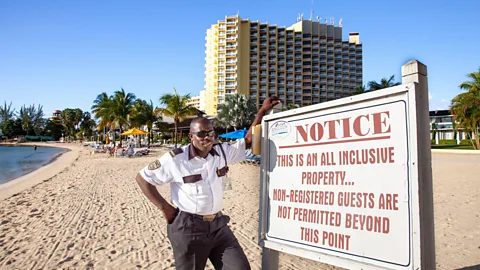
For many international travellers, Jamaica is synonymous with white-sand beaches and swaying palm trees. In 2024, a record 4.3 million tourists flocked to the island, and while many came to splash in its gin-clear waters, these same beaches are increasingly inaccessible to Jamaicans themselves. Of the island's 1,022km of shoreline, just 0.6% is public and freely accessible to local residents, according to JaBBEM.
"Our cultural ties to spaces have been decimated," Taylor said. "They're transferring our natural resources to foreign entities."
The privatisation of Jamaica's beaches has been unfolding for the past seven decades, but as the number of gated resorts and foreign-owned developments have multiplied in the past five years, the closure of locally beloved places like Mammee Bay has accelerated.
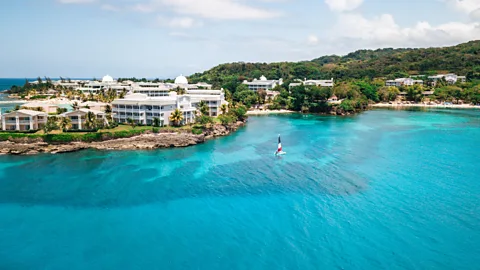
Today, only 40% of Jamaica's $4.3bn (£3.2m) tourist revenue stays in Jamaica, and all-inclusive beach resorts are booming. By 2030, 10,000 new rooms are expected across the island, many of which – including a 1,000-room Hard Rock Hotel and the 1,350-room Moon Palace The Grand in Montego Bay – are located on the coast and will further restrict Jamaicans' access to their own shoreline.

 Alamy
Alamy
Much of this phenomenon is due to a relic from the nation's near-century as a British Crown colony – the 1956 Beach Control Act, that gives the state ownership of the coastline and stipulates there's no public right for Jamaicans to swim or access the beach without a license. That law continues to enable the government to transfer coastal areas into private hands.
"When you cut off Jamaicans from the sea, from traditional fishing practices and livelihoods, you're killing the community – within a generation or two, there will be no more community," said Marcus Goffe, a lawyer representing JaBBEM.
It wasn't until JaBBEM formed in 2021 that Jamaicans' battle for beach access gained traction. Residents are increasingly calling for the repeal of the Beach Control Act and there are currently five court cases seeking to secure beach access for Jamaicans across the island. These include Mammee Bay Beach; Providence Beach in Montego Bay (where Sandals Resorts International plans to build overwater bungalows); Bob Marley Beach, whose Rastafari communities are fighting a $200m (£149m) luxury resort; Little Dunn's River and the Blue Lagoon, which has prohibited local rafting businesses from operating since August 2022.
"In Montego Bay, there are maybe four public beaches left," said Monique Christie, a JaBBEM community outreach coordinator. Christie is also one of 10 plaintiffs who recently filed suit against Sandals Resorts, which is aiming to privatise Providence Beach, where she and her family have swam since she was a child.
 Lebawit Lily Girma
"This is not just a matter of rights; communities like ours are very much tied to our land and our natural environment – our seas, the air, the coastline, the flora and fauna," Goffe said.
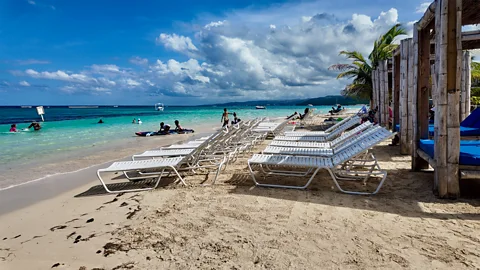
When I returned to Jamaica for an island-wide road trip in December, just six weeks after Hurricane Melissa struck the island, I found a majority of beaches on the western and northern coastlines were either inaccessible due to all-inclusive resorts occupying the space, or now had an entrance fee – including Mammee Bay. I paid a $1,200 Jamaican dollar (£5.60/$7.60) fee to access the beach through the on-site Bamboo Blu restaurant. At the few free beautiful beaches along Jamaica's northern coast, such as Dead End Beach and Discovery Bay, families with children enjoyed the sound of reggae from an on-site bar and restaurant, while fishermen cleaned and sold their catch.
In major tourism hubs such as Montego Bay and Ocho Rios, guests at gated resorts are increasingly separated from these scenes of local life.
How to visit responsibly
As Jamaica rebuilds following Hurricane Melissa's destruction last autumn, Taylor recommends that visitors avoid resorts that only allow private guests access to the beach and not Jamaicans themselves. "That's a very simple ask," he says. "Do your research, spend your tourism dollars wisely and engage local spaces in Jamaica."
 Alamy
Alamy
Fortunately, there are still plenty of ways to enjoy an idyllic Jamaican beach holiday while connecting with the local culture and supporting area businesses. On Seven Mile Beach in Negril, a stay at the locally owned Charela Inn places you steps from the public beach, but is also an easy walk from jerk chicken stands on Norman Manley Boulevard and local artisans at the crafts market. A weekly afternoon drum circle at Wavz Beach Club with master drummer Calbert Brooks or a live reggae band at the Jamaican-owned Boat Bar are great opportunities to experience local culture.
A two-hour drive south of Negril, Treasure Beach's black-sand beaches are also open to the public and lined with a handful of locally owned hotels and upscale villas, such as My Irie Escape, that source their food from Jamaican farmers and fishermen and employ local tour guides.
Taylor recommends looking into Jamaican-run Airbnb rentals around the island, too, including in Kingston, Jamaica's underrated capital and cultural hub. Jamaica's rugged, tranquil east coast is home to a number of intimate Jamaican-owned boutique hotels, such as Sea Cliff Resort. The guesthouse is just a 15-minute drive from Winnifred Beach, one of the island's prettiest public beaches.
A 45-minute drive east of Kingston leads to the public Bob Marley Beach, which was originally a sanctuary for Rastafari families who fled from state persecution in the late 1960s. It's also where the legendary reggae artist lived for a time and created music alongside reggae icons Peter Tosh and Bunny Wailer.
 Alamy
Alamy
Camala Thomas, a third-generation Rastafarian resident whose grandmother was among the first to settle here, runs a small beachside restaurant called Macka's Kitchen and often shares the area's history with travellers. When plans were drawn up to build a $200m luxury resort nearby, she and her family joined a lawsuit to ensure access to the beach remains public. "It feels like a big betrayal [from the government]," she says.
But for Christie, the issue is as simple as allowing Jamaicans to access the same cerulean seas that lure so many travellers. "In Norway, the forest belongs to everyone, you don't fence it off", she says, referencing allemannsretten, the public right to roam the outdoors freely, as long as you leave no trace. "Why should the sea and beaches be different in Jamaica?"
--
If you liked this story, sign up for The Essential List newsletter – a handpicked selection of features, videos and can't-miss news, delivered to your inbox twice a week.
For more Travel stories from the BBC, follow us on Facebook and Instagram.