The Campus AI Crisis
Young graduates can’t find jobs. Colleges know they have to do something. But what?
By
Photo-Illustration: Intelligencer; Photos: Getty
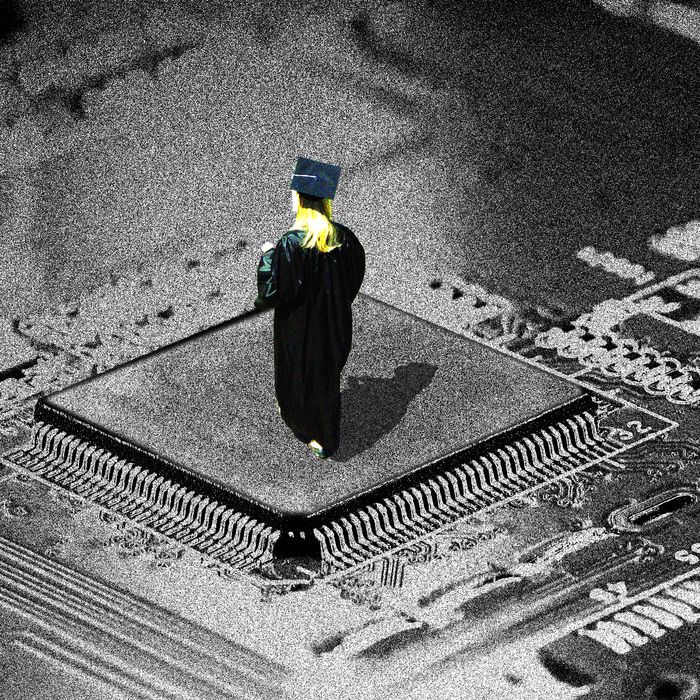
Photo-Illustration: Intelligencer; Photos: Getty
Photo-Illustration: Intelligencer; Photos: Getty
This article was featured in New York’s One Great Story newsletter. Sign up here.
When I left for college in the fall of 1991, the internet era was just beginning. By sophomore year, I received my first email address. By junior year, the first commercial web browser was released. The summer after graduation, I worked as a reporter at the Arizona Republic covering the internet’s rise in our everyday lives, writing about the opening of internet cafés and businesses launching their first websites. I was part of an in-between class of graduates who went off to college just before a new technology transformed what would define our careers.
So when Alina McMahon, a recent University of Pittsburgh graduate, described her job search to me, I immediately recognized her predicament. McMahon began college before AI was a thing. Three and a half years later, she graduated into a world where it was suddenly everywhere. McMahon majored in marketing, with a minor in film and media studies. “I was trying to do the stable option,” she said of her business degree. She followed the standard advice given to all undergraduates hoping for a job after college: Network and intern. Her first “coffee chat” with a Pitt alumnus came freshman year; she landed three internships, including one in Los Angeles at Paramount in media planning. There she compiled competitor updates and helped calculate metrics for which billboard advertisements the company would buy.
But when she started to apply for full-time jobs, all she heard back — on the rare occasions she heard anything — was that roles were being cut, either because of AI or outsourcing.