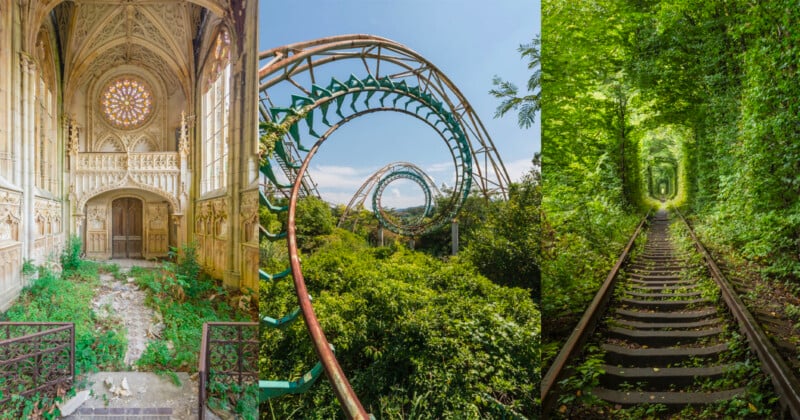
From zombie apocalypse movies to alien TV shows, there is a morbid obsession with what it would be like if humans vanished from the Earth.
Prominent abandoned photographer Romain Veillon taps into this fascination. He travels all across the world in search of locations that have been forgotten — and are slowly being reclaimed by nature.
“The title, The World Without Us, is a perfect illustration of what I wanted to show,” Veillon says in reference to his new book, Green Urbex 2.
“I wanted to convey an environmental message in my book by showing what the world would be like if we weren’t there anymore, meaning that if we continue on this way, humanity’s disappearance could be one of the consequences.”
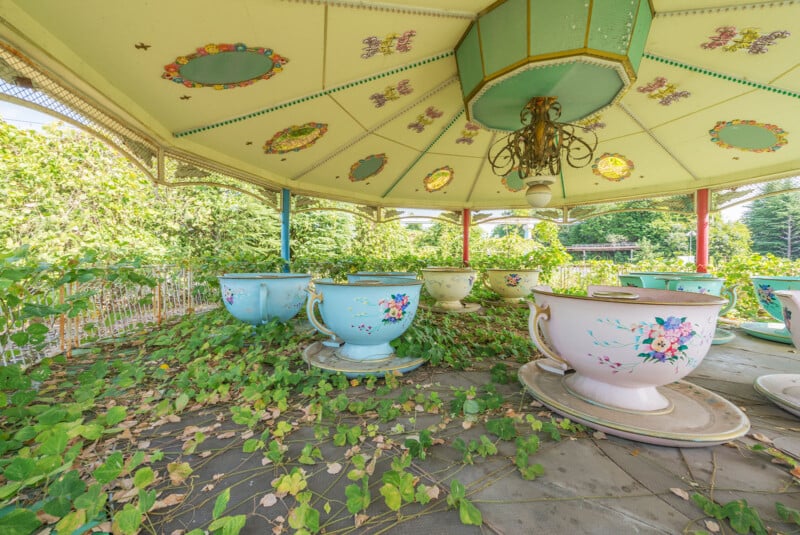
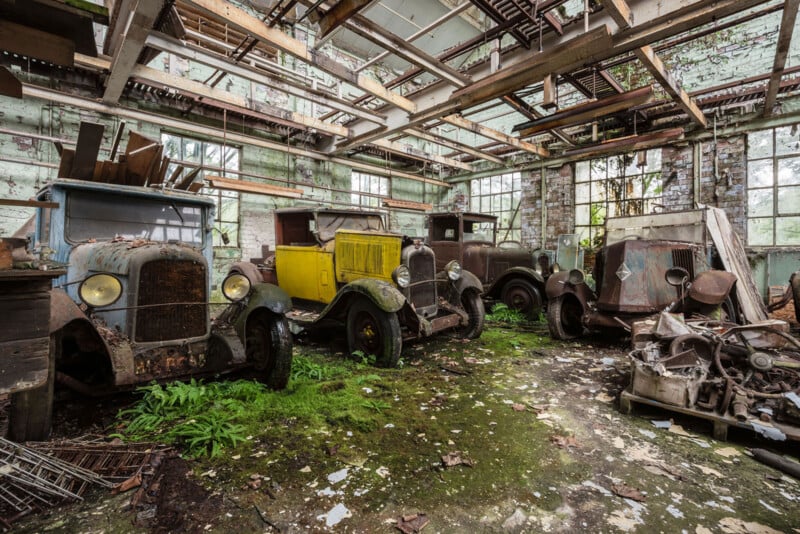
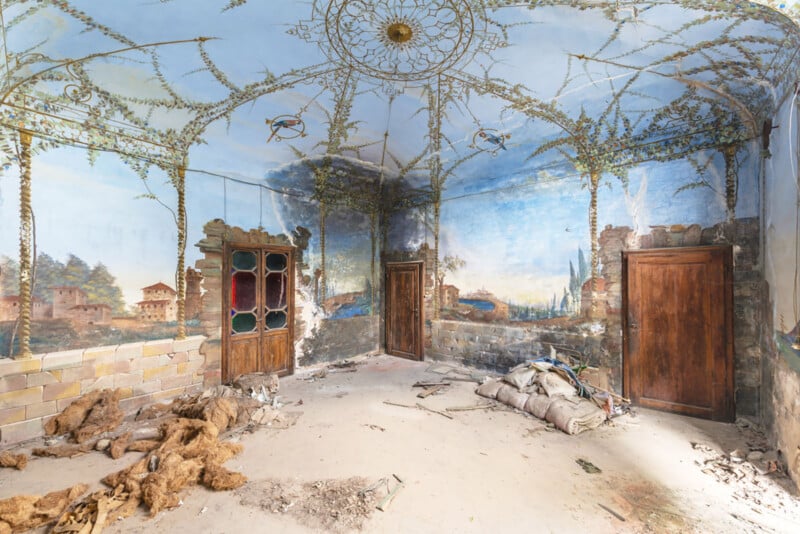
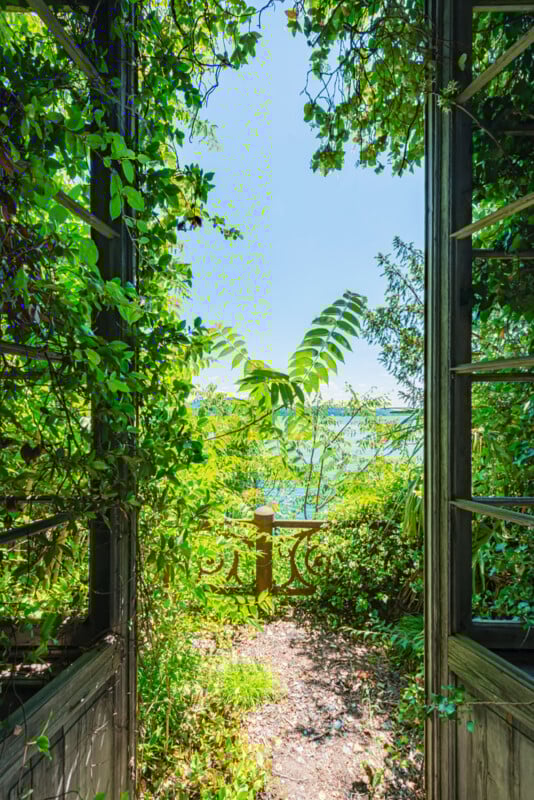

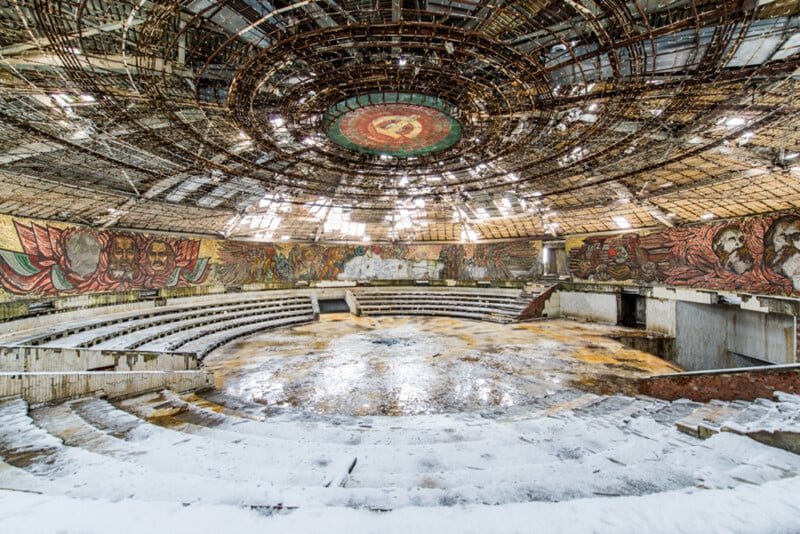
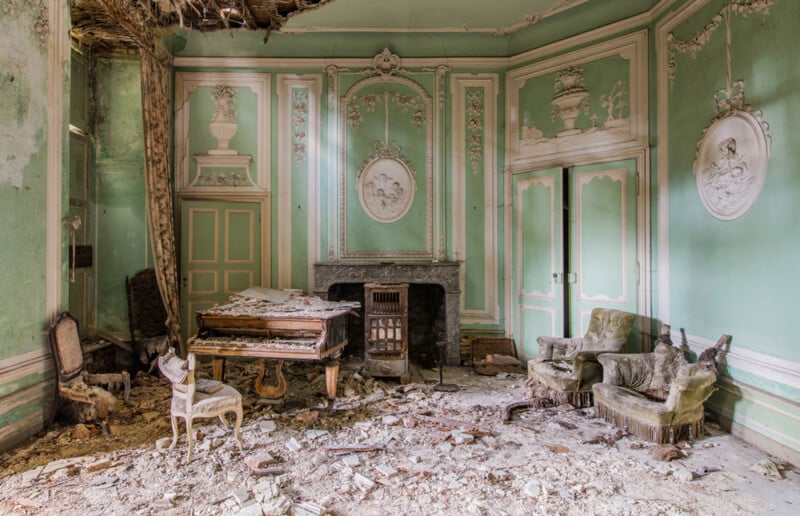
The French photographer explains to PetaPixel that he split the book into three sections that capture varying stages of decay: the first shows abandoned places that remain intact as if humans recently vanished, just some dust gathering on the floor; the second part shows walls cracking as these places start to crumble; in the third and final section nature reclaims what humans made and the viewer can only guess there was ever any intelligent life there.
“That’s what I prefer working on, when ivy takes over everything,” Veillon explains. “We can see what the world could look like if humans disappeared from Earth. We are all fascinated by this post-apocalyptic vision.”
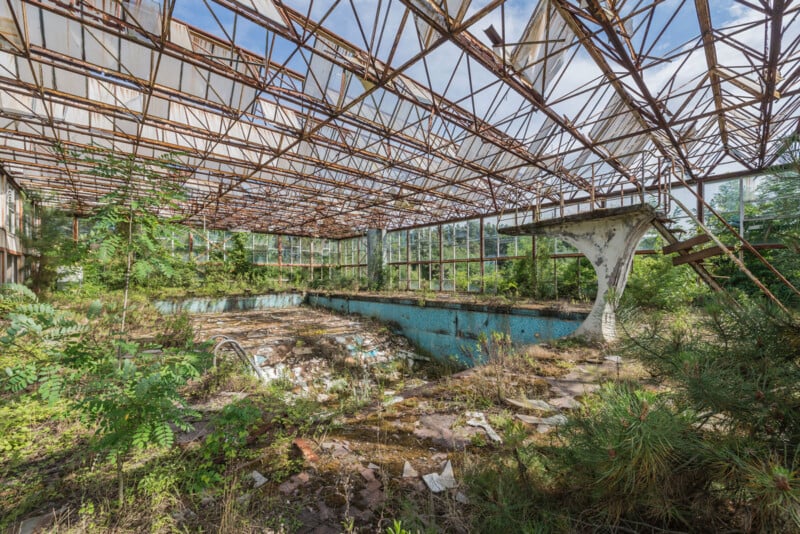
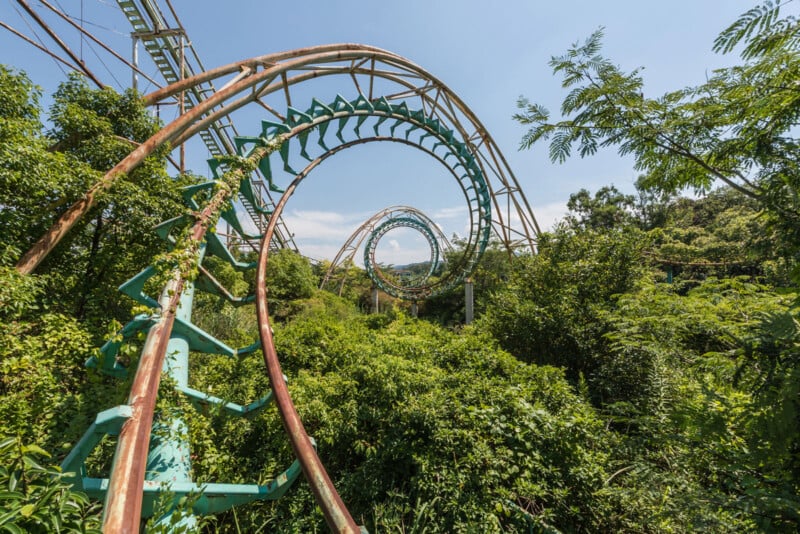
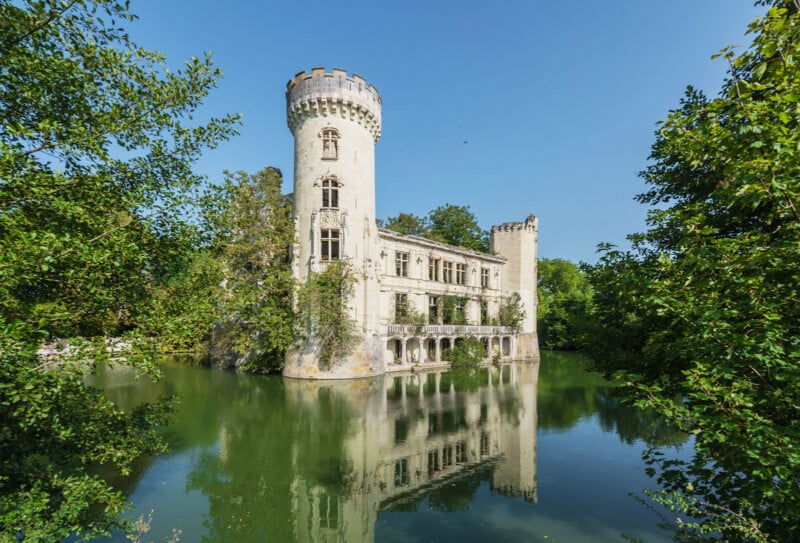
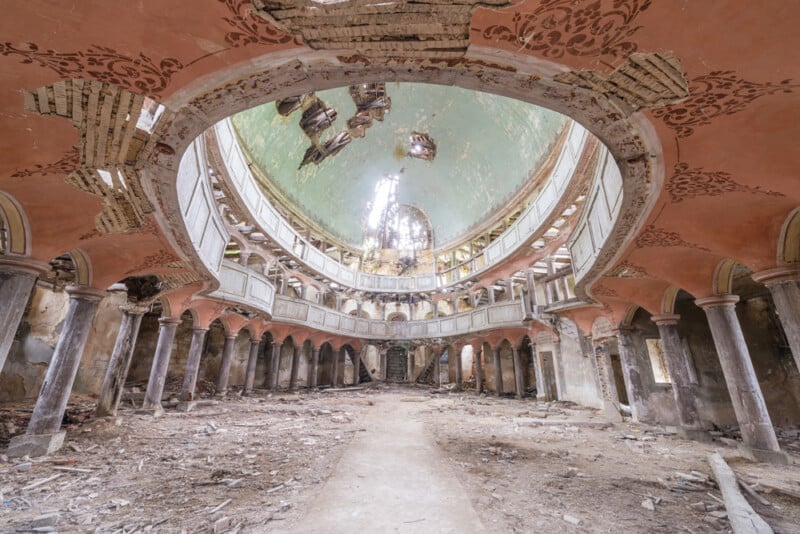

Veillon traveled to Myanmar, Namibia, Ireland, Georgia, Japan, Guyana, Portugal, and many more destinations as he explored houses, castles, palaces, churches, factories, theme parks, hospitals, railways, greenhouses, and schools.
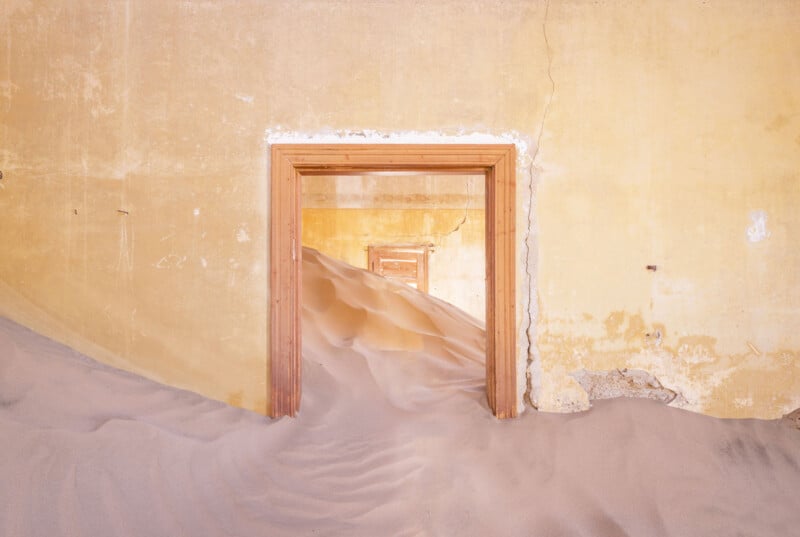
“Without a doubt, Kolmanskop was my favorite,” the photographer says. Kolmanskop is a ghost town in the Namib Desert of Namibia, which flourished at the beginning of the 20th century after diamonds were discovered there. In a classic boom and bust tale, folks moved out as the diamond field depleted and found more fruitful pastures nearby.
“I was there for a week shooting, the atmosphere is somehow unreal and magical, like time has stopped there years ago,” Veillon says of Kolmanskop.
“That is my most well-known photographic series and it is also the perfect illustration of what I want to show. Moreover, it is a unique place where you feel you could be on another planet or even on another timeline where mankind has disappeared.”
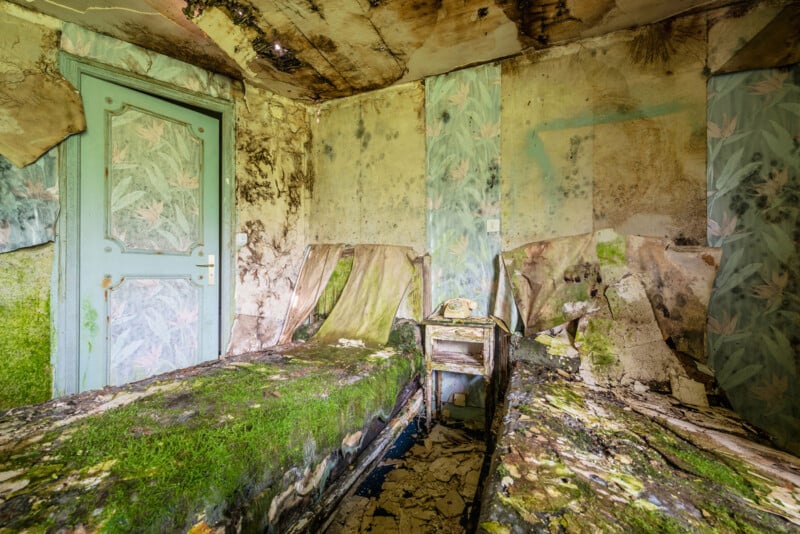


Veillon says he’s been fascinated by abandoned photography since he used to explore a decaying truck factory close to his grandmother’s house, where he would stay each summer.
“I would imagine that, like many people, discovering the decaying house at the end of the street is a memory we all have deep inside of us,” he says.
“When I encounter such a place, my goal is that everybody can travel in the past with me and make up the stories they decide they want to: Why was this place abandoned? What happened to the former owners? What used to happen in this room? People make their own kind of answer.”
“It makes them go into their imaginary world and become the hero of their own adventure,” he continues. “Each story will be different — and that’s what I love. To me, my photos act as a new kind of Memento Mori; they are here to remind us that everything has an end, and that we should enjoy it while it lasts.”

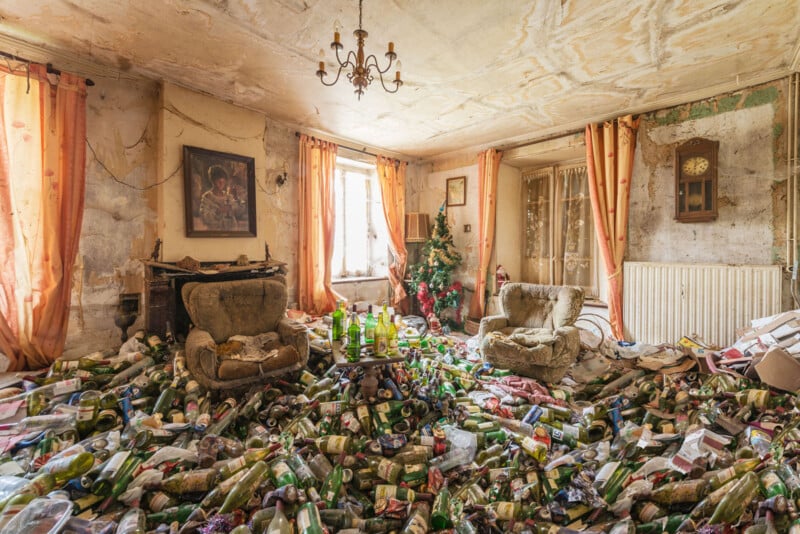
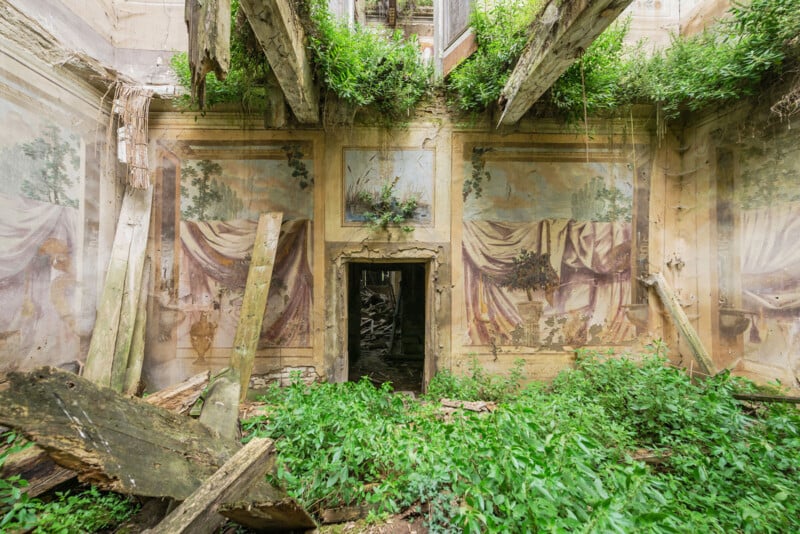
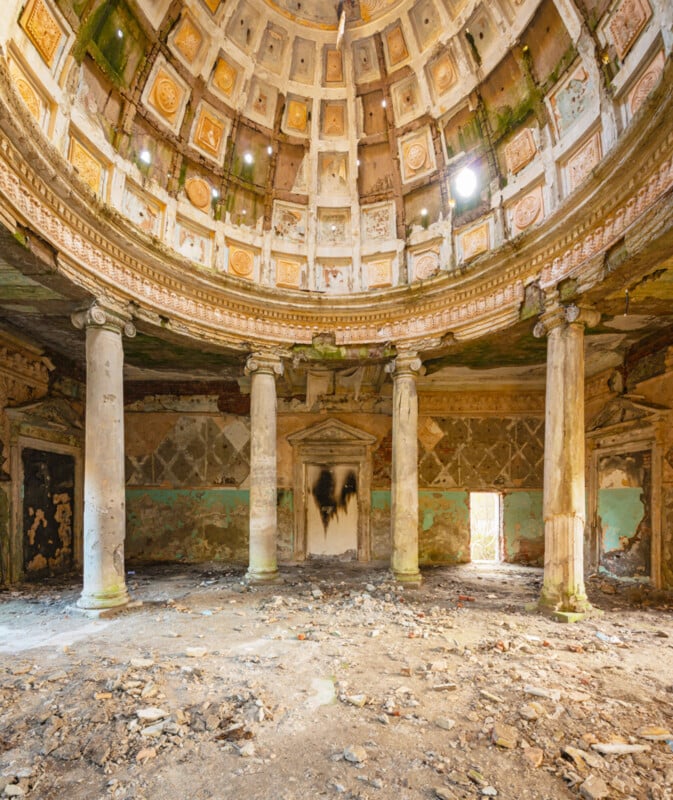

Veillon’s book, Green Urbex 2: The World Without Us, is available at bookshops in France, including Amazon. He is still searching for an English publisher to buy the rights — (if you are such a publisher, then please contact Veillon).
More of his abandoned photography can be found on his website and Instagram.
Image credits: Photographs by Romain Veillon