Ibram X. Kendi Can’t Separate His Fame From How to Be an Antiracist
His new book deserves to be judged on its own terms.
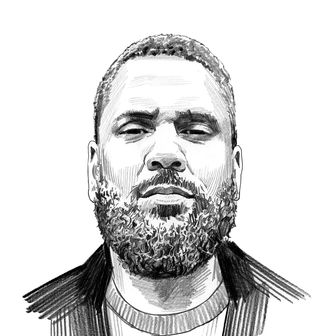
By , a features writer for New York where he has covered race, politics, culture, and law enforcement

At Capitol Hill Books in Washington, D.C. Photo: Nate Palmer for New York Magazine
At Capitol Hill Books in Washington, D.C. Photo: Nate Palmer for New York Magazine
This article was featured in New York’s One Great Story newsletter. Sign up here.
People cast aspersions on me as a director in order to cast aspersions on my scholarship,” says Dr. Ibram X. Kendi, “because they do not see a direct way to undermine my scholarship.” Huddled in a storage room inside Founders Library at Howard University, the 43-year-old historian, speaking softly and deliberately, is reflecting on the roller-coaster arc of his fame. Nearly seven years ago, his 2019 book, How to Be an Antiracist, was seized upon by liberals as a sacred text, rocketing up the best-seller lists and earning Kendi, already a National Book Award winner for Stamped From the Beginning: The Definitive History of Racist Ideas in America, a reputation as a racial-reconciliation guru. Written as he was being treated for stage-four colorectal cancer, the book is infused with a spirit of personal transformation. (“The heartbeat of antiracism is confession,” Kendi writes in an oft-cited passage.) Both its language and its stakes felt biblical after the killing of George Floyd.
Yet today, How to Be an Antiracist is widely remembered as a self-flagellating manual for bleeding hearts. This baffles Kendi, for whom the book’s thesis — that “racist” is not a pejorative identity, like “evil,” but a descriptive term that should be applied to policies according to whether they shrink or widen racial disparities — is focused on material effects. “I don’t know how anyone could read any of my books” and think of them as self-help, Kendi says. But the apparent simplicity of its “this or that” labeling system proved irresistible to institutions eager to virtue signal their way out of fixing inequality. As antiracism became a corporate DEI buzzword, Kendi was excoriated by criticism across the ideological spectrum. Journalist Tyler Austin Harper accused him of peddling “self-help for white people that runs interference for corporations and wealthy universities.” The conservative strategist Christopher Rufo branded Kendi the chief exponent of “critical race theory,” the GOP’s bogeyman for the 2022 midterms.
Kendi is tall with enviable posture and militant about his health, keeping to a strict vegan diet and exercise regimen. He is cancer free eight years after being given a 13 to 15 percent chance of surviving the next five, but perils still lurk. “One thing my doctors say I have to do is manage my stress,” he says calmly but with a hint of an edge. In September 2023, the Center for Antiracist Research at Boston University, where Kendi was director, began to publicly disintegrate. A gleeful pile-on ensued; pundits claimed the center, which had launched in 2020 on the strength of Kendi’s celebrity, had produced an underwhelming amount of original scholarship for having attracted more than $50 million in funding. It was absurd, critics argued, that an initiative so flush should have to abruptly lay off half of its staff to remain solvent. Some took employee allegations of mismanagement to mean that Kendi was a “grifter.”
The evidence tells a less exciting story. A BU inquiry found Kendi had done nothing sketchy with the funds: Most were held in an endowment he could not access. He has admitted that launching during a pandemic made “management and culture building more challenging.” “We made missteps,” he wrote on X. Two years later, as Americans’ zeal for racial justice faded alongside high-dollar donations, the center was dissolved and Kendi announced his move to Howard — a homecoming of sorts, the HBCU alum calls it — where he heads a more modestly scaled hub for researching racial issues. The transition, since he started last summer, has been overwhelmingly pleasant. On a snowy March afternoon, colleagues across campus greet him warmly.
If Kendi is right that detractors magnify his shortcomings to discredit his scholarship, the biggest test will be his new book, which seems destined to be judged less by its content than by Kendi’s own baggage. But Chain of Ideas: The Origins of Our Authoritarian Age deserves to be analyzed on its merits. Across more than 500 globe-spanning pages, Kendi argues that the “Great Replacement,” a racist conspiracy theory popularized by French novelist Renaud Camus in 2011, is the dominant political theory of our time. The idea, that elites are conspiring to replace rightful citizens (usually white) with disadvantaged usurpers (usually not), was born from the increasing anxiety among white Europeans over Muslim immigration from Africa and the Middle East, but it has been actively fueled by far-right, power-hungry political aspirants. Kendi is certainly not the first to remark on the theory’s influence. But he argues that its reach can be seen in gang roundups in modern-day El Salvador, Israel’s evisceration of Gaza, and Nazi Germany. (It’s a compelling, if not always convincing Kendian analysis; the historian has been criticized for stretching the definition of racism to encompass too much as well.) In many cases, Kendi argues, the disaffection of vastly different populations is a product of recent financial crises, even as it is typically redirected at immigrants or minorities; in each case, the endgame for Great Replacement politicians is authoritarianism, which they recast as protection.
The zero-sum misconception that “white people lose out as peoples of color gain,” as he writes, encourages people to ignore the oligarchs responsible for their problems and embrace a society like Vladimir Putin’s Russia, where people “fight for privileges provided by dictators instead of power provided by democracy.” The most harrowing sections of the book connect the rhetoric of right-wing political leaders to the actions of mass murderers like Anders Behring Breivik and Dylann Roof. It’s hard to come away from Chain of Ideas without a firm conviction that the most violently disturbed people in the world are being sicced on us by elected leaders.
Other elements of his scholarship are more disputable. The effort to cast El Salvador president Nayib Bukele’s targeting of gangs as a Great Replacement strategy requires some squinting, for example. Gang violence in El Salvador is an actual problem, and the country really did have the world’s highest murder rate before Bukele was elected. But he is placed in the same broad category as Italy’s Giorgia Meloni, who drummed up a Great Replacement panic over migrants while crime rates in Italy were plummeting. (Kendi clarifies that Bukele-style autocracy is “the future” of the strategy.) When I question his claim that zero-sum thinking about race “inevitably leads to ‘Great Replacement’” theorizing, he sits back and gazes at the ceiling before reversing his formulation. “What I probably should have stated was ‘Great Replacement’ theory inevitably leads to zero-sum thinking,” he concedes.
Part of what stood out about Kendi’s responses to the research-center fallout was his tendency to claim that aspersions of his motives were rooted in racism — which might have been true but also reads like deflection. The Kendi with whom I cross the Harriet Tubman Quadrangle, taking in the Cramton Auditorium where Malcolm X debated Bayard Rustin in 1961, seems clearly more humbled, both by the history that surrounds us and the scale of the crisis he researched for his book. “I think there’s this overinflated sense that Donald Trump is behind the current state of our global politics,” he says, and “a sense that racism is primarily an American problem, which to me is another myth.” The worldview Trump espouses, including his own spin on Great Replacement, was “learned from others, and I think it’s important for Americans to see that and realize it.” Kendi writes that the attacks against him fueled his research, but he rejects my suggestion that years of having his character impugned might make him skeptical of public criticism — or even reflexively defensive. “In ways I don’t feel like I had to do previously, I’m regularly trying to interrogate decisions I’m making,” he says. “But if I am making them based on public expectations as opposed to curiosity, then I feel like I’m not truly being a scholar.”