

When Pamela Hogan phoned 911 from her Seattle apartment, she was suffering from knee pain so intense she couldn’t stand up. She had been trapped in her bed all day, unable to eat, drink or get to the bathroom. Worried and alone, Hogan thought an ambulance would come quickly and take her to the hospital.
She was mistaken.
Seattle no longer is capping ambulance wait times for certain 911 patients, tracking those waits or penalizing its ambulance contractor when they run long.
Rather than send Hogan help right away, the Fire Department routed her to a nurse in Texas who determined her crisis didn’t need immediate attention.
So the 71-year-old, a retired executive assistant who loved cooking casseroles, watching “Judge Judy” and listening to The Pointer Sisters, waited one hour for a nurse-ordered ambulance, according to call recordings and court documents.
Two hours. Three hours. Four hours, phoning 911 back several times and telling the Fire Department about a heart condition. Ten hours.
By the time an ambulance arrived at Hogan’s building, it was the middle of the night and she wasn’t answering her phone. The ambulance left without her.
Weeks later, her body was found decomposing on the floor of her bedroom.
It’s not clear Hogan’s wait is what killed her, but her estate has sued and her experience raises questions about Seattle’s relationship with its for-profit ambulance contractor, American Medical Response, which also provides the city’s 911 nurse line.
“More checks and balances and accountability need to happen,” said Josephine Ensign, a professor emeritus at the University of Washington School of Nursing who called Hogan’s case concerning and upsetting. “Seattle can do better.”
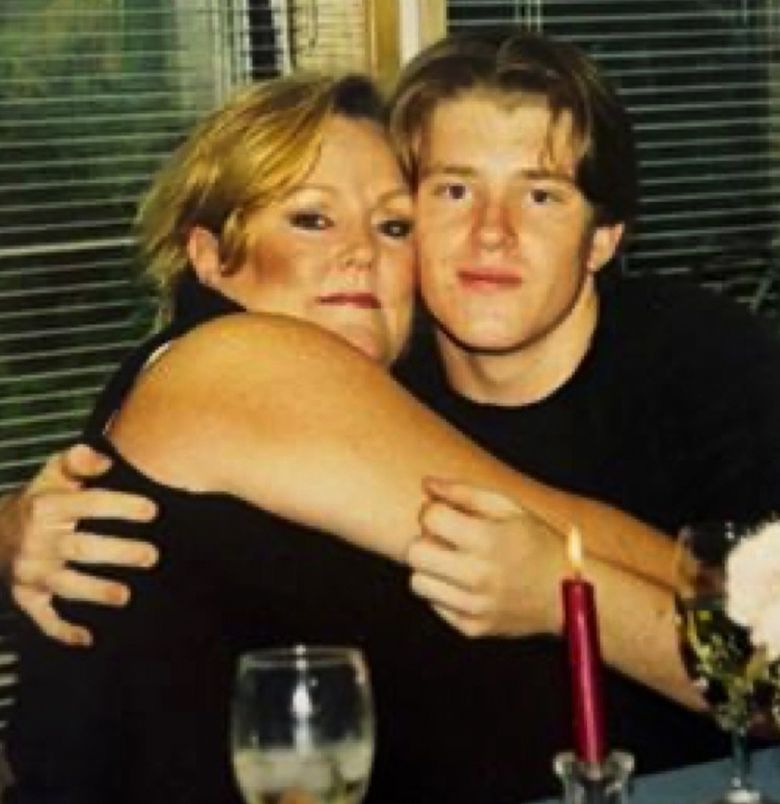
Pamela Hogan and her son Alex Hogan, in an undated photo. (Courtesy of Alex Hogan via Evergreen Personal Injury Counsel) ( / )
Seattle and AMR have denied the lawsuit’s wrongful death allegations and say the nurse line is generally working as intended. They say it’s reducing strain on hospitals and ambulances by diverting low-level patients to more appropriate care.
But most Seattle callers triaged by the nurse line are still being sent to hospitals in AMR ambulances, rather than being diverted, program data reveals. And officials have exempted those nurse-ordered rides, like Hogan’s, from city standards that normally require the company’s ambulances to arrive on time.
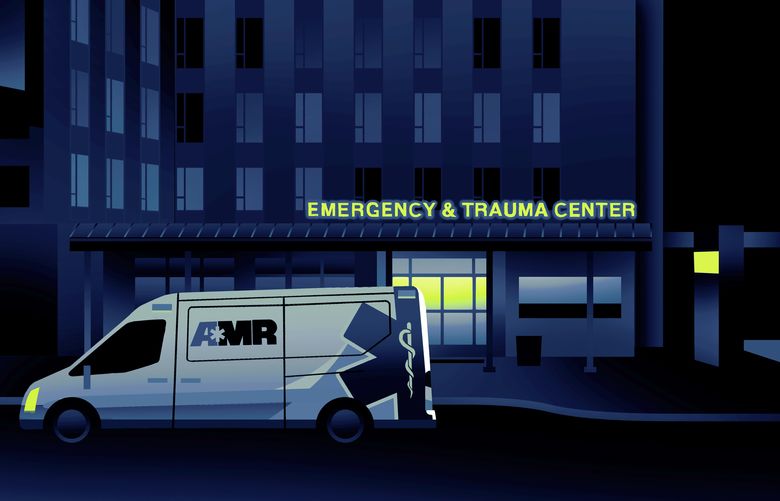
(Illustration by Jennifer Luxton / The Seattle Times)
It’s possible that Hogan’s experience was an aberration. But the city stopped tracking ambulance waits like hers in 2022, so officials have no way to know.
To examine these changes, The Seattle Times plumbed public records, analyzed Fire Department data and spoke to about two dozen experts and advocates across the nation, including 911 administrators, emergency medicine physicians and professionals, telephone triage specialists and health care watchdogs.
Many said Seattle’s system should be reviewed for transparency and safety. Some said that could be especially important as rising health care costs and federal cuts to social services threaten to increase reliance on 911.
“It does seem incredibly important to get to the bottom of how something like this could happen,” said Harold Pollack, a public health policy professor at the University of Chicago who co-directs the university’s Urban Health Lab.
When The Times shared results from its investigation with the Fire Department and AMR, including in a list of more than 125 bullet points, they declined to address any specific points, citing the litigation over Hogan’s death.
A Fire Department spokesperson said The Times’ reporting misrepresented the Nurse Navigation program but didn’t identify any errors. A spokesperson for AMR said the reporting was inaccurate but also didn’t identify any errors.
The audio clips in this story have been edited for brevity and clarity.
Hogan lived on the seventh floor of an affordable housing complex for seniors. Visitors must be buzzed into the lobby by a resident or staffer, and the office is closed at night, a manager said. Hogan had told the Fire Department and AMR to have their crews break her door down, if necessary. That didn’t happen.
The King County medical examiner’s office found receipts and food items dating to the days before Hogan called 911, “with no evidence of activity” afterward. The office reported the cause of death as probable heart disease and the time of death as April 9, the same day AMR left the voicemail on Hogan’s phone.
Phone records obtained in the lawsuit show calls from Hogan’s phone on April 10 to bank customer service numbers and a medical clinic, suggesting she was still alive then. The records show no calls after April 10. It’s hard to know exactly when and how she died.
In court papers filed last month, AMR asked a judge to dismiss the lawsuit’s claims against the company, arguing Hogan’s estate can’t demonstrate AMR’s conduct was the proximate cause of her death. An attorney for AMR cited the April 10 calls and the length of time before Hogan’s body was found.
Hogan’s son, Alex, says he was in touch with his mother in the days before she called 911 but didn’t hear from her on April 8 or in the weeks after.
Her estate’s lawsuit alleges her ambulance wait was too long, accusing Seattle and AMR of gross negligence.
“Ms. Hogan dialed 911 because she was having an emergency that required emergency services to transport her to the emergency department,” the active King County lawsuit alleges. “Defendants breached the duty of care.”
No one would want their mother to experience what Hogan went through, said Pollack, from Chicago. Yet Hogan’s 10-hour ambulance wait was acceptable under the city’s amended contract with AMR. And it could happen again.
The city signed a new five-year contract with AMR in September that continues to exempt nurse-line ambulance waits from contractual time standards.
New Seattle Mayor Katie Wilson’s office declined to comment for this story, citing the Hogan lawsuit. In December, a spokesperson for then-Mayor Bruce Harrell said Harrell couldn’t comment on the case, except to express sympathy to Hogan’s family. Nurse Navigation has consistently received positive survey reviews, the spokesperson said.
Still, Seattle’s setup alarms experts like Patricia Kelmar, health care campaign director at the Public Interest Research Group, a national consumer advocate.
Giving patients various ways to access care makes sense, but when someone needs an ambulance, they should get one in a timely manner, she said.
“If 911 isn’t going to take you seriously,” Kelmar asked, “what else is there?”
This coverage is partially underwritten by Microsoft Philanthropies. The Seattle Times maintains editorial control over this and all its coverage.
COMING UP:
How Seattle’s system compares Some cities have stricter protections regarding 911 ambulances, nurse lines > Coming Monday
Call 911, Uber to the ER? Why you might not get an ambulance in Seattle > Coming Tuesday
CREDITS
Reporter: Daniel Beekman
Project editor: Molly Harbarger
Project coordinator: Laura Gordon
Illustrations: Jennifer Luxton
Design and development: Ava Mandoli and Frank Mina
The Seattle Times closes comments on particularly sensitive stories. If you would like to share your thoughts or experiences in relation to this story, please email the reporter or submit a letter to be considered for publication in our Opinion section. You can read more about our community policies here.
Daniel Beekman: 206-464-2164 or dbeekman@seattletimes.com. Daniel Beekman is a reporter at The Seattle Times, where he covers politics and communities, telling stories that explain how government decisions affect people across Washington.