The sight of an orca carrying her dead calf on her back for 17 days captured global attention in 2018. Scientists worldwide watched as Tahlequah pushed her baby through the Pacific waters, seemingly unable to let go. Meanwhile, in the depths of Tanzania’s forests, researchers have documented elephants gathering around the bones of deceased relatives, gently caressing remains with their trunks in what appears to be quiet remembrance.
These profound moments offer a window into something science is only beginning to understand. While humans have long believed grief belongs exclusively to us, mounting evidence suggests the emotional landscape of loss extends far beyond our species. From chimps who die of heartbreak to dolphins who refuse to abandon their companions, animals are teaching us that the experience of mourning might be more universal than we ever imagined. So let’s dive into this emotional world and discover what animal grief reveals about the nature of loss itself.
The Science Behind Animal Grief Is Still Evolving
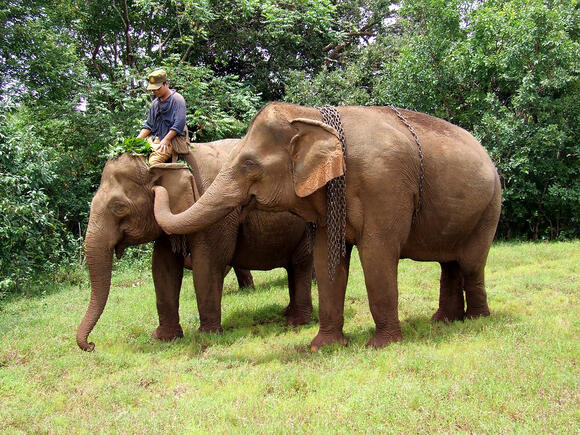
Barbara King, who wrote a book titled “How Animals Grieve,” explained that we can define grief by a change in essential functions – a departure from the usual pattern of eating, sleeping and socializing – that is triggered by death. To qualify as grief, surviving individuals who knew the deceased must alter their behavioral routine. They might eat or sleep less, or act listless, or agitated. They might attend their friend’s corpse.
Empirical research provides striking examples of non-human animal responses to death, which look very much like manifestations of grief. However, recent philosophical work appears to challenge the idea that animals can grieve. The scientific community remains divided on whether animals truly experience grief as humans understand it, or if these behaviors stem from confusion, instinct, or simple attachment responses.
A growing body of scientific evidence supports the idea that nonhuman animals are aware of death, can experience grief and will sometimes mourn for or ritualize their dead. Yet researchers acknowledge the challenge of studying something so deeply emotional and internal across species barriers.
Elephants Create the Most Human-Like Mourning Rituals
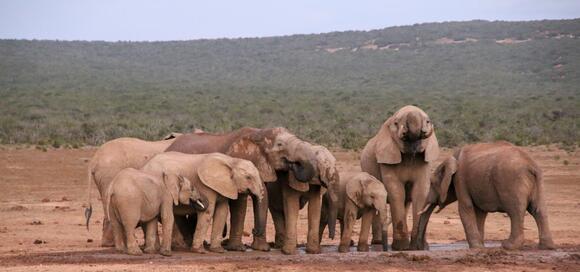
Elephants have been observed mourning lost members of their social group – performing rituals that include touching and caressing the bones of the dead, moving them to different locations, and burying them with grass, leaves and tree limbs. Elephants have been known to investigate old elephant carcasses, smelling the bones, moving them with their trunk and feet, and at times gathering in abundance around the area in which an elephant died.
Researchers documented five calf burials conducted by Asian elephants in the Bengal region of India, detailing the organised nature of these burials and the mourning behaviours exhibited by the herds. These ceremonies involve the entire family unit, with members taking turns to cover the deceased with vegetation in what appears remarkably similar to human burial practices.
Nor is elephant mourning short-lived. Unlike other animals, elephants appear to experience profound and long-lasting grief. Some anecdotal reports suggest wild elephants may have gathered when “The Elephant Whisperer,” Lawrence Anthony, passed away, though these accounts remain unverified by scientific sources. Such stories, whether factual or not, reflect our desire to understand the depth of elephant emotional connections.
Marine Mammals Display Heart-Wrenching Loyalty to Their Dead
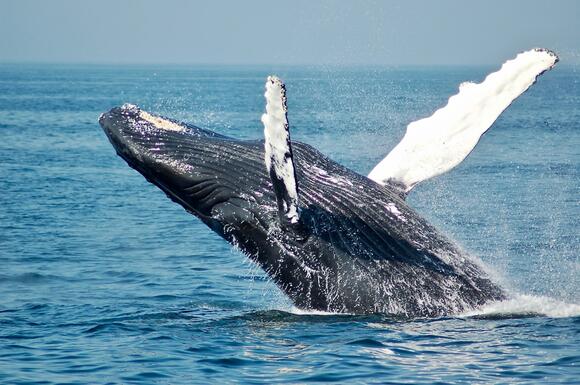
“The animals go through a period where they’re experiencing the same kind of emotions you or I would when a loved one dies,” Robin Baird from the Cascadia Research Collective stated to Dive Magazine. Some mothers have been seen carrying their dead infants in their mouths or on their backs for a week or longer, even as the body decomposes; a couple adult males have also been seen holding dead calves in their mouths.
Humpback whales have been heard crying mournfully when one of their companions is beached, and captive dolphins have been observed lying on the bottom of the pool, seemingly wracked with depression, after the death of a companion. Not only do dolphins and whales emotionally feel grief, but they also physically respond to it. For example, dolphins maintain physical contact and watch over their deceased pod members which demonstrates their sympathetic and altruistic tendencies.
Such behavior, after all, has an enormous cost: A whale keeping vigil over a dead companion is a whale that isn’t eating or reinforcing its alliances with other whales. This sacrifice suggests the emotional drive to stay with the deceased overrides basic survival instincts, pointing to the profound nature of cetacean bonds.
Primates Show Grief That Mirrors Human Heartbreak
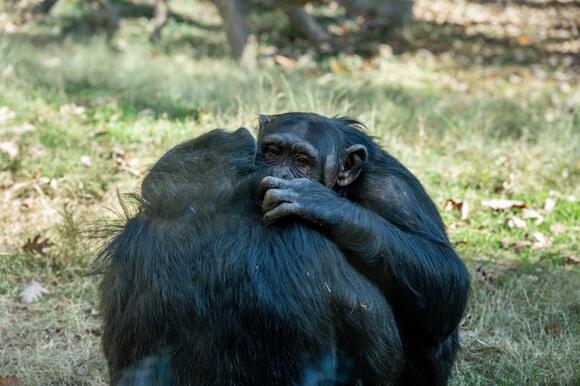
The chimp, who was unusually bonded to his mother, suddenly grew listless, losing his appetite and becoming increasingly isolated from the rest of the troop. “He ate seldom, and by the end of the third week had lost more than a third of his weight,” wrote a young Jane Goodall: The famous primatologist had been a long-time observer of the troop. Then, three weeks after his mother died, Goodall reported that the emaciated Flint had died, too.
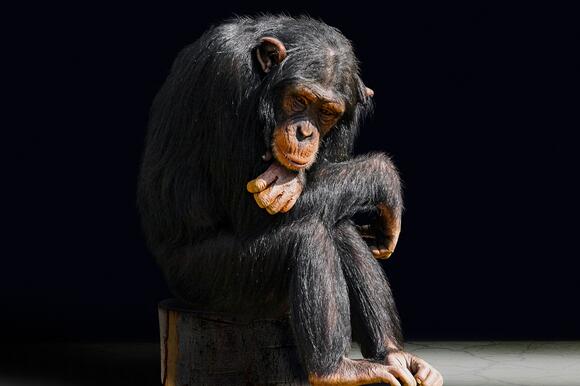
Now we know chimps hold vigils for the dead. They’ll clean the body, chase away flies, and sit silently beside their fallen friend. The chimpanzees checked Pansy’s body for signs of life and cleaned bits of straw from her fur. They refused to go to the place where Pansy had died for several days afterwards.
In 2017, a team of primate researchers in Zambia filmed a mother using a piece of dried grass to clean debris from the teeth of her deceased son. The implication, according to the scientists involved, is that chimpanzees continue to feel social bonds, even after death, and feel some sensitivity toward dead bodies.
Even Household Pets Experience Genuine Loss

They found that, after the death of a fellow pet, cats on average sought more attention from their owners, spent more time alone, appeared to look for the deceased animal, ate less and slept more. The data showed that cats exhibited behaviors associated with grief – such as eating and playing less – more often after the death of a fellow pet, suggesting they may in fact have been in mourning.
Contrary to their aloof reputation, cats form deep attachments. When a feline housemate dies, surviving cats often search the home, meowing in distinctive, mournful tones. Some grieving cats sleep in the deceased’s favorite spots. These behaviors often persist for weeks, showing that even independent animals can form strong emotional bonds that persist beyond death.
Honestly, watching a pet search for a missing companion is one of the most heartbreaking experiences for any animal owner. The confusion and distress they display seems so genuinely emotional that it’s hard to dismiss as mere instinct.
Birds Hold Elaborate Funeral Ceremonies
Finding a dead crow triggers a remarkable response from nearby corvids. They’ll gather around the body, calling loudly in what researchers term a ‘funeral.’ These gatherings aren’t just curiosity – crows appear genuinely distressed. They avoid areas where crow deaths occur and will mob predators responsible for the death, suggesting complex emotional and social understanding.
Unlike their crow cousins’ noisy funerals, ravens respond to death with unusual silence. A flock discovering a dead raven will gather quietly, almost reverently. These intelligent birds appear to understand death’s permanence. They’ve been observed bringing small gifts – bright objects or food – to place near a fallen companion, creating what looks remarkably like memorial offerings.
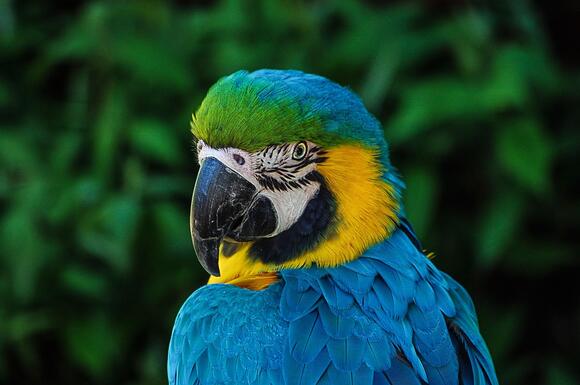
Bereaved macaws call out repeatedly for their missing partner. Their vocalizations change to lower, more mournful tones. Some stop eating and become listless, showing classic signs of depression that mirror human grief responses. These vocal changes can last for months, suggesting birds experience prolonged mourning periods similar to mammals.
The Evolutionary Purpose of Animal Grief Remains a Mystery
“Grief is an evolved behavioral program, akin to sickness behavior, that promotes convalescence during a significant neural rewriting job,” King quotes one author as summarizing their findings. It responds to earlier work by John Archer who in The Nature of Grief instead argued that grief might be evolutionarily maladaptive but also an unavoidable corollary of a more useful separation response that drives individuals to reunite when separated.
Although in our minds, it makes perfect sense to be upset when a person we know dies, if we think about it evolutionarily speaking, after-death rituals aren’t that logical. From a survival perspective, spending time with the dead instead of foraging, mating, or avoiding predators seems counterproductive.
Yet these behaviors persist across species, suggesting grief serves some important function. Perhaps it strengthens social bonds within groups, helps animals learn about mortality, or simply represents the unavoidable cost of forming deep attachments that are otherwise beneficial for survival.
What Animal Grief Teaches Us About Our Own Humanity
Grief has an ethical aspect: what people grieve reveals their values and emotional attachments, and processes of grief can include moral transformation. Several philosophers and animal rights activists have argued that it is moral to grieve the suffering of non-humans, and especially if such suffering is caused by humans, there is a need to engage with the issue of responsibility and the dynamics of guilt.
Animal grief challenges our assumptions about consciousness, emotion, and what makes us uniquely human. If elephants can mourn, dolphins can experience heartbreak, and even cats can feel loss, then perhaps our emotional experiences aren’t as exclusive as we once believed. This realization forces us to reconsider how we treat animals and whether our moral responsibilities extend beyond our own species.
The notion that cetaceans are capable of grief and that they may have some understanding of death has been used to promote conservation actions in the hopes that attributing human-like behavior and emotions to animals makes us relate to them more and want to protect them. However, conservation measures should not have to rely on how similar an animal is to humans. Every living being is different: it is the beauty of biodiversity. We should celebrate that uniqueness instead of comparing every living thing to ourselves and our own feelings.
Conclusion: Grief as a Universal Language of Loss

The evidence is clear that grief extends far beyond human experience, manifesting in ways both similar to and different from our own mourning rituals. From elephants who bury their dead to whales who carry corpses across oceans, animals demonstrate that the capacity for deep emotional attachment – and the pain of losing those bonds – transcends species boundaries.
These discoveries humble our understanding of consciousness and emotion in the natural world. They suggest that the ability to love deeply enough to grieve may be one of the most fundamental experiences of complex life on Earth. While we may never fully understand what goes through an elephant’s mind as it touches the bones of a deceased relative, we can recognize the profound similarities in how loss affects us all.
The next time you witness an animal displaying what looks like grief, remember that you might be seeing one of nature’s most universal experiences. What do you think about it? Tell us in the comments.