A new book by historian Emily Sneff records the journeys of the Declaration’s first printed copies, tracking their reception in the Thirteen Colonies and overseas
/https://tf-cmsv2-smithsonianmag-media.s3.amazonaws.com/accounts/headshot/rbg.png)
:focal(750x500:751x501)/https://tf-cmsv2-smithsonianmag-media.s3.amazonaws.com/filer_public/9b/81/9b816acb-0313-4d21-b305-371c9cdf32a3/trumbull.jpg)
In January 1777, Baltimore printer Mary Katharine Goddard published the first copies of the Declaration of Independence that included the signers’ names. By then, the document was already old news.
Report Ad
Congress adopted the Declaration on July 4, 1776. That same day, Philadelphia-based printer John Dunlap produced the first copies of the text, which were soon sent on to state assemblies, military officers and local leaders across the nascent nation. Newspapers reprinted these early broadsides, and many communities held public readings of the Declaration. Many copies traveled overseas; others were confiscated or thrown overboard from ships.
Today, the original signed parchment version of the Declaration sits behind bulletproof glass at the National Archives in Washington, D.C., its titanium frame sturdy enough to transcend political divisions while reiterating the righteous circumstances of the nation’s birth.
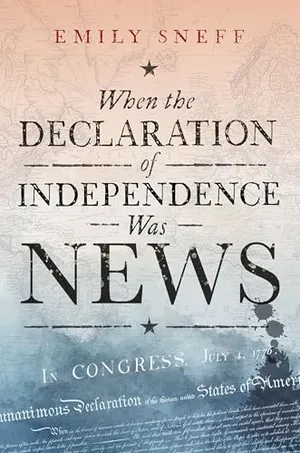
When the Declaration of Independence Was News
Tracing the moments after the Declaration of Independence’s creation, this groundbreaking book follows how news of American independence spread to people throughout the Thirteen Colonies and the Atlantic world.
In the immediate aftermath of the Declaration’s creation, however, the text “was malleable, easily combined with other pieces of information and misinformation, or overshadowed by other stories,” historian Emily Sneff writes in her new book, When the Declaration of Independence Was News. “It was entrusted to communications networks that were under constant threat, and it was often preceded by salacious rumors. … All this fragility and unpredictability in 1776 has been forgotten because, ultimately, the United States survived.”
Sneff’s book follows different printings of the Declaration across the Thirteen Colonies and beyond between the summer of 1776 and the winter of 1777, tracing how diverse populations received the news of independence and unpacking what it meant for them. Some were displeased. Others were thrilled. No one knew exactly what would happen next.
Need to know: When was the Declaration of Independence signed?
- The majority of the Declaration’s 56 signers put pen to parchment on August 2, 1776, adding their names to the document nearly a month after its adoption.
- Seven delegates to the Continental Congress signed the Declaration later; Delaware delegate Thomas McKean was likely the last to sign, adding his signature sometime after January 1777, perhaps not until 1781.
References to the Declaration often conjure up a singular image. “It is easy to assume that the Declaration of Independence remained the same no matter when, where or why a new copy was produced,” Sneff writes. “In reality, almost every printed or manuscript copy of the Declaration produced in 1776 varies in format.”
In addition to noting aesthetic and grammatical variations in different versions of the Declaration, Sneff draws attention to the documents’ materiality. She points to a Boston merchant’s scribbles on a newspaper copy of the Declaration, each note linking one of the signers’ grievances to articles previously published by the Colonial press, and highlights annotations on various copies of the document by Anglican ministers who grappled with how to adjust their rhetoric regarding royal sovereignty. Sneff even discusses the many printings of the Declaration that didn’t survive the ravages of time. (An estimated 125 broadsides dated to July 1776 are known to survive today.)
To mark the release of When the Declaration of Independence Was News on April 15, Smithsonian magazine asked Sneff how people encountered the Declaration 250 years ago, long before it was a national treasure. Read on for a condensed and edited version of the conversation.
/https://tf-cmsv2-smithsonianmag-media.s3.amazonaws.com/filer_public/c2/0d/c20de283-358c-4522-9a28-0efb20a0c68f/1920px-usa_declaration_independence.jpg)
How did residents of the Thirteen Colonies first learn about the Declaration of Independence?
The copy that we recognize today is the signed parchment. But when people were learning about the Declaration, that didn’t even exist. It was ordered on July 19, and then signing began on August 2. By that time, people in most of the United States already had learned about the Declaration through other means.
News of the Declaration first spread through printed copies and public readings. People gathered for readings near centralized spaces like courthouses and churches. The Declaration was also printed in every active newspaper.
Who were John Dunlap and Mary Katharine Goddard?
Dunlap was an immigrant from Northern Ireland. He had been printing for the Continental Congress for a while, so he was trusted to take on this responsibility. He created a broadside, a poster-size sheet with a bold title at the top and the text in a single wide column. Other printers as far as Massachusetts and South Carolina copied that look, so we see other broadsides from the weeks after that look similar.
/https://tf-cmsv2-smithsonianmag-media.s3.amazonaws.com/filer_public/bd/4f/bd4f307f-abc5-4890-a0af-45a61aab3b54/1920px-dunlap_broadside_copy_of_the_united_states_declaration_of_independence_loc.jpg)
Goddard printed the text of the Declaration in her Baltimore newspaper in July 1776. When the Continental Congress evacuated Philadelphia in December 1776, they moved to Baltimore and asked her to print the first broadsides of the Declaration that included the names of the men who had signed the parchment copy by that time.
In this version, the text is in two columns, and Goddard made some interesting capitalization decisions. She printed the religious references, such as “God” and “Divine Providence,” in capital letters. Then, she named the signers in their state delegations. At the bottom, she printed her own name. When she had printed the Declaration in her newspaper in July 1776, her name on the newspaper was just M.K. Goddard. But when she printed this broadside for the Continental Congress, she used her full name. She took pride in printing the Declaration, and she also understood the risks of being associated with it.
From the summer of 1776 into the winter of 1777, Goddard was the only woman printing under her own name in the Colonies-turned-United States. She was not the only woman to print the Declaration, however. The names of many people involved in the process of printing did not end up on the final product.
January 1777 marks the end of when the Declaration was a news item and the beginning of its time as archival treasure.
/https://tf-cmsv2-smithsonianmag-media.s3.amazonaws.com/filer_public/1b/05/1b05cf45-c10d-4259-93f1-6c1dea9473c4/1920px-goddard_broadside.jpg)
How did people in the Thirteen Colonies react to the Declaration?
The overwhelming reaction to the Declaration in the U.S., as reported in the newspapers, was joy. The people who gathered to hear the Declaration read aloud responded with huzzahs. They tore down the symbols of the British monarchy and celebrated the Continental Congress’ decision. However, there were many other people who were uninterested and even disappointed in the Declaration. Their reflections were often more private, in diaries or letters to other people who were worried about what would happen to them after independence.
The first acknowledgment of the Declaration by a foreign nation came from an Indigenous leader, Wolastoqiyik Chief Ambrose Bear. How did Bear first hear about American independence?
Indigenous treaty conversations were happening at the same time as the adoption of the Declaration of Independence. We see a spectrum of Native reactions to and participation in the Revolutionary War. They range from allies who wanted to fight in the Continental Army to nations who wanted to remain neutral to nations who sided with the British.
Bear was a spokesperson for the Wolastoqiyik and Mi’kmaq representatives who had hoped to negotiate with George Washington but ended up meeting with the Massachusetts Council instead. When the Declaration arrived in the middle of the meeting, it was translated into French for the Indigenous men. Bear responded, “We like it well.”
What you might not know about the Declaration of Independence - Kenneth C. Davis
You researched countless broadsides and prints of the Declaration. Many surfaced in unexpected locations. What were some of the most surprising finds?
The United Kingdom has an incredible set of very early copies, including multiple broadsides printed by Dunlap, which were from the first and most prized printing. When the royal governors and the king’s commissioners for restoring peace—representatives who had come to the Colonies—saw the Declaration, they sent it back to London and the British secretaries of state.
As a result, the U.K. National Archives have one of the best collections of the Declaration. You wouldn’t expect to find them there, but they speak to this communication back and forth, updating their superiors about what was happening. It’s cool to think about the trip taken by each broadside.
One of the Dunlap broadsides that ended up in the U.K. was sent by Jonas Phillips, a Jewish American merchant who tried to share a copy of the Declaration with a relative in Amsterdam. He wrote a letter in Yiddish to disguise the document in case it was intercepted. How does Phillips fit into the story of the Declaration?
Phillips’ letter offered updates on his family, his business, and his broad impressions of independence and the new nation. At one point, he said that he could explain his meaning better in English. That reveals his intentional choice to obscure the contents of the letter in Yiddish so that they would only be understood by his intended recipient. He sent the letter through a merchant connection in the Dutch Caribbean, and sometime after it left the island of Sint Eustatius, it was intercepted by the British.
/https://tf-cmsv2-smithsonianmag-media.s3.amazonaws.com/filer_public/67/bd/67bd6666-4155-4195-9522-eb64a1460056/lossy-page1-1920px-portraits_and_autograph_signatures_of_the_framers_and_signers_of_the_declara.jpg)
If I put myself in the shoes of a British naval officer in the summer of 1776 who saw a letter from Philadelphia enclosing the Declaration, written in a language that he didn’t know, he might have thought it was a code obscuring secret information. And so that letter ended up in the intercepted papers at the U.K. National Archives.
People tried their best to navigate the risk of having their mail intercepted. In this case, Phillips fails. His letter did not reach its destination, nor did the money he tried to send to his mother.
How did news of the Declaration reach Silas Deane, a patriot who was dispatched to Paris in early 1776 to lay the groundwork for an alliance between France and America?
Deane was on his way to France to represent the Continental Congress, but not in an official capacity. He was sent as a secret agent to make connections that could eventually, if the Continental Congress declared independence, lead to an alliance.
With every ship arriving in France in the summer of 1776, Deane hoped that one might contain a letter from Philadelphia. What he did not know was that the Continental Congress’ Committee of Secret Correspondence had sent him a copy of the Declaration just a few days after July 4. However, they instructed the captain to throw it overboard if the ship was intercepted by the British. That was ultimately what happened.
/https://tf-cmsv2-smithsonianmag-media.s3.amazonaws.com/filer_public/f5/82/f58245f5-0b3a-41b9-95ff-eec4f9cb9f83/s_deane_-_drawn_from_the_life_by_du_simitier_in_philadelphia__engraved_by_bl_prevost_at_par.jpg)
Congress did not send a backup copy until a month later. As the Declaration spread through European newspapers, Deane was in this challenging position of not knowing how to represent the interests of the Continental Congress. He could not present the Declaration to the Court of Versailles until he had an official copy.
The Declaration arrived months after Deane would have expected it—late in the fall of 1776. He was so frustrated. I try to give readers a sense of one week to the next as he wrote these angsty letters back to Philadelphia, asking, “Do you not trust me anymore?”
When he eventually presented the Declaration at Versailles, it was an old story. He was a victim of trans-Atlantic communication challenges, as the Continental Congress did not send multiple ships with multiple copies. Shortly after Deane finally received the news, Benjamin Franklin arrived as reinforcement. That is where the story of American diplomacy in France that we’re more familiar with resumes.
The 2026 semiquincentennial, like the 1976 bicentennial, treats July 4, 1776, as the nation’s birthday. Should it be?
I think so. It’s helpful to have a specific day. You will get the John Adams supporters who want to highlight July 2, which was the day that the Continental Congress made the decision to declare independence.
The Declaration was really the press release explaining the reasons for declaring independence, so it has rhetorical power. As we look at the ways that the Declaration has been used during its anniversaries in the past—by the women’s rights movement, by Native American activists, by free Black and enslaved people—we can see the importance of keeping the Fourth of July as the birthday. It’s important to recognize not only the action of declaring independence but also the words to explain that action, because they had resonance across every generation since 1776.
/https://tf-cmsv2-smithsonianmag-media.s3.amazonaws.com/filer_public/35/9b/359b4fd7-ca0b-4696-9a38-af28f4cbd93d/declaration_sentiments_foote_lrg.jpg)
In 2026, bookstore shelves are full of titles about the Declaration of Independence, the American Revolution and historical memory. What insights are available only in When the Declaration of Independence Was News?
The focused time makes this book unique. Most recent books take a broader view of the nation’s history, whether that means looking at what influenced the language of the Declaration, the Declaration’s legacy through time or how it’s been understood in American public memory. I focus on the eight-month period when the Declaration was news, a time when no one knew if the Declaration would survive, let alone the U.S. I like that the book ends on a cliffhanger of sorts. No one knew what was going to happen next.
In his final speech before the vote for independence, delegate John Dickinson said that the Continental Congress was building a “skiff made of paper”—a skiff was a small boat—that would disintegrate when it was sent out into the world. The Declaration needed to be reinforced by military and diplomatic factors. My book is about the Declaration in its own moment, without the imposition of what would come next and the place that it holds in American public memory.
What does your book encourage readers to keep in mind as America marks its 250th anniversary?
Our acknowledgments about the Declaration of Independence can be more than one day. If you think about the time that it took the Declaration to spread to different places—but also how the news of independence interacted with different moments that were happening militarily, legislatively and politically—it makes it a much more spread-out story and something to think about throughout the year. You can have your fireworks on July 4. The public readings that happen on July 4 are great. But especially on the East Coast, it’s worth remembering when the Declaration reached our homes and how it shaped our communities.
I also encourage engagement with local history. A lot of stories in this book are about specific communities coming together in a specific place. Let’s use this anniversary moment as an opportunity to think about what happened in your backyard, the history of your area from 250 years ago. A longer and deeper 250th would be my hope.

A Note to our Readers
Smithsonian magazine participates in affiliate link advertising programs. If you purchase an item through these links, we receive a commission.