Psychology as a subject has always intrigued me. Learning about how our brain works and how different behaviors can be dissected and understood—it's all so complex. However, when I learn about the darker side of psychology and the experiments conducted for "science" or "national interests," I genuinely wonder if these experiments are truly necessary. I surfed the internet and came across the most horrifying and unethical psychological experiments conducted in history. And I have to warn you, it's a tough read.
Here are 10 unethical and disturbing psychological experiments that should never have happened:
Disclaimer: The following content has mentions of abuse, violence, death, and other sensitive topics. Reader discretion is advised.
1.The Aversion Project is a report commissioned by gay rights groups and South Africa's Medical Research Council, which details the abuse and inhumane treatment of homosexuals in South Africa during the apartheid era between the 1970s and 1980s. During this time, national service was compulsory for white males, and homosexuality was a crime. This was an attempt to "cure" homosexuals and was carried out under the command of army colonel and psychologist Dr. Aubrey Levin. Dr. Levin used electroconvulsive aversion therapy on homosexuals at Ward 22 of the Voortrekkerhoogte Military Hospital near Pretoria. He was convinced he could convert homosexuals into heterosexuals using electric shocks. Homosexual soldiers were shown pictures of naked men and were encouraged to fantasize about them while the intensity of the electric shock increased slowly until the patient could take no more.

After this, the subject was shown an image of a naked woman. One incident revealed how a lesbian was subjected to such intense and severe shocks that her shoes flew off. Dr. Levin believed that this same treatment could cure "drug addicts," who were men caught smoking marijuana.
When "patients" arrived at Ward 22, they were stripped of their clothes and shoes and given brown pajamas. They were put on Valium while at Ward 22. One homosexual soldier was chemically castrated by Dr. Levin at the Bloemfontein Psychiatric Hospital in 1980. Later, he tragically died by suicide. The army carried out as many as 50 sex change operations in a year.
The Aversion Project report states that the doctors broke international law. This unethical project ran for 18 years.
Die Burger / Getty Images2. The Little Albert Experiment in 1920. This experiment was a study of classical conditioning in human beings. It was conducted by John B. Watson, a behaviorist, and Rosalie Rayner. This experiment was considered a landmark study that demonstrated that fear could be classically conditioned in humans; however, this experiment was heavily criticized for breaching ethical codes. The experiment involved conditioning a young boy, Little Albert, to be afraid of a white rat. Little Albert was nine months old at the time. Before the actual experiment, he was given a variety of emotional tests like being exposed for the first time to a white rat, a rabbit, a dog, a monkey, masks, cotton, and other stimuli. The young boy showed no fear to any of these items.
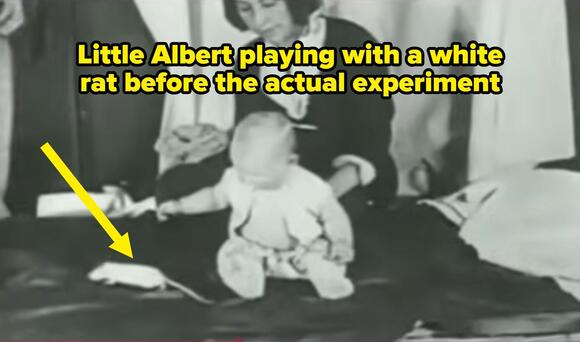
By the time the proper experiment began, Albert was 11 months old. He was placed on a mattress in a room. A white rat was placed in front of him, and he was allowed to play with it. When Albert was playing with the rat, Watson made a loud sound by striking a steel bar with a hammer every time Albert touched the rat. At the sound, Albert responded by crying and showing fear.
YouTube / Via youtu.beAfter several demonstrations of these stimuli, Albert became visibly distressed upon seeing the ra; he cried and crawled away. The young boy had associated the white rat with the sound. In further experiments, Albert generalized his response to the white rat with several other furry objects such as a rabbit, a furry dog, a fur coat, and even a Santa Claus mask. According to modern standards, Watson's experiments had many failings. For starters, it only had a single subject and no control subjects. But the bigger failing was in the ethical code of the experiment. Little Albert was harmed during this experiment, as he left with a previously nonexistent fear. This experiment would not have been permitted by modern standards. What happened to the young boy after the experiment is still a mystery.

At first, researchers thought that Little Albert was actually a boy named Douglas Merritte. Upon further investigation, scientists discovered that Douglas had passed away on May 10, 1925, at the age of six due to hydrocephalus, an illness he had suffered since birth. If Douglas were indeed Little Albert, his illness would have deemed Watson's experiment invalid.
However, new evidence uncovered in 2014 suggested that a boy named William Barger was the real Little Albert. Barge was born on the same day as Merritte at the same hospital as Merritte's mother.
YouTube / Via youtu.be3. The CIA's Operation Midnight Climax used LSD experiments in sometimes unethical ways. It was part of the CIA’s mind-control research program. In 1955, in San Francisco, the CIA was designing a special bedroom, with George White overseeing the interior renovations. George White was part of the Federal Bureau of Narcotics at the time, and his role in this experiment was essential. He decorated the room lavishly with red bedroom curtains, black silk mats, and other items, which added to the glamour of the room. He also added bugging equipment and a two-way mirror, where he would sit and wait for prostitutes to lure unsuspecting Johns into the bedroom. These men would be dosed with LSD, and George would observe their behavior through the mirror.
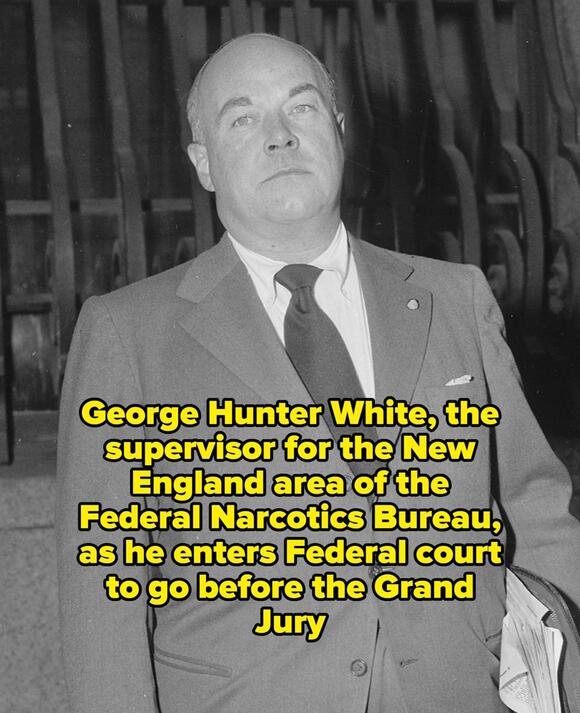
While these safe houses were initially used to test the effects of LSD, George began looking at how to use sexual acts to extract information from a source, and he came to the conclusion that the best time to obtain information was immediately after sex.
This experiment was a highly secretive operation within the CIA; however, the use of LSD on unsuspecting men and the potential use of threats against prostitutes made this one of the most notorious and unethical experiments ever conducted. This operation was also considered illegal, as it was essentially spying on U.S. citizens.
This operation was officially shut down in 1965.
New York Daily News / NY Daily News via Getty Images4.Project MK-Ultra was part of the CIA's mind-control program. When the fear of brainwashing and "brain warfare" spread among the American public in the 1950s, the director of the CIA at the time, Allen Dulles, approved the beginning of MK-Ultra, a program for the "covert use of biological and chemical materials." The experiments in this program centered around behavior modification using electroshock therapy, hypnosis, polygraphs, radiation, and a variety of drugs, toxins, and chemicals. The test subjects consisted of volunteers, those who volunteered under coercion, and some who had no idea what they were involved in. The program used some of the most vulnerable members of society, including American soldiers, mentally impaired boys, and prisoners.
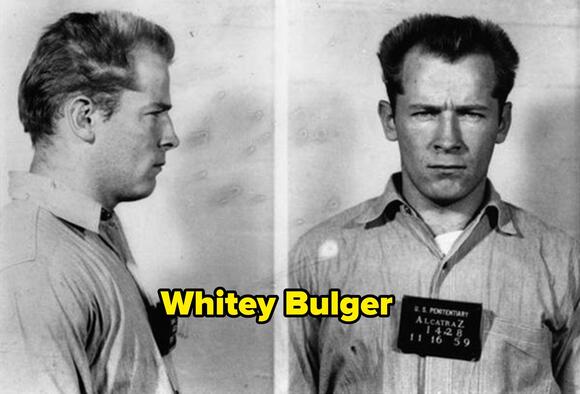
A former organized crime boss, Whitey Bulger, revealed his experience as a test subject for the program. He stated that he experienced a total loss of appetite, hallucinations, paranoia, and violent emotions. He added that it was like "horrible periods of living nightmares." He had been injected with LSD, which the CIA wanted to use for its "brain warfare".
Officials noted that LSD could be useful in gaining control of people, whether they were willing or not. Due to its obviously unethical and illegal processes, this entire operation was kept out of the public eye until 1963, when a member of the CIA Inspector General's staff learned about the project, and the Inspector General insisted that the agency follow new research ethics and cease all programs involving non-consenting subjects.
Donaldson Collection / Getty ImagesThe program was terminated in 1972, and the records were destroyed in 1973. The existence of this program was revealed in 1975. Senator Edward Kennedy oversaw the congressional hearings that investigated Project MK-Ultra in 1977. The interrogations and hearings revealed disturbing details about the project. One incident revealed how Dr. Frank Olson, an Army scientist, jumped out of a hotel window several days after unknowingly consuming a drink that had been spiked with LSD.

5. The Stanford Prison Experiment was a social psychology study that was conducted at Stanford University in August 1971. It involved college students who became prisoners and guards in a simulated prison environment. This experiment was funded by the U.S. Office of Naval Research, and its purpose was to measure the effect of role-playing, labeling, and social expectations on behavior over two weeks. This experiment is deemed to be one of the most controversial psychological studies, as the escalations within the simulated prison were incredibly alarming. Out of the 70 young men that volunteered for this experiment, 24 physically and mentally healthy men were selected. They received $15 a day and were equally divided into guards and prisoners.
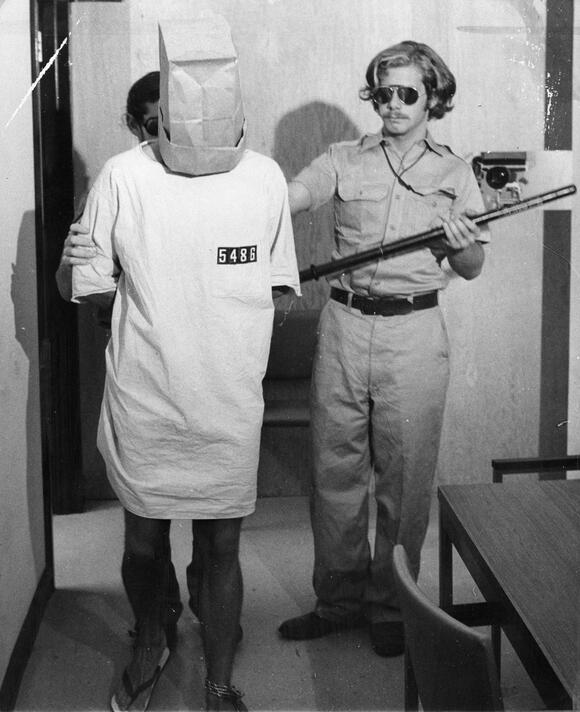
As part of the experiment, the guards were ordered not to physically abuse the prisoners, and to wear mirrored sunglasses that prevented eye contact. The simulation began with the prisoners being "arrested" by actual police, and handed over to the conductors at the mock prison.
The prisoners were subjected to the same process of indignities as real-life prisoners—they were systematically searched and stripped naked. The principal investigator of the experiment, American psychologist Philip G. Zimbardo, wanted to quickly create an atmosphere of oppression. To enforce that, each prisoner was made to wear a uniform, and a chain padlocked around one ankle. This entire ordeal was being observed and videotaped by the experimenters in real time.
San Francisco Chronicle/Hearst N / Hearst Newspapers via Getty ImagesTo assert authority, prisoners were awakened at 2:30 a.m. for "counts," which served the purpose of familiarizing the prisoners with their numbers. This took place several times each shift and often at night. On the second day, the prisoners rebelled against the guards; they took off their stocking caps, ripped off their numbers, and barricaded themselves inside the cells by putting their beds against the door. The guards were frustrated as prisoners began taunting them. The guards responded to the rebellion by entering each cell, and humiliating the prisoners by stripping them naked while intimidating them. The guards then worked on a system of rewards and punishments to manage the prisoners. Within the first four days of the experiment, three prisoners had become so traumatized that they had to be released.
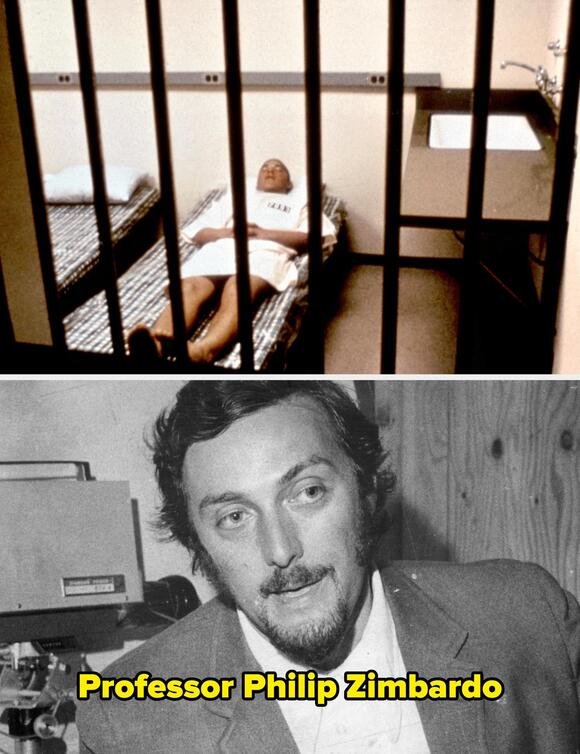
Over the course of the experiment, the guards became increasingly cruel and tyrannical, while the prisoners became more depressed and disoriented. Due to this escalating violence and harassment, Zimbardo ended the experiment less than a week after it had started.
Zimbardo claimed that the experiment's "social forces and environmental contingencies" had led the guards to behave badly; however, many critics stated that Zimbardo encouraged the guards' cruelty towards the prisoners.
This experiment is a shining example of unethical research. Due to a lack of fully informed consent, abuse of participants, and lack of appropriate debriefings, this experiment was considered invalid.
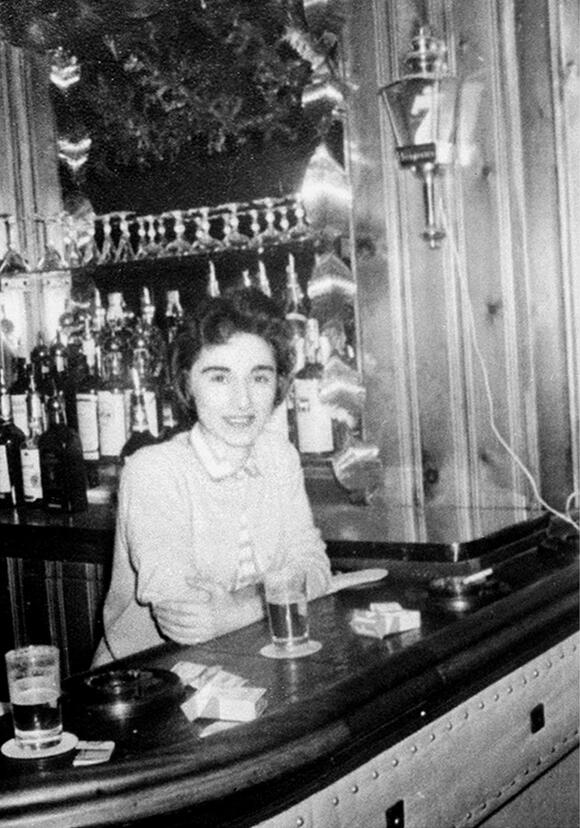
©Discovery Channel/Courtesy Everett Collection / San Francisco Chronicle/Hearst Newspapers / Contributor via Getty Images6.The Kitty Genovese Case—the tragic murder that led researchers to identify the 'bystander effect'. In 1964, Kitty Genovese was brutally raped and murdered by Winston Moseley, a stranger who had been following her. After the murder, the police first intensively investigated her partner, Mary Ann Zielonko, regarding possible involvement in her girlfriend's killing. However, days later, Moseley was arrested for burglary, when he confessed to Genovese's murder as well as the murder of two other women. He was sentenced to death (later reduced to life imprisonment). But it was not the murder itself that led to this psychological discovery—it was the aftermath of a false claim in an article and people's response to it. The New York Times had published an article stating that 38 witnesses had seen and heard the attack, but had failed to intervene.

Kevin Cook, the author of Kitty Genovese: The Murder, the Bystanders, the Crime that Changed America, revealed that the story was not true at all. In fact, "dozens" of people heard or saw the attack, but there were more earwitnesses than eyewitnesses. Only two of the witnesses saw the attack and chose not to act, according to Cook. However, police interviews did reveal that witnesses had attempted to contact authorities.
Social psychologists John Darley and Bibb Latané were intrigued by the reaction of the angry public, and investigated why people sometimes fail to intervene during heightened social situations where there are others present. This investigation led to the discovery of the "bystander effect".
©FilmRise / courtesy Everett Collection / Courtesy Everett CollectionThrough experiments, Darley and Latané revealed that people were far less likely to intervene in an emergency when they believed others were also observing it. The first reason behind this is diffusion of responsibility—meaning when multiple people are present, each individual feels less personal responsibility towards taking action. The second reason is social influence—as individuals look to others for cues on how to respond. If no one else is concerned, then one would interpret a situation as less serious than it really is. The Genovese case led to the discovery of an essential psychological study, although it started through false claims and unverified facts. While this was not an experiment, the tragic backstory and unethical approach to reporting the murder make this incident a disturbing one.
7. Seligman’s Learned Helplessness experiment, conducted by American psychologist Martin Seligman, was a study of how the behavior of a subject changes drastically after enduring repeated stimuli that are beyond their control. This theory states that clinical depression and related mental illnesses may result from the real or perceived absence of control over a situation or an outcome. In 1967, he initiated this research at the University of Pennsylvania. In the experiment, three groups of dogs were placed in harnesses. Dogs in Group 1 were put in a harness for a period of time and were later released. Groups 2 and 3 were considered "yoked pairs". Dogs in Group 2 were given random electric shocks, which they could stop by pressing a lever. Each dog in Group 3 was paired with a dog from Group 2, so whenever a Group 2 dog received a shock, its pair in Group 3 received the same shock; however, the lever did not stop the shock.

To the dogs in Group 3, it seemed as though their shocks ended at random because their paired dogs in Group 2 caused them to stop; thus, the shocks were "inescapable" for Group 3.
In part 2 of the experiment, the same three groups of dogs were tested in a shuttle-box chamber (containing two rectangular compartments divided by a barrier a few inches high). All of the dogs could escape the shocks on one side of the box by jumping over the partition to the other side. Dogs in Groups 1 and 2 quickly learned this and escaped; however, most of the Group 3 dogs, which had previously learned that nothing they did had any effect on the shocks, simply lay down passively and whined when they were shocked.
This experiment demonstrated how learned helplessness can be brought about due to a lack of control, much like how the Group 3 dogs became depressed after realizing they could not control the shocks. This experiment proved to be a great addition to psychology studies; however, the treatment of the dogs was widely considered unethical and cruel.
Rob Kim / Getty Images for We The Planet8.Harlow's Pit of Despair was a cruel experiment conducted by Harry Harlow, a comparative psychologist, on rhesus macaque monkeys in the 1970s. The "pit of despair" was the name of the device Harlow designed for the experiment. The purpose of this research was to investigate the nature of human love and affection. And he did that by using infant monkeys in this controversial experiment. Harlow would separate the young monkeys from their biological mothers just a few hours after birth so that they could be 'raised' by surrogate mothers—one made with wire and equipped with a baby bottle, and one made with soft terrycloth, but lacking food.
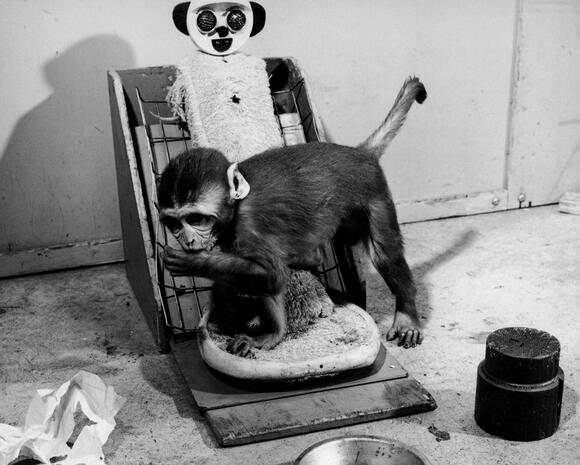
Based on this experiment, Harlow found that the baby monkeys consistently chose to spend more time with the cloth surrogate than with the wire surrogate, even though the wire mother had food. The monkeys preferred the comforting presence of the soft cloth, demonstrating the importance of love and affection—specifically "contact comfort" —for healthy childhood development. While the findings of this research were heavily appreciated in the study of love, the experiment crossed ethical boundaries with the monkeys. The treatment of the infant monkeys was cruel, as they were deprived of maternal care and social contact. Harlow stated that he would keep the infant monkeys completely isolated in the device that he called "the pit of despair".

Related: I Can Guess Your Age Within Three Years Based On These 17 Controversial Questions
9. The Monster Study was a non-consensual experiment performed on 22 orphaned children in Iowa in 1939, focusing on stuttering. This experiment was conducted by Wendell Johnson at the University of Iowa, along with his graduate student, Mary Tudor. Wendell had studied how to identify the causes of stuttering and discover a cure, as he himself had a severe stutter. The experiment took place at the Iowa Soldiers' Orphans' Home in 1939. This study was nicknamed "The Monster Study" partly due to the fact that Wendell experimented on orphaned children and also based on the words that were said to them. Wendell believed that a child's stutter "starts in an adult's ear, not in the child's mouth." He wanted to induce stuttering in non-stuttering children by telling them that they stuttered, and he wanted to stop stuttering in children who stuttered by ignoring their speech and telling them that they were fine.

None of the children were told the intent of the research; just that they would receive speech therapy. Among the 22 subjects, 10 of them were stutterers. Mary Tudor and five other graduate students listened to the children speak and graded them on a scale of 1 (poor) to 5 (fluent). The 10 children were divided into two groups: Group IA, the experimental set, and Group IB, the control set. Group IA would be told, "You do not stutter. Your speech is fine," and the other group would be told, "Yes, your speech is as bad as people say."
The remaining 12 were chosen at random and spoke normally. Six children, aged between five and 15, were assigned to IIA. These children were told that their speech was not normal, and that they needed to fix it immediately. The final six children in IIB were normal speakers and were given compliments on their enunciation.
Jim Steinfeldt / Getty ImagesThe experiment went on from January until May 1939. After repeated instances of giving compliments and criticisms to the children, the effects were seen soon enough. The orphans who stuttered and were told to fix it immediately withdrew and spoke less, and some showed frustration by snapping their fingers. All of the children's schoolwork declined, and they were not able to focus. Some of the children were not speaking at all. The findings from this experiment did not align with what Johnson was stating, and in fact, some students who were stutterers ended up speaking better. However, this experiment remains highly controversial and unethical, as Wendell and Mary Tudor experimented on non-consenting orphan children.

In 2003, this research came to light, and the public found the details incredibly disturbing. The three surviving orphans from Group IIA sued the State and the University of Iowa for millions of dollars, citing infliction of emotional distress and fraudulent misrepresentation.
Oleksandr Shchus / Getty Images10.The Milgram experiment was a series of controversial experiments examining obedience to authority using electric shocks. It was conducted by social psychologist Stanley Milgram. In the experiment, the conductor would instruct a volunteer, labeled the "teacher," to administer painful electric shocks to the "learner," who was actually an actor. This experiment was considered unethical due to the lack of proper disclosure, informed consent, and the trauma experienced by the teachers. In 1961, Milgram recruited men from New Haven, Connecticut, to participate in a study that he claimed would focus on memory and learning. The participants were paid $4.50 and were between the ages of 20 and 50. In total, about 780 people, including 40 women, participated in the experiments.
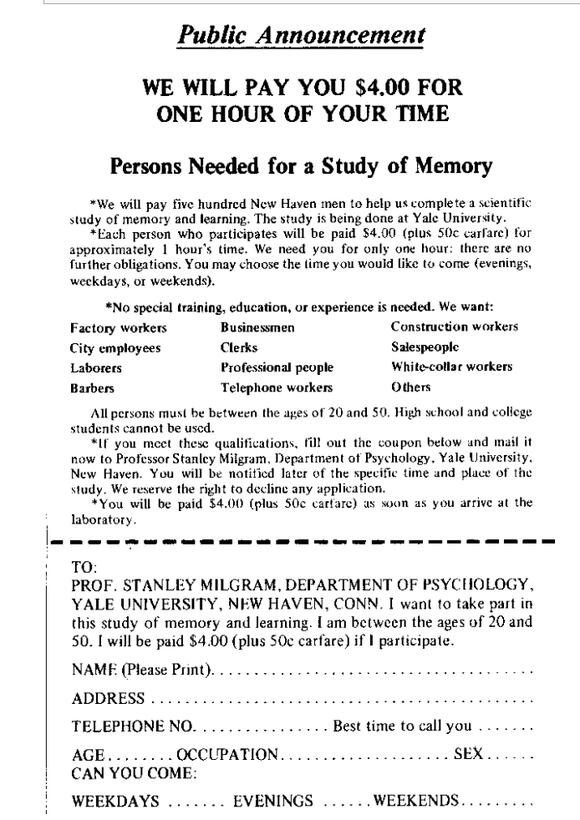
Volunteers were told that they would be randomly assigned either a "teacher" or "learner" role. Each teacher would administer electric shocks to a learner in another room if the learner failed to answer questions correctly. However, in reality, the random draw was fixed with all volunteers being assigned the "teacher" role and actors being the "learners."
By The original uploader was Poolisfun at Wikipedia. - File uploaded on enwiki. This file was derived from: Milgram Experiment advertising.gif by Olivier Hammamwhich / Via Public Domain, commons.wikimedia.org
The teachers were instructed on how to use the electroshock punishment, which ranged from 15 to 450 volts. The teachers asked the learners questions, and if they answered incorrectly, the teacher would administer a shock to the learner. The actors playing the learners had pre-recorded responses to the shocks, ranging from grunts of pain to screaming and eventually dead silence. The experimenters encouraged the teachers to continue administering shocks regardless of the learner's reaction. This experiment demonstrated the disturbing number of teachers who were willing to proceed to the maximum voltage level despite the pleas of the learner. In his study, 80% of the teachers administered shocks beyond 150 volts. Some of the teachers showed negative emotions, while others pleaded to stop the experiment. One teacher believed that he had killed the learner and cried upon finding out that the learner was actually alive.

This controversial and unethical experiment crossed all limits due to the extreme stress placed on the teachers. It was later revealed in Milgram's study that some experimenters went off script in their attempts to coerce the teachers into continuing.
By Unknown author - Dayton Daily News Mar 22, 1974 page 3, Public Domain, commons.wikimedia.orgI'm genuinely horrified after reading about these unethical and inhumane experiments. I understand that experiments must be done for progress in science; however, such extreme measures should never be used. I truly wonder how these experiments were allowed to happen.
Also in BuzzFeed: Just A Few WTF Facts That Shattered My Brain Into A Million Pieces This Week
Also in BuzzFeed: I'm Not Saying You're Gross, But If You've Done Half Of These Things, Well...