Picture wandering through landscapes where ancient peoples left behind traces of lives we still struggle to fully understand. The Americas harbor secrets in stone and earth, mysteries that make archaeologists pause and reconsider everything they thought they knew about who was here first and what they accomplished. These aren’t the glossy tourist destinations you see in every travel brochure.
These strange ruins tell stories that don’t quite fit into neat historical timelines. Some of them predate what we assumed was possible. Others feature engineering feats that seem almost impossible without advanced tools. Let’s be real, when you stand before some of these sites, you can’t help but wonder what else we’re missing about the distant past.
Mystery Hill: America’s Stonehenge That Nobody Can Quite Figure Out
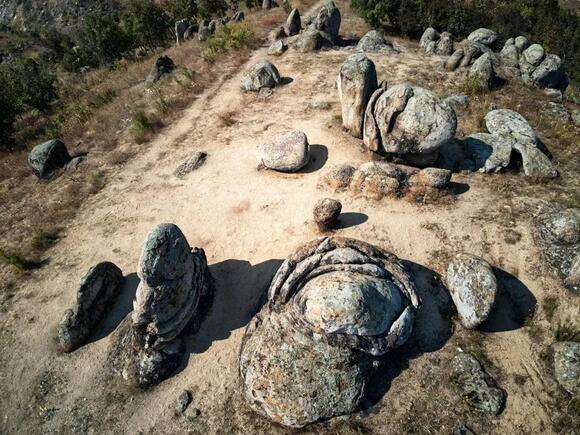
Locals sometimes call this “America’s Stonehenge,” though Mystery Hill bears little resemblance to the English megalith, featuring instead a complex of stone structures and artificial caves, most likely only as old as the 17th century. What makes it truly strange is that exact dating may never be possible, as the ruins suffered from tampering at the hands of a 1930s landowner who was convinced the structures were the remains of a 7th-century Irish monastic colony. The guy actually “fixed” parts of the site to match his theory, which means we might never know the real story.
The site’s “mysterious” reputation has made it a popular tourist attraction for decades, and it’s even earned some pop culture fame as H.P. Lovecraft reportedly visited the site for inspiration, and The X-Files set one episode nearby. Whether ancient Irish monks, colonial settlers, or someone else entirely built these chambers, Mystery Hill continues to perplex researchers who can’t agree on its origins or purpose.
The LSU Mounds: Older Than the Egyptian Pyramids
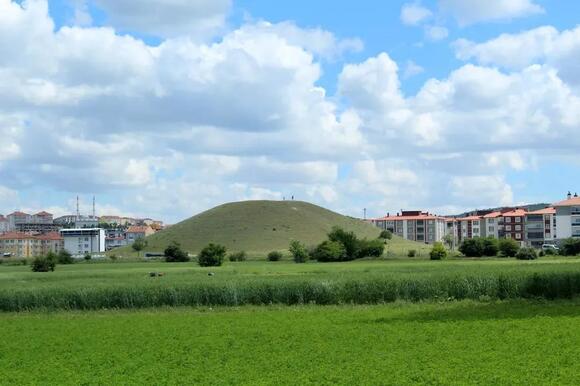
Walk onto the Louisiana State University campus in Baton Rouge and you’ll find something extraordinary hidden in plain sight. Two grassy mounds sit at the north end of Louisiana State University’s campus, rising in a gentle slope to a height of about 20 feet, just two of more than 800 similar human-made mounds in Louisiana, built by Indigenous Americans. Nothing about them screams “ancient wonder.” They look almost ordinary.
Here’s the thing though. The grassy surface hides layers of ancient clay, dirt and ash, and researchers recently found that the oldest mound is 11,000 years old, making it the oldest human-made structure discovered in either North or South America. Think about that for a second. While everyone focuses on Stonehenge or the pyramids, these humble earthworks quietly predate them all. The university is now moving to help preserve these ancient monuments, acknowledging that the structures were clearly important to the Indigenous Americans who populated the area, and LSU is planning to protect the mounds by building a path and a buffer zone of native plants.
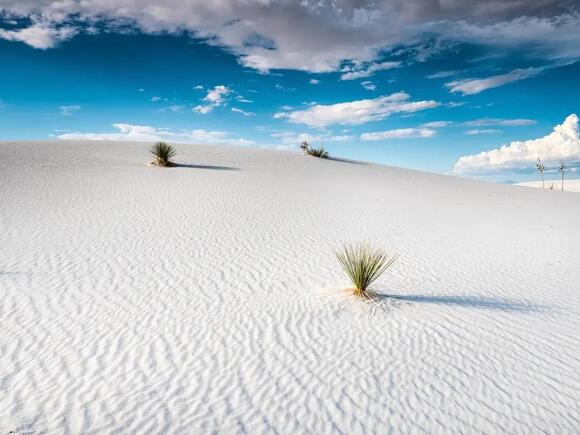
Archaeologists discovered 23,000-year-old fossilized footprints in White Sands National Park, New Mexico, the world’s largest gypsum dunefield, containing some of the earliest unequivocal evidence of people in the Americas thanks to a megadrought that lowered the water levels of an ancient and now dried-up lake called Lake Otero, exposing swampy ground that preserved tracks. That date is staggering when you consider that scientists long believed humans only arrived around 13,000 years ago.
Covering around a mile, it’s also the longest track of fossilised human footprints ever discovered, made mostly by children and teenagers, including one child under three, and other prints show that these people crossed paths with mammoths and giant sloths. Imagine kids playing near ice age megafauna, leaving behind evidence that would challenge our entire understanding of when people first set foot in the New World. It’s difficult to overstate how much this discovery shakes up established archaeology.
Poverty Point: The Ancient Trading Hub With No Clear Purpose
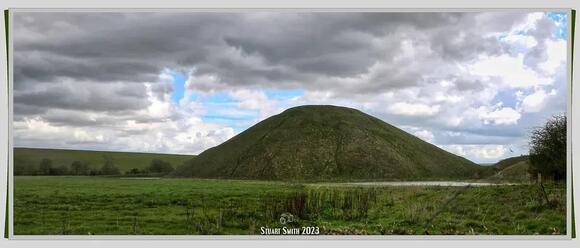
The earthen mounds at Poverty Point dwarf most of their peers in size and also in age, though what isn’t yet known is the purpose of the site, and adding to the mystery, Poverty Point was abandoned sometime around 1100 BC before another group moved in around AD 700. This Louisiana site features massive concentric ridges and mounds that suggest a sophisticated society existed far earlier than anyone expected.
Poverty Point is another one of the strangest ancient sites in the US with no explanation, a massive network of earthwork construction discovered by an American explorer, Jacob Walter, in the 1830s, including mounds, concentric ridges, and a central plaza. Researchers speculate it might have been a residential area, trading center, or ceremonial site. Honestly, it could have been all three. It is believed to have been constructed by Native Americans who inhabited the lower portion of the Mississippi Valley between 1100 and 1700 BC, though the purpose is not clear. The sheer scale of construction for a hunter-gatherer society challenges assumptions about what cultures without agriculture could accomplish.
Casa Grande: Arizona’s Four-Story Question Mark
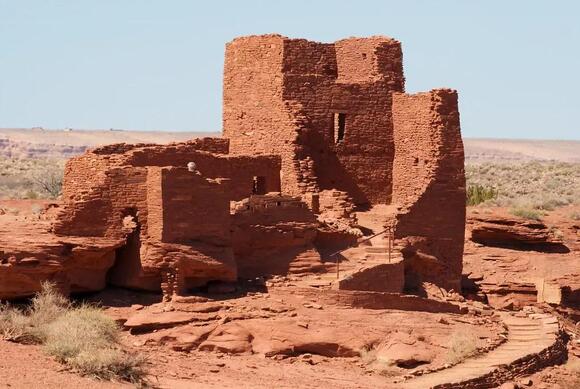
Archaeologists understand some things about Casa Grande in Arizona, knowing that it was probably constructed in the early 13th century, that the builders used adobe, and that the full complex included several other adobe structures and a ball court, but what they don’t know is what the four-story central building was for: a guard tower, a grain silo, a house of worship, or something else. The massive prehistoric structure stands as one of the largest in North America, yet its actual function remains completely unknown.
The site was abandoned nearly half a century before Columbus’s voyage to the Americas, long after the nearby Hopi had moved away, and was too ruined for early Spanish explorers to do their own investigating, though today the main building is under a protective roof built by Civil Conservation Corps workers in the 1930s. Casa Grande became the first prehistoric ruins to become a federally protected national park in the United States. Despite over a century of study, the mystery of its purpose endures.
Serpent Mound: An Ancient Earthwork Aligned With the Stars
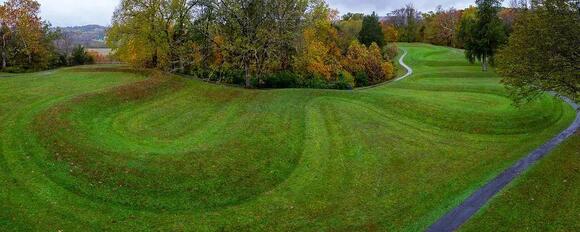
The largest serpent effigy on earth stretches through the Ohio countryside in a sinuous curve that seems to writhe across the landscape. The Great Serpent Mound measures 1,348 feet long and resides in Peebles, Ohio, though nobody is sure what culture it belongs to, with burial mounds nearby from the Adena culture, circa 800BC-100AD, thought to be the first Native American culture to transition from a hunter-gatherer lifestyle to permanent settlements.
Dating the serpent has proven incredibly tricky. According to radiocarbon dating, the serpent mound seems to be younger, only around 900 years old. Meanwhile, according to a 1991 study, radiocarbon dating sets the age of the mound as prior to the Adena culture, at about 900 years old, but a new radiocarbon test in 2014 put it back in the range of the Adena culture, at around 300 BCE. When investigations into the mound were conducted in the late 1800’s no artifacts were found buried in the mound, and this along with the fact that the head of the serpent is aligned with the setting sun on the summer solstice lends to the idea that the mound was constructed for ceremonial or spiritual purposes. The precision of that astronomical alignment suggests whoever built this had sophisticated knowledge of celestial movements.
Medicine Wheel: Wyoming’s Mountaintop Mystery
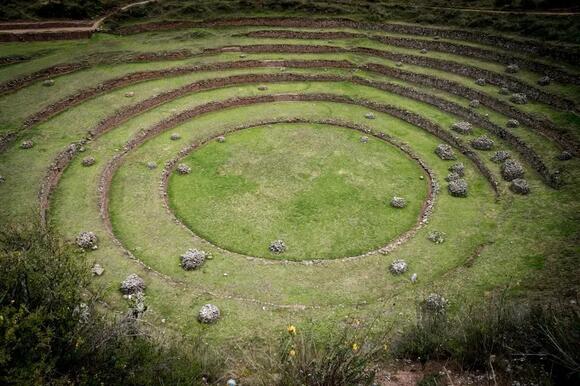
Bighorn Medicine Wheel, in northern Wyoming’s Bighorn National Forest, is shrouded in snow through the winter months, and in summer, the snow melts away to reveal limestone rocks scattered in a wheel shape, with spokes encased in a large circle. This isn’t just some random rock arrangement. The structure sits atop a mountain at nearly 10,000 feet elevation, which would have required serious effort to construct.
Experts have dated the mountaintop site to at least as far back as AD 1300, and it forms part of a chain of Native American archaeological sites up to 7,000 years old, though it’s thought that the pattern was used to predict astronomical events such as the summer solstice, yet the truth remains something of an enigma. A sacred complex, the Medicine Wheel/Medicine Mountain National Historic Landmark was used by numerous tribes, from before Euro American contact and well into to the present day, with artifacts suggesting it was in use up to 7,000 years ago. Multiple indigenous groups considered this place sacred, which adds layers of cultural complexity to understanding its original purpose.
Meadowcroft Rockshelter: America’s 19,000-Year-Old Holiday Inn
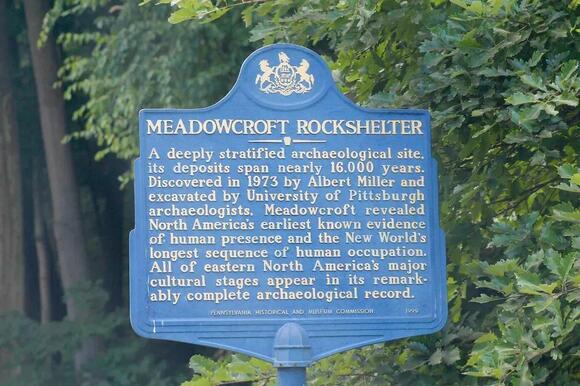
People have been living on and off at Meadowcroft Rock Shelter for up to 19,000 years, placing it firmly among the oldest sites of human habitation in the Americas, with the site being well-ventilated, spacious, high enough to be safe from flooding and set on the shores of Cross Creek, leading one excavating archaeologist to describe it as “a late-Pleistocene Holiday Inn”. That comparison makes me laugh, though it’s actually pretty accurate.
When Albert Miller found a prehistoric tool on his family farm in 1955, he had no idea that his discovery would eventually yield nearly two million ancient artifacts dating back 16,000 years, with a rock ledge overhang in the area even showing evidence of campers dating back 19,000 years, and the Meadowcroft Rockshelter, believed to be the oldest human settlement in the U.S., was designated a National Historic Landmark in 2005. The site completely upends traditional theories about when humans first arrived in North America. If people were camping here 19,000 years ago, the entire narrative about migration routes and timing needs revision.
Cahokia: The Ancient American City Larger Than London
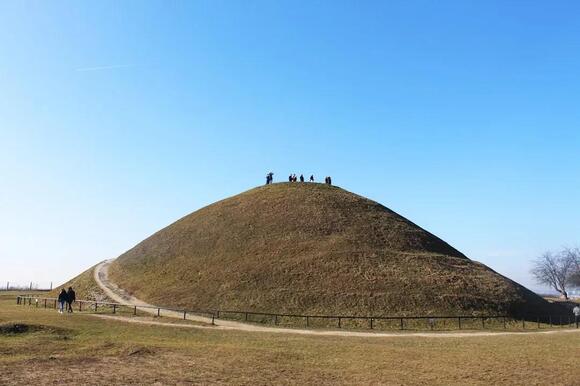
Starting around 800 CE, the extremely sophisticated Mississippians began building mounds near what is now St. Louis, Missouri, and the site, which was later named Cahokia, was part of one of the greatest cities of the world, larger than 1250 CE London, having a population that may have peaked at 100,000 people. Let that sink in. This wasn’t some small village. This was a thriving metropolis in pre-Columbian America.
There are more than 100 mounds that can be found there today, spread across 2,200 acres, making it the largest archaeological site in North America, with four circular sun calendars known as Woodhenge, as well as a dedicated museum. The sophisticated urban planning, astronomical knowledge, and sheer population density at Cahokia challenge simplistic narratives about pre-contact indigenous societies. This was a complex civilization with international trade networks, advanced engineering, and elaborate social hierarchies.
Judaculla Rock: North Carolina’s Indecipherable Stone Billboard
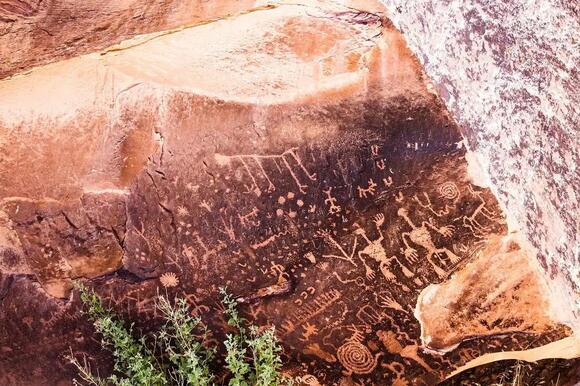
For years, the Cherokee people who lived near the soapstone boulder now known as Judaculla Rock used it as a sort of billboard, etching so many petroglyph designs into the North Carolina stone that even today it’s difficult to tell exactly how many there are, with the boulder also sporting seven grooves, the mythical footprints of a legendary giant, which contemporary archaeologists attribute to ancient masons mining the soapstone to make bowls.
Research has been slow; soapstone is naturally fragile, and the Cherokee also still see the rock as a sacred artifact, though the Cherokee are working with visitors and researchers to give them access while still preserving the stone. The collaboration between modern researchers and indigenous communities represents a more respectful approach to archaeology. The dense concentration of petroglyphs suggests this location held profound significance for centuries, serving as a gathering place where countless people left their marks. Whatever messages are carved into that stone remain largely unreadable to us today.
Conclusion
These ten sites barely scratch the surface of what’s hidden across the Americas. Every year brings new discoveries that push back dates, challenge assumptions, and reveal just how much we still don’t know. The ruins scattered from Wyoming to Louisiana, from New Mexico to Ohio, tell us that sophisticated cultures flourished here far longer than textbooks once acknowledged.
What strikes me most is how many mysteries remain unsolved despite decades or even centuries of study. We can map the cosmos and sequence DNA, yet we still can’t definitively explain who built certain structures or why they were abandoned. Perhaps that’s what makes these ruins so compelling. They remind us that history isn’t a closed book with all the answers neatly written down. It’s an ongoing investigation, and the earth still holds countless secrets waiting to be uncovered.
What’s your take on these ancient mysteries? Do any of these sites surprise you as much as they surprised me?