If you think rocks are boring, you probably just haven’t met the right ones yet. Scattered across the United States are landscapes so strange and dramatic that they look more like movie sets or alien planets than something you can actually hike through on a random weekend. Some of them glow, some of them balance where they have no business staying upright, and some look like nature tried its hand at sculpture and never stopped.
I still remember the first time I rounded a bend in Utah and saw an entire cliffside striped like a layer cake, and my brain just kind of stalled for a second. These places do that: they make you feel tiny, amazed, and weirdly protective of a planet that can do things this wild on its own. Let’s wander through 15 of the strangest geological formations – and peek under the surface at how they actually came to be.
1. The Wave, Arizona: A Stone Surf Frozen in Time
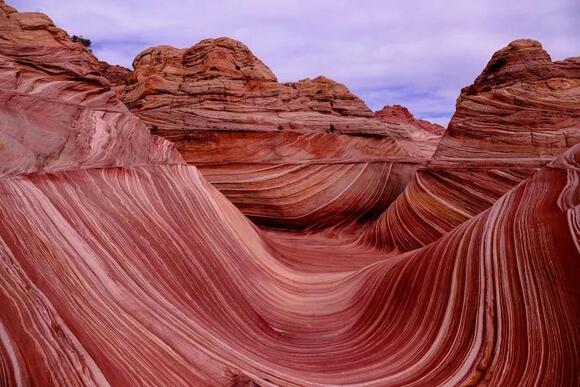
Walk up to The Wave on the Arizona–Utah border, and it honestly looks fake, like someone overdid it with Photoshop filters. The sandstone swirls, colored in reds, oranges, and soft creams, curl and fold like a frozen ocean of rock. It is carved into the Navajo Sandstone, a rock layer that started out as massive desert sand dunes roughly in the Jurassic period, later compacted and cemented into stone.
Those hypnotic stripes are actually the visible cross‑beds of ancient dunes, revealed because wind and water selectively eroded the softer layers over millions of years. The result is this smooth, flowing surface where you can literally see the ghost patterns of old wind directions recorded in stone. It feels otherworldly, but what you are really walking on is the geological diary of an old desert, written line by line in sand that turned to rock.
2. Devils Tower, Wyoming: A Giant Stone “Tree Stump” from Deep Underground
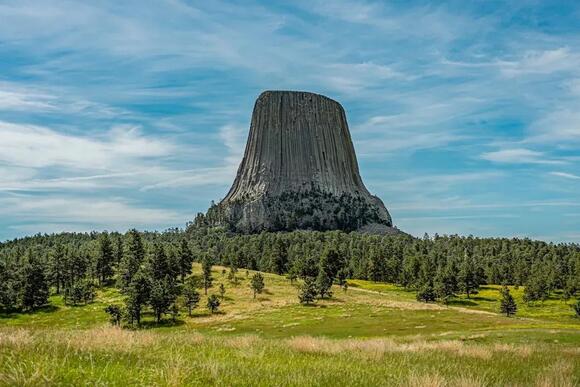
Devils Tower rises abruptly out of the rolling Wyoming landscape like a colossal tree stump dropped from the sky. Its tall, vertical columns and flat top make it one of the strangest isolated formations in the country, and also one of the most debated. Geologists agree it is igneous rock that cooled underground, but there is still some discussion over the exact process that exposed it and shaped it to its current form.
The most widely accepted idea is that Devils Tower is the eroded core of a volcanic feature, where magma forced its way into surrounding sedimentary rocks and cooled slowly, forming tight, hexagonal columns. Over many millions of years, the softer rock that once surrounded and covered it eroded away, leaving this solid, resistant plug standing alone. From a distance, it is eerie and imposing; up close, you can run your hand along those long vertical joints and literally feel how slowly cooling magma fractures as it contracts.
3. Goblin Valley, Utah: A Playground of Stone “Mushrooms”
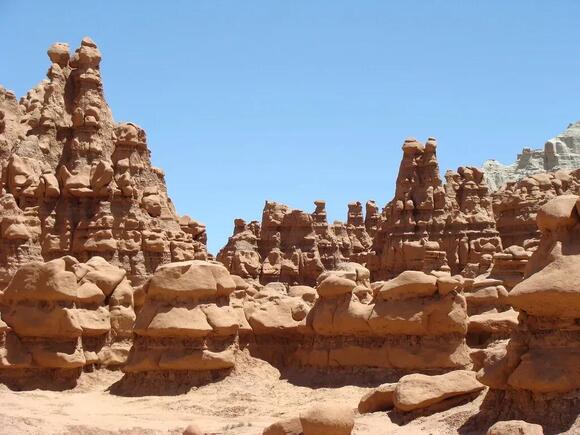
Goblin Valley State Park looks like the backdrop for a low‑budget sci‑fi movie in the best possible way. The valley floor is crowded with thousands of odd rock shapes that look like goblins, mushrooms, or melted statues, depending on your imagination and how much sleep you got. These formations are called hoodoos, and they form when a harder cap of rock protects a softer layer underneath from eroding as quickly.
In Goblin Valley, these hoodoos are carved out of Entrada Sandstone, a rock deposited in an ancient tidal flat or coastal environment. Wind and water pick away at the softer layers, leaving squat, rounded pillars topped by bulbous heads of more resistant rock. The result is a bizarre stone crowd frozen mid‑motion, something that feels playful and creepy at the same time. As you weave between them, you can see where the next goblins are slowly emerging as erosion keeps doing its quiet work.
4. Fly Geyser, Nevada: A Technicolor Accidental Wonder
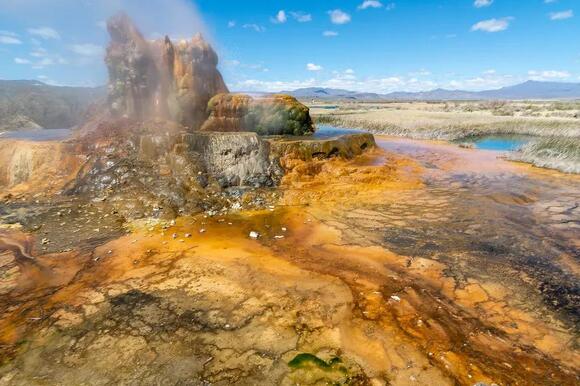
Fly Geyser in Nevada looks like something dreamed up by a fantasy illustrator: a small, steaming cone encrusted in bright reds, greens, and yellows, spraying hot water into the air. The weird twist is that this eye‑catching formation is partly natural and partly human‑made. In the early twentieth century, a well was drilled in the area, and decades later geothermal water found its way up through that weak point, beginning to build the geyser mound you see today.
The vivid colors come from thermophilic (heat‑loving) algae and minerals deposited by the constant flow of hot, mineral‑rich water. Over time, silica and other minerals have built up terraces and little pools around the central cone, growing like an oversized, steaming coral reef in the desert. It is a reminder that when humans poke holes in the crust, nature sometimes answers in surprising and slightly chaotic ways.
5. The Racetrack Playa, California: Mysterious Moving Rocks
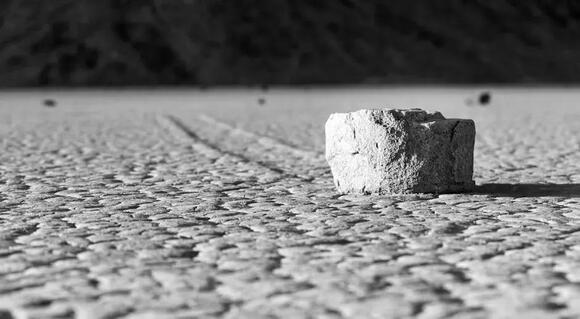
Deep in Death Valley National Park, the Racetrack Playa looks like a simple dry lakebed at first glance, but the ground hides a famous mystery. Scattered across the cracked mud surface are rocks that appear to have slid long distances, leaving behind distinct tracks carved into the playa. For decades, nobody had seen them move directly, which fueled all sorts of wild theories ranging from magnetic fields to pranks.
Careful observation and time‑lapse studies finally showed that under very rare conditions, a thin sheet of ice forms under and around the stones on cold winter nights. When that ice breaks up and a light breeze blows, the rocks can be gently pushed along the slick surface, carving those tracks into the soft mud below. It is incredibly slow, quiet, and almost delicate, which somehow makes it more amazing than any supernatural explanation. The science kind of ruins the mystery and makes it better at the same time.
6. Bryce Canyon, Utah: An Amphitheater of Stone Spires
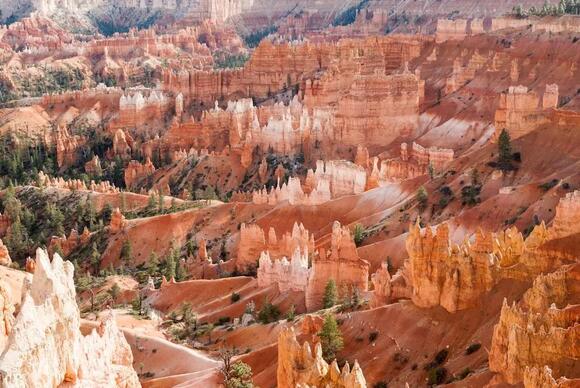
Bryce Canyon is less a canyon and more a giant natural amphitheater jam‑packed with weird stone sculptures. The star attractions are the hoodoos: slender, irregular spires of orange, pink, and white rock rising from the valley floor like a crowd of frozen figures. They are carved into the Claron Formation, a relatively soft limestone and mudstone sequence deposited in an ancient lake environment.
Here, freeze–thaw cycles do the heavy lifting. Water seeps into cracks, freezes, expands, and slowly pries the rock apart, while rainfall and runoff remove the debris. Over long stretches of time, this process sculpts vertical fins that then break down into isolated columns, often topped by a harder cap that delays their final collapse. Walking between them on the trails feels like exploring the remains of a stone city built by something with a very dramatic sense of style.
7. Craters of the Moon, Idaho: A Fresh Lava Landscape on Earth
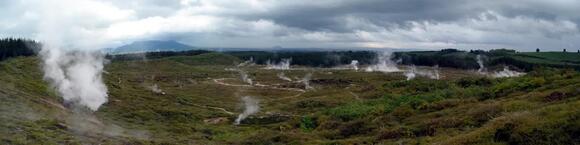
Craters of the Moon National Monument in Idaho looks exactly like its name suggests: black, twisted fields of rock and cinder cones stretching to the horizon, with an almost eerie lack of vegetation in places. This is not an impact site, though; it is a volcanic landscape created by lava eruptions relatively recently in geological terms, over the past several thousand years. The region sits above a system of fissures where basaltic magma has repeatedly reached the surface.
The weirdness comes from the sheer variety of volcanic features crammed into one area. You can walk across ropey pahoehoe lava, clamber over jagged aa flows, and peer into collapsed lava tubes that once channeled molten rock. It feels raw and young compared to older, more eroded landscapes, like the Earth’s crust here has not yet had time to hide its molten temper. It is also a sobering reminder that volcanism is not just a thing of ancient history in the continental United States.
8. Marble Canyon’s Wave‑Like Folds, Arizona: Rock Bent Without Breaking
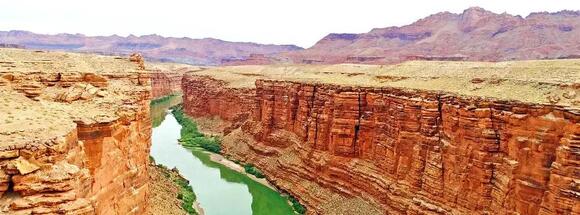
Along parts of Marble Canyon and the nearby Vermilion Cliffs region in northern Arizona, you can find sandstone layers that look like they have been gently folded into smooth waves. At first glance, it seems impossible that rock, something we think of as rigid and brittle, could bend like taffy without shattering completely. The secret is that these deformations usually happened when the sediments were still relatively soft or deeply buried, under high pressure and elevated temperatures.
When tectonic forces compress or shift the crust, layers of rock respond in different ways depending on their composition and the conditions. Some break, forming faults, but others flex, producing these graceful folds that get revealed later as erosion slices through the stack of layers. When you hike past these folded beds, you are literally seeing the record of crustal stress written into the stone. It feels almost like catching the Earth mid‑shrug in a very slow‑motion movement.
9. Mono Lake Tufa Towers, California: Stone Columns from Underwater Chemistry
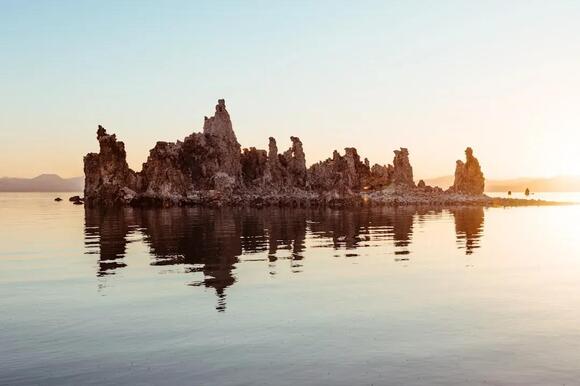
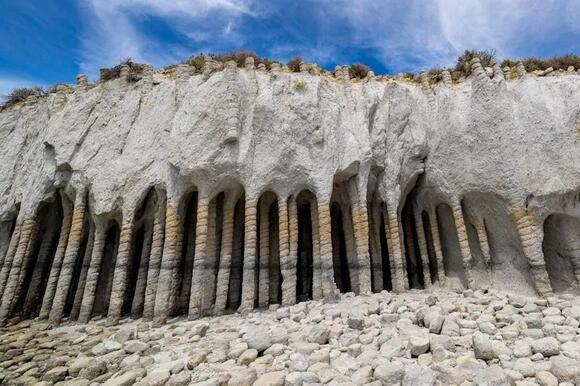
Mono Lake in eastern California is already strange, with water that is salty and alkaline and a shoreline that has shifted dramatically over time. But the star attractions are the tufa towers, pale stone columns that look a bit like crumbling castle ruins rising out of the shallow water. These structures form underwater when calcium‑rich freshwater springs bubble up through the lake and react with carbonate‑rich lake water to precipitate calcium carbonate.
As that mineral accumulates around the springs, it builds chimney‑like towers, slowly growing as long as the chemistry stays right. The reason we can see so many of them now is that water levels dropped significantly, exposing what used to be underwater monuments. Walking among them feels like exploring the skeleton of some ancient reef, except it was built by chemistry and springs rather than corals. It is geology and water chemistry teaming up to create something quietly spectacular.
10. Garden of the Gods, Colorado: Tilted Red Giants
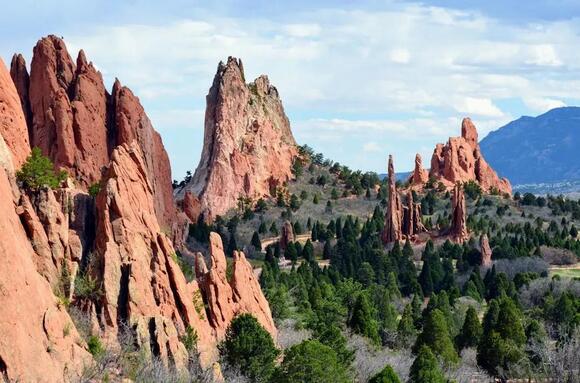
Garden of the Gods in Colorado Springs is one of those places that almost looks staged for maximum drama. Massive slabs of red and white sandstone stand nearly vertical, jutting out of the ground like the spines on some buried creature’s back. These rocks were originally laid down in horizontal layers as sediments in ancient environments, then later tilted and uplifted by tectonic forces related to the rise of the Rocky Mountains.
Over time, erosion stripped away much of the surrounding material, leaving these resistant beds standing proud. The result is a series of knife‑edge ridges, arches, and balanced rocks that feel both delicate and unshakeable. When you stand beside one of those towering fins, you are looking at former river deposits and sand dunes that have been cranked upright and sculpted by millions of years of wind and rain. It is like staring at the exposed ribs of the Earth’s history.
11. Bisti/De‑Na‑Zin Badlands, New Mexico: A Surreal Stone Graveyard
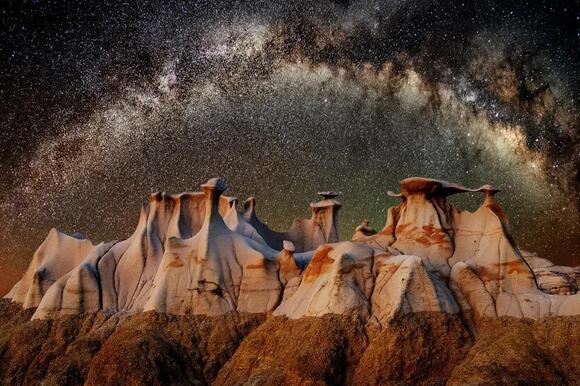
The Bisti/De‑Na‑Zin Wilderness in New Mexico feels like nature’s abstract art gallery. The landscape is scattered with bizarre hoodoos, thin rock tables, and petrified log fragments, all sitting on soft gray badland hills. The rock units here were laid down in ancient rivers, swamps, and coastal plains during the late Cretaceous and early Paleogene periods, then slowly carved into their current shapes by erosion.
The weird forms come from subtle differences in hardness between layers and the way water runs off the surface. Harder sandstone caps can protect narrow pillars of softer sediments below, while nearby layers collapse into smooth, rounded mounds. Toss in the occasional balanced rock or eroded pedestal, and it starts to resemble a stone junkyard shaped by patience instead of tools. It is a place where you can literally see how tiny changes in resistance to erosion create huge differences in landscape over time.
12. Natural Bridge Caverns’ “Soda Straws,” Texas: Growing Stone Icicles
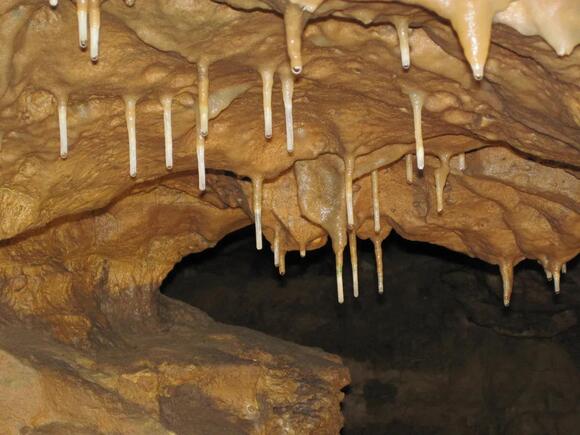
Underground at Natural Bridge Caverns in Texas, the ceilings are lined with thin, hollow mineral tubes known as soda straws. They look fragile, like rows of tiny glass icicles, but they are slowly built one droplet at a time. When mineral‑rich water drips from the cave roof, a small ring of calcite can form around the edge of the drop; as more water follows the same path, the ring extends downward, creating a straw‑like tube.
Given enough time, these can thicken into full stalactites, but catching them in the soda straw stage feels like seeing a sculpture mid‑creation. Conditions have to stay stable enough for the dripping and mineral saturation to continue for long periods. To me, this is geology at its most meditative: nothing dramatic, just countless tiny chemical decisions adding up to delicate stone architecture. It is weird not because it is big or flashy, but because rock is quietly growing in the dark while nobody’s watching.
13. Shiprock, New Mexico: The Spine of an Ancient Volcano
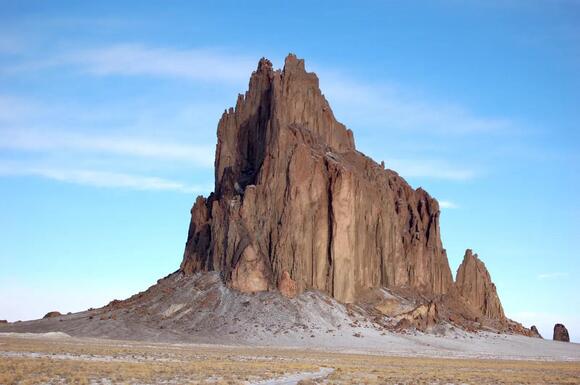
Shiprock rises abruptly from the Navajo Nation landscape like the prow of a stone ship breaking through the desert floor. This striking peak is the eroded throat of an ancient volcano, composed of hard volcanic breccia and other intrusive rocks. Long, thin ridges of dark rock radiate out from it like stone fins, representing solidified magma that filled fractures known as dikes.
Over millions of years, the softer surrounding rocks eroded away, leaving this resistant core exposed and towering above the plains. The geometry of Shiprock and its dike walls gives you a rare three‑dimensional look at the plumbing of an extinct volcano. Standing nearby, it is hard not to feel like you are looking at the skeleton of something massive that once roared with lava and gas. Now it is quiet, but its shape still shouts about the forces that built it.
14. The Great Sand Dunes, Colorado: A Towering Inland Desert
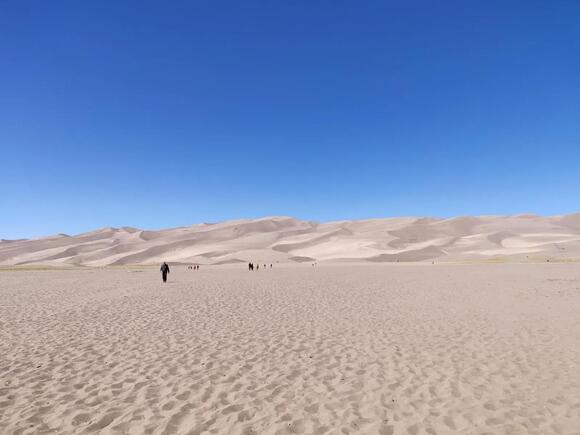
At the base of Colorado’s Sangre de Cristo Mountains, the Great Sand Dunes rise in steep, golden waves that are surprisingly tall for an inland dune field. Some of the dunes reach heights comparable to multi‑story buildings, making them the tallest in North America. The sand was originally carried down from surrounding mountains by streams and rivers, then blown by prevailing winds into this natural basin where it became trapped.
Those winds continue to reshape the dunes constantly, pushing sand up their windward sides and letting it avalanche down the steeper slip faces. Even though sand dunes are familiar, seeing them piled this high against a backdrop of snow‑capped peaks feels oddly out of place, almost like a chunk of Sahara got dropped in the Rockies. The science of their formation is clear, but the visual contrast is still startling every time you crest a ridge and see more sand stacked beyond.
15. Grand Prismatic Spring’s Colorful Rings, Wyoming: Thermophiles Painting in Heat
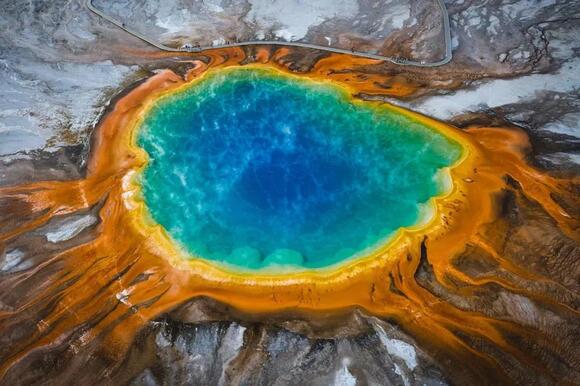
In Yellowstone National Park, Grand Prismatic Spring might be one of the most photographed hot springs on Earth, but it has not stopped being weird. From above, it shows vivid concentric rings of blue, green, yellow, and orange, radiating out from a deep turquoise center. The colors are not paint or minerals alone; they are created by communities of microorganisms that thrive in different temperature zones around the spring.
The hottest, central water is essentially too extreme for most life, so it stays a clear blue, while cooler edges host heat‑tolerant bacteria and algae that produce colorful pigments. As the water flows outward and cools, different species dominate, literally banding the pool with biological color. It is a gorgeous reminder that life and geology are not separate stories; they remix and rewrite each other constantly. Here, microbes are using a geothermal canvas to show off, and the planet gets all the credit.
Conclusion: America’s Strangest Rocks and What They Say About Us
When you line up these fifteen formations side by side, a pattern emerges that is bigger than any single rock tower or glowing hot spring. America’s weirdest geological sites are less about isolated miracles and more about time, pressure, chemistry, and erosion taking slightly different paths. The Wave and Bryce Canyon owe everything to patient sculpting by wind and water, while Devils Tower and Shiprock are the exposed guts of ancient volcanoes that refuse to erode at the same pace as their surroundings.
What strikes me most is how visiting places like these quietly changes the way you see the everyday landscape. After you have stood on a lava field at Craters of the Moon or watched dunes tower over mountain meadows in Colorado, a simple road cut or riverbank suddenly looks more like a cross‑section of a story instead of just dirt. In a world obsessed with quick thrills, these formations are a slow‑burn reminder that the planet is creative on a timeline that makes our lives look like brief, bright sparks. Next time you pass an odd outcrop on the highway, are you going to shrug it off – or wonder what strange, patient forces shaped it into being?