Piggy is the bullied, bespectacled boy known for his intellect, and Ralph is the natural leader, who insists that rules and order will keep the island civilised. Ralph's adversary, the power-hungry Jack, leads the other boys to anarchy and violence against each other. Simon is a visionary, a sacrificial figure who understands that the evil on the island comes from inside the boys themselves. Golding orchestrated these types with such balance that the book has long been viewed as a microcosm of society. And it is classroom-ready, loaded with debatable questions about good versus evil and order versus chaos.
Its Cold War origins
For all its universality, though, the novel was definitely a product of its time. Kendall, who is the editor of William Golding: The Faber Letters, a collection of correspondence between Golding and his book editor, says: "You can see in the manuscript form, its initial conception, that it is actually a World War Three novel. It's a nuclear war that's being described and that the boys are being evacuated away from." In the first few manuscript pages, deleted from the book, "It says if they were only big enough to be able to see through the airplane windows they would see the big mushroom cloud behind them. So that really hammers home what's going on, which is that the boys only end up doing on the island what the adults are doing on a global scale." The original version, Kendall says, "is very much aware of the nuclear age and the dangers that that brings."

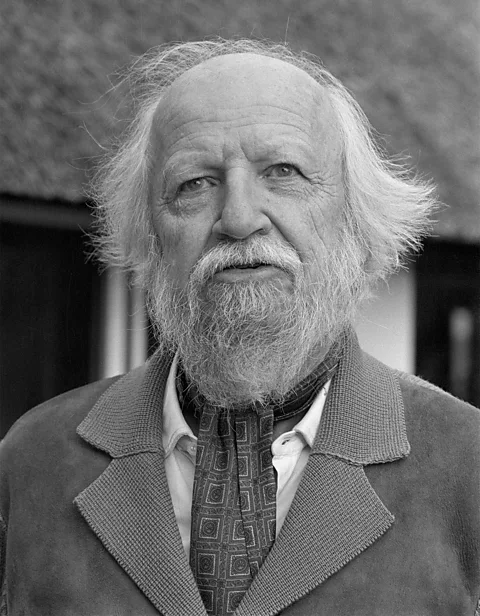 Getty Images
But the book has only one specific reference, to "the Reds", hinting at the Cold War, and that vagueness has made it far more open to various interpretations over the decades. Carver says: "To begin with, people saw it in very clearly religious terms and made Simon, as I think he was meant to be, into a Christ figure." More recently, she notes, "the environmental angle has come to the fore" – with people referencing, for example, the way the boys set fire to the island – while she also believes that today "it's hard to ignore the rise of autocratic rulers around the world, and to not see that in terms of Jack… the rules of warfare, the rules of the right to a fair trial, all these things are on a knife edge and I think the book is relevant to that".