Big Game
Colorado’s San Luis Valley was a wildlife poacher’s paradise.
Then an undercover federal agent arrived.
By Nick Davidson
The Atavist Magazine, No. 174
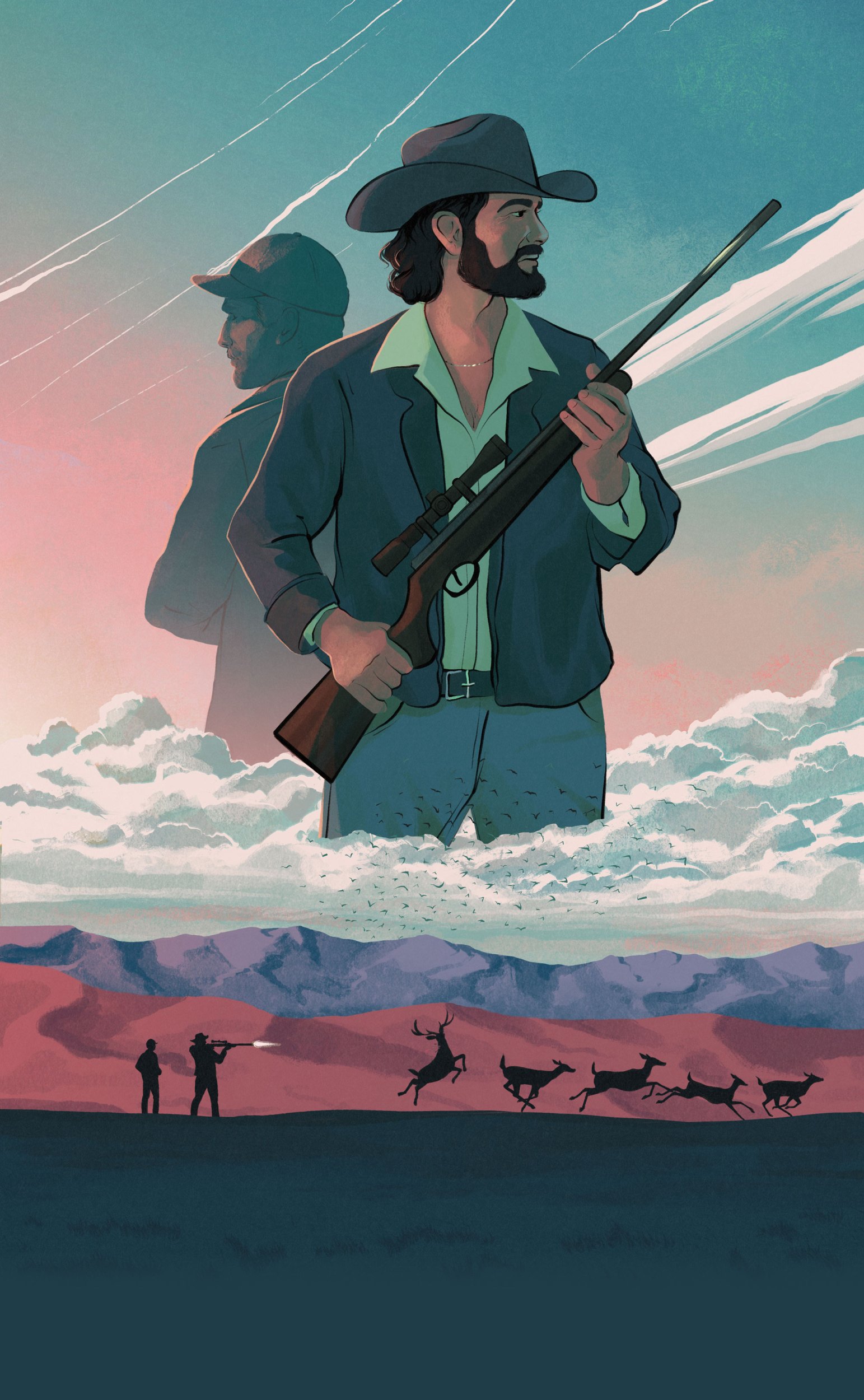
John Morgan woke to the sound of a fist hammering on his door. The clock beside him read 10:15 p.m. Morgan answered and found Costilla County deputy sheriff Robert Espinoza staring at him. Espinoza was muscular, with dark eyes, a kempt beard, and black, wavy hair that fell down his neck in a short mullet. It was a cool night in early September 1987, and most people in the quiet village of Fort Garland, Colorado, were asleep. Morgan had recently established himself as Fort Garland’s new taxidermist and wild-game sausage maker; he and his business partner, J.J., had opened a shop three weeks earlier. Morgan mostly mounted deer heads and sold elk chorizo, but Espinoza knew that he also trafficked in poached game.
“You want to go out and kill one?” Espinoza said. “I just saw four deer in a field.”
Hunting season was still a month away, but Espinoza didn’t care.
Morgan got dressed and followed the deputy sheriff. Espinoza grabbed a scoped, bolt-action .22 rifle and a box of shells from his cruiser, changed into camouflage coveralls, then hopped into Morgan’s pickup. He directed Morgan to a dead-end gravel road north of town, heading toward Blanca Peak, the tallest mountain in the Sangre de Cristo range. The two men drove to the road’s terminus looking for signs of game wardens—the state employees tasked with enforcing hunting regulations—then backtracked to an open field adjacent to a scrum of homes.
“There they are,” Espinoza said, pointing into the alfalfa. “Turn your lights on them.”
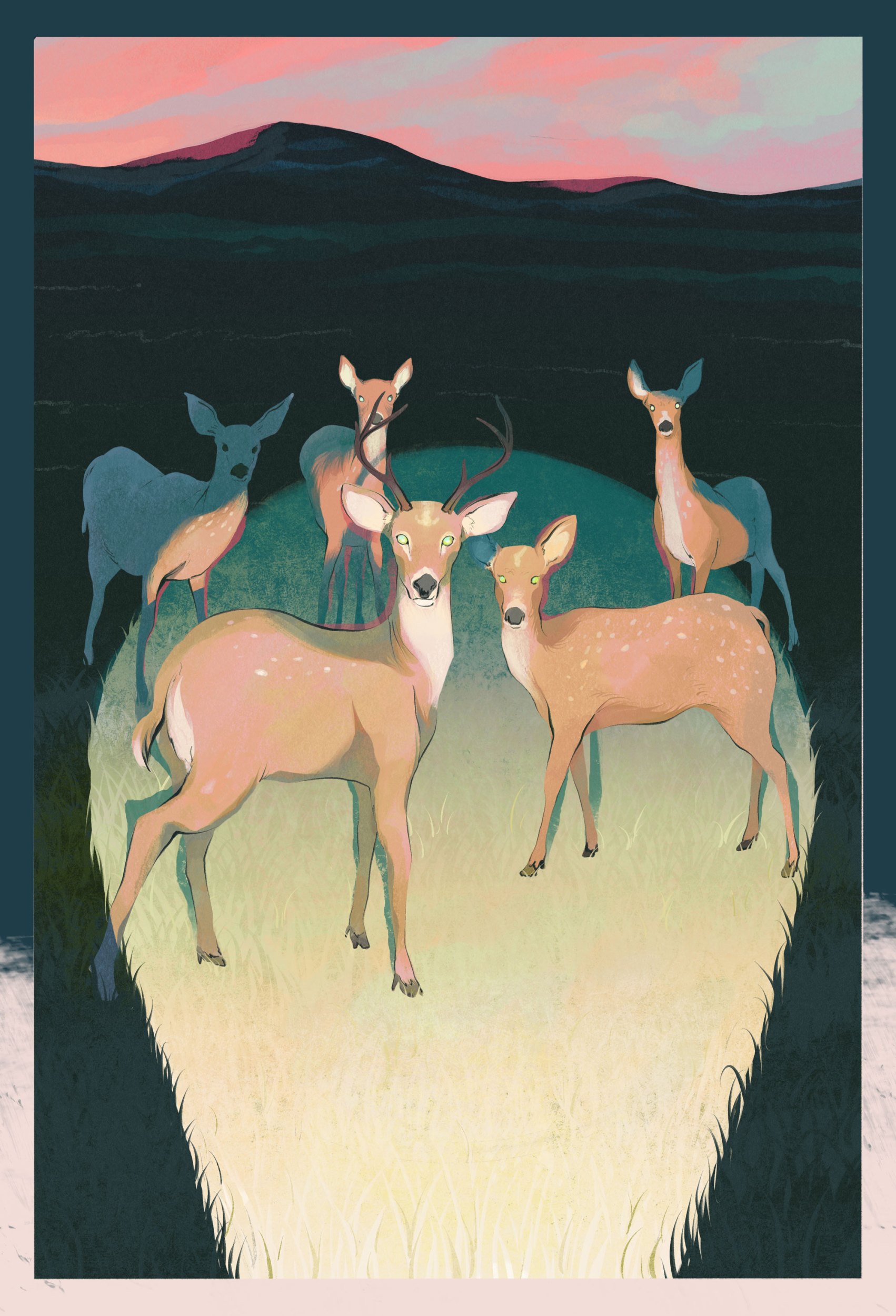
Five deer grazed in the truck’s beams. Espinoza raised his rifle, fired a single shot, and watched one of the animals fall.
Morgan sped them back to Espinoza’s cruiser, where the men listened for a game warden to come over the radio. When it was clear that no one had heard the gunshot, they returned to the field. The buck Espinoza had hit stood up at their approach; the first round had merely wounded the animal. The deputy shouldered his rifle and dropped it with a second shot.
Near the dump south of Fort Garland, Morgan gutted the deer at the bottom of a pit. Espinoza offered to split the meat and asked Morgan to turn his half into sausage.
“Do the game wardens use planes here?” Morgan asked, gesturing at the pile of offal in the moonlight. “Sometimes,” Espinoza said. He had once shot at one.
“I’m in a position where I can help you,” Espinoza told Morgan. “If they’re about to raid you or something, I can let you know.” Morgan said he appreciated that.
“But I have to be real careful,” Espinoza added. “If I find out you’re a federal agent, I’ll shoot you and leave you out here in a gut pile.”
Morgan said plenty of locals could vouch for him.
After finishing up with Espinoza, Morgan took the deer back to his shop. But he needed J.J.’s help to process the meat, because he didn’t know the first thing about making sausage. He wasn’t a taxidermist, and his name wasn’t John Morgan. He was George Morrison, a special agent with the U.S. Fish and Wildlife Service. And he intended to take down Espinoza and dozens of other men he believed were among the American West’s worst poachers.
“If your true identity is discovered, there’s a good chance they will take you on in numbers or from afar with a rifle in the dark of the night,” Grosz said.
Morrison had worked in wildlife law enforcement for a decade, beginning as a state game warden in Ohio, where he grew up. From March to December, he checked anglers’ licenses and chased night hunters jacklighting deer—an illegal tactic that blinds animals for easier killing. When the Ohio Division of Wildlife required a covert operator to infiltrate a poaching ring in the Appalachian Mountains, Morrison jumped at the opportunity. He found that he had a knack for going undercover, and in 1984, the Fish and Wildlife Service hired him as a federal investigator. He spent the next nine months on Long Island, New York, casing duck hunters, scallop boats, and taxidermists who illegally stuffed migratory birds.
Then he got a call from Terry Grosz, who offered him a position in the Rocky Mountains. Grosz was a burly, no-nonsense special agent who oversaw a network of two dozen operatives covering eight states. Morrison had long dreamed of living in rugged country. He packed his pickup and drove west.
Not long into the job, Grosz called Morrison into his office at Fish and Wildlife’s Denver headquarters. Morrison was in his early thirties at the time, with tousled blond hair, dark blue eyes, and a Sam Elliott voice. (Grosz later described him in a book as a “tall, muscular drink of water with not more than four percent body fat on his lean six-foot, five-inch frame,” who moved “with the deliberate energy and practiced smoothness of an anaconda.”) Morrison had already initiated three covert investigations in the Rockies. In one he posed as a woodcutter working for an outfitter who poached bighorn sheep at a remote hunting camp in Wyoming’s Wind River Range. In another he made backroom deals with a Korean sex trafficker peddling black market bear parts in Colorado. These were worthy projects, and Grosz was pleased with their progress. But he had called Morrison with a special assignment in mind.
A swaggering lawman with a cowboy sensibility and a soft spot for what he called “the poor critters,” Grosz took personal offense at the illegal slaughter of animals in his domain. He was especially peeved about the situation in the San Luis Valley, some two hundred miles south of Denver. Grosz wanted Morrison to launch a clandestine investigation into the rampant killing of the valley’s wildlife. “It would require you to sever all but the most necessary ties with your fellow officers,” Grosz told him.
A mile and a half above sea level, the San Luis Valley stretches across parts of eight counties in two states. Most of its terrain is high-desert scrubland, peppered with sagebrush and piñon-juniper forest. Spruce- and fir-clad mountains soar into the sky—the San Juans form the valley’s western edge, and to the east are the Sangre de Cristos, where the Great Sand Dunes dust the knees of the highest peaks. The towns scattered across the region are little more than blips in otherwise desolate country.
In 1987, the San Luis Valley was a tequila-swilling, gun-toting pocket of the Old West transposed onto modern America. Morrison would focus his efforts primarily on Costilla and Alamosa Counties in Colorado, and Taos County in New Mexico. These were economically depressed locations; Costilla was Colorado’s poorest county. As a white man, Morrison would stand out. Most of the area’s denizens descended from the settlers of Spanish New Mexico, who in the 1850s answered Don Carlos Beaubien’s call to colonize a million-acre land grant he had acquired after the Mexican–American War. Some locals traced their roots in the valley even further back, to the Catholic Penitentes of the 1600s or to earlier Indigenous nations.
By reputation, residents were hostile to outsiders, and for good reason. In 1960, a timber baron from North Carolina named John Taylor strode into the valley and bought a 77,000-acre tract known as La Sierra. The land had been privately held by a far-off entity for years, but locals believed they had the right to use it to hunt, graze cattle, and cut wood, as they had for more than a century. Taylor disagreed. A protracted land-rights war ensued. Taylor erected fences; people tore them down. Taylor eventually won the claim to his land in federal court, but many of the valley’s residents thought the ruling was racist—a federal judge had given a white man thousands of acres that had belonged to them before the area was even part of the United States. People continued to vandalize and poach on Taylor’s property. In October 1975, the timberman awoke to a spray of bullets cutting through his roof, one of which shattered his ankle. He left the valley and never returned, though La Sierra remained in his possession and tensions simmered between locals and the land’s caretakers.
Many valley residents claimed to be subsistence hunters, and certainly there were people who shot only what they needed to fill their freezers, even if they neglected to get a hunting license to do so. But others killed indiscriminately. State and federal authorities thought that this faction—made up of hardcore loners and ragtag rings of friends, farmers, and businessmen—had decimated populations of deer, elk, eagles, and other animals protected by hunting seasons or outright bans on killing. Crooked cops, judges, and county employees accepted poached meat as gifts and arranged cover-ups. People in the valley who opposed poaching mostly stayed silent. Snitches found their homes shot up or set afire, their children threatened, or their cattle butchered.
As the Colorado Division of Wildlife saw it, by the mid-1980s the San Luis Valley had become a lawless backcountry where hunters traded poached wildlife for goods and services, to pay off gambling debts, or to obtain cocaine and marijuana. (The U.S. Drug Enforcement Administration had its sights on the valley, too.) State authorities shared information about poachers with U.S. Fish and Wildlife, and the agency in turn produced a list of people it believed to be the worst perpetrators—fifty-eight names in all. Grosz felt that it was up to his agency to break the valley’s poaching habit and prosecute as many people as possible. That was where Morrison came in. But it was a dangerous proposition. Some of the men on the Fish and Wildlife list carried felony convictions for arson, robbery, battery, and homicide.
Grosz warned Morrison that he couldn’t provide him with protection. Local law enforcement would remain ignorant of his purpose by design—some officers were the very poachers Morrison would be charged with investigating. “If your true identity is discovered, there’s a good chance they will take you on in numbers or from afar with a rifle in the dark of the night,” Grosz said. “You will have to survive using your own wits, common sense, and the god of your choice.”
Morrison hadn’t said much while Grosz spoke, but his enthusiasm was palpable. “You have a deal,” he replied. “This is going to be a good one.”
Operation SLV was a go. Morrison took a six-week CIA Spanish course, then called his parents. He told them they wouldn’t hear from him for a while.
Espinoza was undeterred; he had poaching fever. “It’s like a sickness,” he said. “I wish there was a pill you could take to make you stop.”
Morrison needed a partner, someone who could help him maintain his false identity. That’s where Jim Bensley came in. More than a dozen years earlier, Grosz had caught him tanning the hides of protected desert bighorn sheep for the ringleader of a Los Angeles–area poaching racket. Bensley, a slim man with sandy hair and a narrow face, later showed up in Grosz’s office, announced that he’d gone straight, and offered his services in atonement.
Morrison had already collaborated with Bensley on a case involving two prominent doctors who wanted to smuggle big-cat skins through an infamous Mexican hunter. Bensley was a first-rate taxidermist and a skilled hunter and angler. He also knew how poachers thought. Morrison considered him crucial to Operation SLV’s success. Without Bensley, Morrison might pay $400 for a $25 coyote skin and blow his cover. “I had no idea how to grade fur or determine what it was,” Morrison later said in a series of unpublished interviews. (In addition to those interviews, which were shared with me, this story is primarily drawn from 1,200 pages of government documents, audiotapes Morrison covertly recorded during his investigation, newspaper clippings, and a chapter on Operation SLV in one of Terry Grosz’s many books about his career.)
Morrison and Bensley, who went by J.J. during the operation, set up a storefront near Colorado Springs, 140 miles northeast of the San Luis Valley. “The plan was slow penetration,” Morrison later said. The partners posted fliers advertising their taxidermy and sausage-making services, and they engaged hunters along a route that threaded through eight towns in southern Colorado and northern New Mexico. Soon poachers were propositioning them. But as the months went by, the commute from their store to the valley stymied the investigation’s progress. “The only way we’re going to get anything done is just to move in with them,” Bensley said.
So they rented a pink and green adobe building on Fourth Avenue, the main street in Fort Garland. The decrepit, leaky structure was in such bad shape that Bensley thought it might collapse on them. Still, he stocked it with his own antlers and lion mounts to make the operation look legit. The partners parked a run-down trailer near the building, to serve as their living quarters, and they called their shop Bear River Trading Company. Poachers came to it like moths to a flame.
Their new landlord was none other than Robert Espinoza, whose name was on the list Grosz had shared with Morrison. At 31, Espinoza was a veteran of the Marine Corps who had served three tours in Vietnam and had a black belt in karate. He had tattoos on his arms and chest, and some locals called him Rambo. In addition to the sheriff’s office, he worked at the Fort Garland community center, where he taught martial arts and boxing and served as a lifeguard and EMT. He was respected in the community he served.
But according to Morrison’s intelligence files, Espinoza could also be dangerous when drunk, and his affinity for poaching was no secret. He’d illegally killed a buck in Great Sand Dunes National Monument, and his hunting license was under a two-year suspension. A year before that, he’d accidentally shot a friend in the ankle when they were jacklighting deer. After one stint in jail, he’d killed four bull elk and sold them in Denver to pay his legal fees. He’d promised to quit poaching when he became a deputy sheriff, Espinoza confided in Morrison, whom he knew as John Morgan. But then, according to Morrison’s investigation reports, Espinoza said the Costilla County sheriff had told him he could shoot what he wanted as long as he was careful.
Espinoza became a regular at Bear River Trading Company and often invited Morrison on illegal hunts. One night in October 1987, a month after joking that he’d kill Morrison if he was a federal agent, Espinoza told Morrison to grab his rifle—he’d seen a big buck west of town, by the gate of Forbes Ranch, a property comprising tens of thousands of acres. The two men sped in Espinoza’s cruiser until they came upon a large mule deer grazing. Espinoza held a spotlight to blind the buck and directed Morrison to shoot.
So far, when poachers had invited him on hunts, Morrison had left the rifle work to others or intentionally aimed wide. Too many misses, though, would risk scrutiny. Morrison raised the rifle to his eye, took a breath, then fired a single shot. The deer collapsed.
Espinoza killed several more deer over the next week. Morrison paid poachers in cash from the coffer allocated to his investigation, but the funds were precious. He couldn’t blow them all on one sheriff’s deputy. He had already told Espinoza to quit killing deer—he had enough meat at the moment. But Espinoza was undeterred; he had poaching fever. “It’s like a sickness,” he said. “I wish there was a pill you could take to make you stop.”
One day, Espinoza showed up at Morrison and Bensley’s shop with yet another deer. “Robert, why do you keep killing when we tell you not to?” Bensley asked.
“I just like to watch them die,” Espinoza replied.
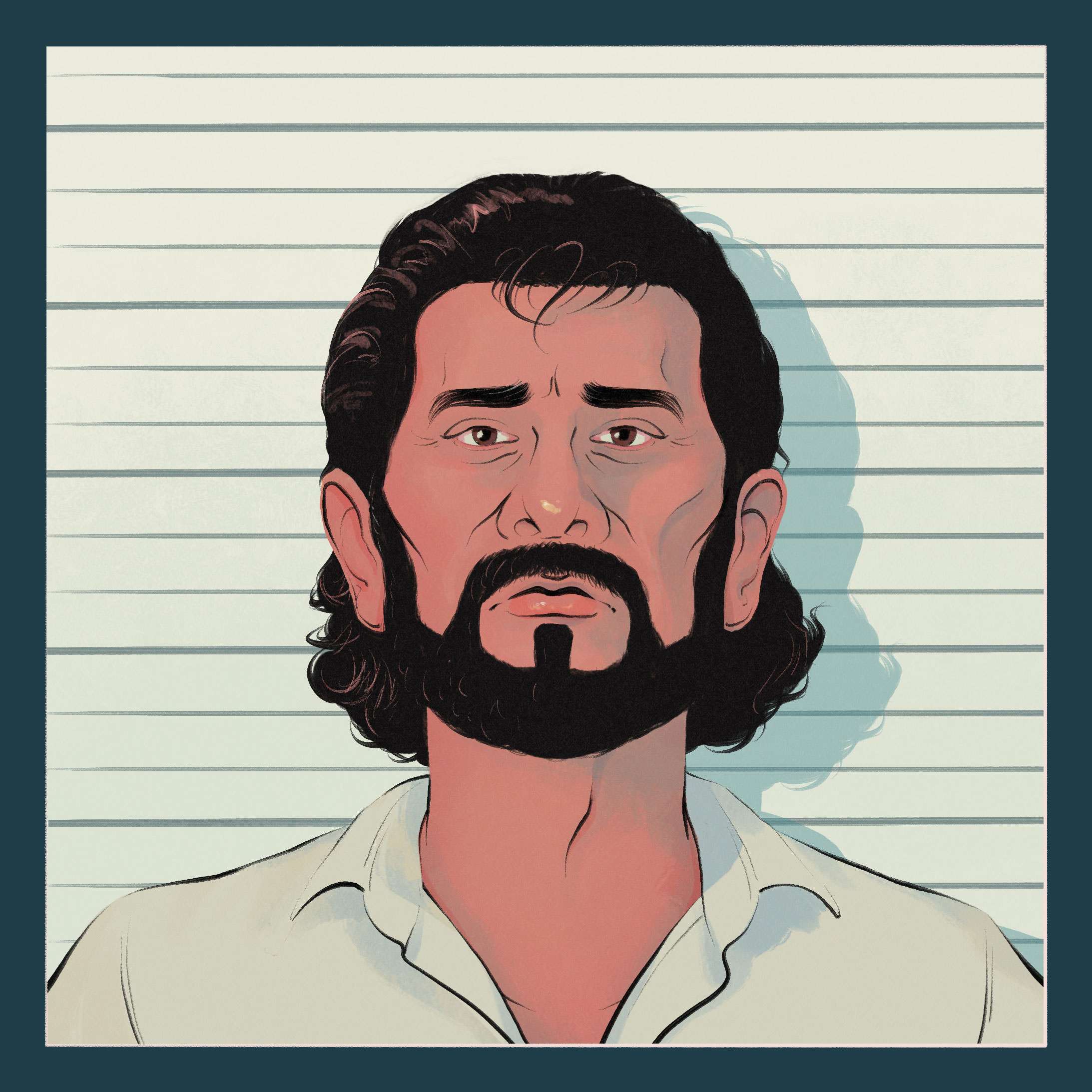
As prolific as Espinoza was, he wasn’t the worst offender in the valley. That dubious honor may have belonged to Fred Carson. One day, as he and Morrison drove into the mountains on a hunt, Carson said that he’d once massacred eleven deer in a single outing. When he’d exhausted his supply of bullets, he’d run the animals down with his truck and finished them off with an axe.
The 40-year-old Carson was reputed to be a scion of Kit Carson, the storied nineteenth-century mountain man and trapper. Many landmarks in the region were named for him: Carson National Forest, Fort Garland’s Carson Avenue, Kit Carson Peak. Fred Carson wore a ball cap backward and walked with a faint limp. He had once worked aboveboard guiding hunts at Taylor Ranch, but he now made a living killing wildlife and fencing stolen goods, including guns. He had his intimates, but many people in the valley feared him. “Nobody messed with Freddie,” Bensley told me. At five foot eight, he wasn’t a big man, but “everybody knew he was a half-bubble off or more.”
State and federal wildlife agencies considered Fred and his brother Clyde among the biggest poachers in the valley. Clyde ran a small coffee shop called Guido’s, and he had a pushcart for selling hot dogs secretly made of poached meat; he sometimes served them to game wardens for a laugh. Morrison was after both brothers.
Early one December morning, Fred Carson picked up Morrison in his camouflage Chevy pickup. Morrison’s dog, Rebel, who went everywhere with him, rode in back. Carson drove to Forbes Park, a community northeast of Fort Garland, where he pulled up to a cabin and told Morrison to watch the road. Then he broke into the cabin and rushed out carrying a gas heater. He bragged about all the other cabins he’d ransacked in the valley and told Morrison that one day he planned to break into the Taylor Ranch headquarters, steal what he could, and burn the place down.
Carson had a scoped .30-06 Winchester rifle in his truck. Down the road from the cabin, he picked out two elk on Morrison’s side of the vehicle. “Shoot one of them sons of bitches,” he said. Morrison grabbed the Winchester and fired out the window, missing on purpose. The elk bolted, but Carson wasn’t done with them.
Later that afternoon, Bensley joined Carson and Morrison near Forbes Park to hunt. When a dozen elk came across the road, Carson hollered, “Get the rifle!” Bensley tossed him a gun, and Carson dropped a cow elk on the third shot. It didn’t die right away, and Carson walked to where it lay writhing. Stooping, he smashed its head with a stone, then drew his knife and cut its throat.
After loading the elk into Carson’s truck, Morrison called out for Rebel—the dog had run off somewhere. Carson thought they had lingered too long in the open and risked discovery by game wardens. He wasn’t about to let a dog give him trouble with the law, so he grabbed a rifle. “Where is he?” he demanded. “I’m gonna kill the son of a bitch.”
Bensley knew how much Rebel meant to Morrison. A standoff seemed imminent, the kind that could end with covers blown—or worse. Bensley was pretty sure Carson’s gun was empty, and he intended to keep it that way. Quietly, he grabbed the box of shells under the seat of Carson’s truck and tossed it into nearby sagebrush while the poacher wasn’t looking. Just then Rebel returned and jumped into the truck. The men’s temperatures cooled.
The trio gutted the elk on a back road and then ate dinner with Carson’s mother at her ranch in La Valley, beneath the pleated skirts of the Sangre de Cristos. Carson bragged about having nine elk at a time hanging in his mother’s barn. Later, as the men were driving home through the cold night, they passed a local bar. “Stop the truck,” Carson demanded. The establishment was closed, but he kicked in the door. “He came out with a half-gallon of whiskey,” Bensley recalled, “chugalugging it.”
Morrison was juggling three covert identities across the Mountain West, and it was stretching him thin.
Between Carson, Espinoza, and a cluster of other customers, Morrison and Bensley were joining illegal hunts almost daily as 1987 wound down. Morrison didn’t want to create market conditions that fueled the very activities he sought to curb, so he bought meat and antlers selectively—just enough to gather evidence against each poacher he was after—and bargained relentlessly below market value. Still, what he offered was more than many in the valley had seen in several lean years. “Once they got faith in us, we couldn’t get rid of them,” Bensley said. “I mean, they just would not stop killing.”
For Morrison, that meant sixteen-hour days. He had to run the shop, participate in hunts, then document evidence, write reports, and review conversations he’d taped in secret. Furthermore, he was still running the investigations he’d launched before Grosz sent him to the San Luis Valley. Morrison was juggling three covert identities across the Mountain West, and it was stretching him thin. “I was not wise about how I proceeded,” he later said. “Just gung-ho and willing to work.”
To make matters worse, as winter set in, the tumbledown living quarters in the trailer grew frigid. The shop leaked, and snow blew through cracks in the walls. Bensley and Morrison spent nights bundled up in sleeping bags fully clothed. “Living in that place was hell,” Bensley said. “It’s just a dirty, filthy old antique town to begin with.”
Bensley grew increasingly afraid of the poachers who now considered him and Morrison friends. One man had burned down the sheriff’s house. “There’s nothing they wouldn’t do,” Bensley said. “Nothing.” Given all the illicit hunting he and Morrison were participating in, Bensley also feared that game wardens would catch them and derail their undercover operation. “They were after us like stink on a gut pile,” he said.
Meanwhile, Bensley had a wife in Fort Collins, and she was dying of cancer. He needed to be with her but also felt a responsibility to finish the job in the valley. Morrison worried about his partner—Bensley wasn’t a federal agent, and he hadn’t been trained for prolonged subterfuge. He worked hard and met the high demand for taxidermy at the Fort Garland shop, but the psychological toll was mounting. “I had to be with him all the time to protect him,” Morrison recalled. “He’s a citizen trying to help us.” Sooner or later, Morrison feared, Bensley was bound to make a mistake.
Whenever Morrison had accrued a sufficient quantity of contraband, he and Bensley took a midnight run to stash the meat and antlers in a series of faraway evidence lockers. They met periodically with Fish and Wildlife agents at lonely motels, seventy or eighty miles away, to share intel and discuss the operation. To avoid being followed, they traveled back roads and took labyrinthine routes to each rendezvous.
One such visit brought Morrison face-to-face with Terry Grosz for the first time in months. Grosz had wondered if his agent would be affected by all he had witnessed, but Morrison was in even better physical condition than before and seemed to be riding the high of pursuit. Before they parted ways, Morrison regarded Grosz with a glint in his eye. “You were wrong, chief,” he said. “There aren’t fifty-eight hardcore market hunters in the valley.”
He climbed into his truck.
“There are fifty-nine.”
Two bulls lay quartered and wrapped in trash bags. An array of other illegal specimens were scattered around the shop: a mule deer skull and cape, three golden eagles in a brine barrel, a handful of otter hides, and a charred hawk.
On January 8, 1988, Colorado game warden Mark Cousins got a call from Clayton Wetherill, his superior at the Division of Wildlife. Over the course of the previous week, a man named Steve Benavidez, who lived in the San Luis Valley, had witnessed a herd of nine bull elk dwindle. “These were choice bulls, beautiful animals,” Benavidez told Wetherill.
Benavidez, who was a former Costilla County deputy sheriff, had done some sleuthing. Tire tracks cut the snowy hillside where the elk grazed, and he studied their tread. When he later visited Bear River Trading Company, he noticed that a truck parked there bore the same tread pattern. Benavidez and a friend walked to the back of the shop and found a pair of elk skulls and antlers boiling, part of the process of turning them into mounts. Fresh blood stained the snow. Through a window, they saw what they thought was an elk carcass hanging.
Benavidez’s friend had helped construct the building years earlier and remembered that it contained a basement accessible through a trap door—the kind of place, Benavidez thought, where one might hide incriminating evidence. He suggested to Wetherill that the Division of Wildlife look into John Morgan, J.J., and that basement.
Cousins needed no further prodding from Wetherill. He lived in Fort Garland, and he’d had his eye on Morgan for a while.
Game wardens in the valley wore targets on their backs. Their horses were shot, their kids bullied, and their wives scorned. “There is always a vacancy in Fort Garland,” a former Division of Wildlife officer once wrote. Some wardens were doubly loathed: Many of them were white men, and they were seen as envoys of a distant authority whose power wasn’t welcome. Even the sheriff was said to hate the Division of Wildlife.
During his brief tenure, Cousins had already received his measure of intimidation: physical aggression, tire spikes in his driveway, threats to kill his dog. He had come to see poachers as bad guys motivated purely by profit. And he believed that John Morgan’s taxidermy shop was the hub of the valley’s racket.
Following the call from Wetherill, Cousins sped to the district attorney’s office to obtain a search warrant. Another Division of Wildlife officer, Tom Rauch, went straight to the taxidermy shop. Morrison was there, and Rauch asked to come inside. Morrison declined to let him in the door. Cousins was taking the warrant from the DA to a judge’s house for a signature when Rauch radioed. “Morgan’s burning something in the shop,” he said. “It smells like meat and hair.” Cousins feared that Morgan was destroying evidence and told Rauch to stop him if he could.
It was dark when Cousins arrived at the shop and presented Morrison with the warrant. “I might as well show you the elk,” Morrison said. He led the game wardens through the trap door to the basement, which Morrison was using just as Benavidez had suspected. Two bulls lay quartered and wrapped in trash bags. An array of other illegal specimens were scattered around the shop: a mule deer skull and cape, three golden eagles in a brine barrel, a handful of otter hides, and a charred hawk. All of the poached material, Morrison said, was his alone—he wasn’t about to implicate anyone else and blow up his investigation.
Cousins and Rauch asked Morrison why he had set fire to some of the contraband. “I was scared,” Morrison answered. “I thought it was something I could get in trouble for.” The wardens cuffed him and booked the man they believed to be John Morgan into the county jail.
In truth, Morrison had phoned Grosz from the shop before the game wardens entered. He told his boss that he’d destroyed a tape of surreptitiously recorded conversations, then asked what else he should do. “Burn the eagles,” Grosz advised. If the smell of singed feathers provoked Rauch to enter the shop illegally, before Cousins arrived with a warrant, Operation SLV could continue unimpeded.
But the gambit hadn’t worked, and now Morrison’s arrest put Grosz in a bind. Federal law barred undercover officers from giving false testimony or deceiving judges, which meant that Morrison couldn’t appear in court to plead his case as John Morgan. Nor could he reveal his true identity, unless he wanted to jeopardize his safety and pull the plug on Operation SLV prematurely. More than a year and extensive resources had been invested in the operation, but the feds weren’t ready to prosecute. There were too many loose ends, including half a dozen known poachers whom Morrison had yet to pursue.
The day after Morrison’s arrest, Grosz visited Cousins and Rauch. He introduced himself and congratulated them for catching “such a fine son of a bitch.” Then he made an offer. “Let me talk to Morgan,” he said. Grosz proposed that the wardens drop the criminal charges associated with Morgan’s arrest, issue state citations that carried only fines, and let Fish and Wildlife throw federal charges at the taxidermist—the kind that would break him financially. One conversation, he promised the men, and Morgan would be out of the wardens’ hair. “We can make his life so miserable he will get the hell out of Dodge,” Grosz said.
But Grosz had no intention of filing charges. The real plan was to get Morrison out of legal trouble and move him to the southern reaches of the San Luis Valley, just over the state line in New Mexico.
Cousins and Rauch agreed to let Grosz talk to the taxidermist, and the three men headed to Morrison’s shop. Morrison had posted bond with $1,378 in cash that morning and returned to the old adobe to clean animal hides while he waited to learn his fate. He’d consumed several cups of coffee so he would appear nervous.
Under the wardens’ gaze, Grosz interrogated his own agent about his activities for a half hour. Morrison kept his eyes on the floor. He declined to name other poachers. He said that he was afraid of what they’d do to him if they found out he’d talked. Indicating that he was keen to avoid jail time, he agreed to pay any fines levied on him. Cousins and Rauch were satisfied.
“To continue violating wildlife laws,” Grosz warned his agent, “will bring the full force of the federal government down around your ears.”
Morrison said he understood. “I don’t want any more trouble,” he told Grosz. He tried not to laugh when he said it.
“This is not exactly a legit head,” Morrison told Anastasia over the phone. “I have to do things sort of on the sly.”
Morrison faced fines of a few thousand dollars, which were paid out of the Operation SLV budget. But to maintain the facade of a hard-up taxidermist, Morrison accepted help from Robert Espinoza and Maqueze “Chief” Gallegos to raise the cash they thought he needed. Chief was a 61-year-old Ute-Apache and a Fort Garland resident. He and Espinoza had killed the elk Morrison was caught processing—one of the “choice bulls” Benavidez had noticed were absent from a local herd.
Chief and Espinoza had a plan to cover Morrison’s fines that centered on a well-off hunter from New Jersey named Arthur Anastasia. Chief had guided him on an elk hunt the previous fall, but a bull Anastasia had shot disappeared before he could finish it off. As it happened, Morrison had a rack of illegally obtained elk antlers, and Chief felt confident that Anastasia would pay good money for it if he was told the right story.
Chief phoned Anastasia and said he’d tracked down the bull that got away. Espinoza had helped him, Chief claimed, and the search had taken three days. Now they wanted $300 each for their efforts. Chief said that a taxidermist named John Morgan would mount the bull’s antlers, and Anastasia would need to pay him generously, too, since Morgan could lose his license for doing the job.
Anastasia was elated. He hadn’t killed an elk since 1971. Morrison charged him $800 for the mounting job. “This is not exactly a legit head,” he told Anastasia on the phone. “I have to do things sort of on the sly.”
Anastasia didn’t mind. He said that he was interested in exotics too, perhaps a polar bear, if Morrison came across any. He also planned to bring a group of friends out to Colorado for a hunting trip next fall—Chief would arrange it—and they’d give Morrison all the business he could handle.
Chief had once told Morrison that if he was ever caught poaching, he would kill the officer who found him.
Soon after getting the money from Anastasia, Morrison relocated from Fort Garland to Costilla, New Mexico, half a mile across the state line. As far as the poachers he’d befriended knew, the move was due to his run-in with Colorado authorities—he needed to stay out of their crosshairs. But it didn’t remove him from the poachers’ orbit; they continued to take him out on illegal hunts.
One day, Morrison and Chief went to put out bait for wild turkeys. As they drove, Chief talked about his friendship with Espinoza, which was on the rocks after the deputy sheriff’s loose talk about their scheme had made its way to Anastasia. (In fact, Anastasia didn’t care; he was happy to get an elk mount whether he’d shot the animal or not.)
“I like Robert, but goddamn he’s too loose,” Chief said. “He’s money hungry.”
Morrison agreed. “He’s kill crazy.”
“He’ll do anything for money.”
“He thinks he’s the world’s greatest con artist.”
“Well, I tell ya,” Chief continued, “if you’re the world’s greatest, you got to go down sometime.”
“You haven’t. That’s ’cause you know what you’re doing.”
“I’ve been lucky, too. Still, I’m vulnerable. I can be caught. I’m gonna try everything I know not to. The only time I was caught in anything in my life is when somebody ratted me out. Ain’t never caught me doing nothing. Period.”
Chief had once told Morrison that if he was ever caught poaching, he would kill the officer who found him.
“I’m the same way,” Morrison said.
He watched the land sweep by through his truck window. He was now using a garage at his house in Costilla to store game and Bensley’s taxidermy work. (Bensley had been in Fort Collins when Morrison was arrested, stocking animals in an evidence freezer; Morrison told him to stay there and spend time with his wife.)
“I’m just a lot happier to be out of this town,” Morrison said, referring to Fort Garland. “Except for being away from you.”
“Once I get things straightened out, me and you can hunt in New Mexico, and they can kiss our fucking ass,” Chief said. He’d killed as many as 400 elk in his lifetime, and 1,400 deer, and he’d sold most of them, or so he said. “They ain’t fucking with my soul any. I’m trying to live a halfway decent life. Shit, I pray every day that I’m a better person than I have been.”
Now that he was living in Costilla, Morrison had a chance to go after poachers like Chief from a new angle. By tradition, the divide between one state and another held little meaning for the people of the San Luis Valley. But the federal Lacey Act, passed in 1900, made trafficking poached wildlife across state lines punishable by up to $250,000 and as much as five years in prison for each offense. All Morrison needed to do to bring the act to bear on his Colorado targets was entice them to bring their kills straight to him in New Mexico for processing.
Chief drove on, none the wiser. “I seen a coyote this morning,” he said. “A big bastard. Right out in the flat, right next to the road.” He wanted to kill it, but didn’t have his gun. “I coulda shot him right there. Goddamn it, I looked all year and couldn’t find one, and there he was.”
“That’s the way they are,” Morrison replied.
Morrison didn’t give Fred Carson his new phone number after he moved, but the poacher found him anyway. Carson needed money and wanted to sell an eagle to Morrison. First, though, he needed a gun. Carson’s own .30-06 was too large-caliber for birds—it would blow a hole in them so big they’d be worthless to a taxidermist. Morrison reluctantly agreed to lend Carson his own rifle. “If you’re going to shoot an eagle,” Morrison told him, “shoot a brown”—meaning a golden eagle—“not a bald.” Before handing his gun over, he adjusted the scope so Carson would miss.
But the scope jiggering didn’t work. Carson brought Morrison an eagle later the same day day and asked if he also took hawks. “I’ll kill anything,” Carson said. He meant it. He once claimed that he’d kill a person who spotted him committing a crime. “Fred was a little off-center,” Morrison later said. “Scary to be around.”
Threats followed Morrison wherever he went. A local man once told him what happened to people who snitched on poachers. “There’s some people out there that might turn you in,” he said. “But if they do, it’s not going to turn out well for them.” The man said a rancher had once informed on him and a friend for poaching deer. In return, they shot a bunch of his cattle.
When Morrison had to file a change of address in Taos, a poacher somehow ended up accompanying him. Morrison registered his new address at the post office, and as he walked out, he felt an urgent prickle of fear. He realized that, without thinking, he had written his real name on the address card. Had the poacher seen? Morrison made sure that his companion’s attention was diverted, then asked the woman behind the window to hand the card back. She looked stunned as he tore it up, filled out a new one with the name John Morgan, and left.
One night while drinking at a bar, Morrison ran into Danny Garcia, who often poached with the Carson brothers and was part of a group known as the San Luis Mafia, which dealt in drugs and intimidation. “Are you in cahoots with the feds?” Garcia asked him outright.
Garcia had seen other men get prison time when they were caught with poached eagles, like Morrison had been up in Fort Garland. He thought that Morrison’s light reprimand was strange. By now skilled at deflection, Morrison explained that his punishment hadn’t been especially lenient—he was fined $3,000, a hefty sum for almost anyone in the valley. “If I had been caught selling the birds,” he added, “I’d have been charged with a felony.”
Garcia found Morrison fixing his truck the next day. He had talked to Fred Carson. “Fred says you’re solid,” he conceded.
“He should know,” Morrison said, relieved.
Carson’s behavior, meanwhile, was becoming ever more erratic. He stole an elk head from Morrison and later turned up in Costilla with a stolen semi-automatic gun he wanted to sell for $275. He said he had other hot items—a TV, a pipe wrench, some fire extinguishers—that he needed to get rid of before they were traced to him. Law enforcement nabbed Carson shortly after, and he spent a week behind bars. He managed to search the jail, destroy a police file on one of his friends, and snort a pile of cocaine he found in evidence. When he got out, Carson told Morrison that he suspected Espinoza had snitched on him and that he was plotting payback.
Grosz wasn’t in touch with Morrison often, but he could tell that spending time with characters like Carson was taking a toll. “He was wearing down,” Grosz later wrote. “He had lasted longer in deep cover than most.” Bensley called Morrison from Fort Collins regularly to check on him. “I will never forget that, what he did and what that meant to me,” Morrison later said. A supervisor at New Mexico’s Department of Game and Fish named Tim Barraclough, who was privy to the undercover investigation, also stepped in to offer support. He helped Morrison transfer evidence and occasionally met him for a quiet dinner and a drink of whiskey outside the valley. These were welcome reprieves. Still, Morrison was nervous. “Did it keep me from doing what I was doing? No. Should it have?” he later said. He didn’t know the answer.
Morrison kept a pack ready in case he got into trouble and had to light out for the mountains. But there was no plan beyond that. And while he appreciated that Grosz didn’t micromanage him, there was a downside. “I could be dead for weeks,” Morrison said, “and nobody would know it.”
Morrison noted the locations of illegal mounts, meat, drugs, and guns in each house—more evidence for his investigation. Not that he needed it.
A few days before Christmas 1988, Morrison visited the poachers of the San Luis Valley bearing gifts like an outlaw Kris Kringle. He presented Espinoza with a tanned beaver; Chief got a coyote. All the men he visited received packages of sausage.
As he made the rounds, Morrison noted the locations of illegal mounts, meat, drugs, and guns in each house—more evidence for his investigation. Not that he needed it. By the end of the following month, Morrison had purchased ninety-six poached animals in whole or in part, weighing a total of thirteen tons. He had been offered or knew of an additional 547 elk, 2,005 deer, and ninety-two eagles killed across the valley. He had documented a total of 1,200 felonies and misdemeanors. Some of the kills he’d handled had been moved across state lines and even bartered for drugs. In addition to the Lacey Act, local hunters had violated the Endangered Species Act, the Migratory Bird Treaty Act, and the Bald and Golden Eagle Protection Act. One of Morrison’s final purchases was a live golden eagle that had been wounded and stored in a woodshed; he quietly transferred the bird to a licensed rehabilitator.
It would soon be time to bring in the cavalry and arrest the scores of men Morrison had been tracking. Among the last times he saw Espinoza, he found the deputy with his truck broken down on the roadside. Morrison took him for coffee. Espinoza had scored a massive deer head he felt would make the Boone and Crockett Big Game Records, the final authority on hunting achievements. Morrison said he’d like to see that. “And just the other day, there were two fucking bull elks and my dad didn’t tell me!” Espinoza complained. They had been standing fifty yards from his dad’s truck.
“He didn’t want you to go out there and kill them,” Morrison suggested. “He didn’t want you to get caught.”
Espinoza shook his head. “Huge fucking bulls.”
He noticed bags in Morrison’s truck and asked if he was moving.
“No,” Morrison said, “just working up north in Denver, taking my clothes with me.” He said that he and J.J. had a gig processing animals poached in Africa that would pay well. “I may just stay up there until I get this job done. Work it straight through,” Morrison said.
It was his way of saying goodbye.
When an officer asked to use his phone, a poacher known locally as the Godfather said, “If I had a phone, I would have been ready for you.” In his report, the officer wrote, “I don’t think he meant that he would have had the coffee on.”
The officers who would descend on the San Luis Valley began to arrive at Fort Carson, a U.S. Army post near Colorado Springs, on Saturday, March 4, 1989. A cryptic letter had been sent just two days before, instructing them to gather their gear and assemble no later than 12:45 p.m. at the base’s cinema. The note said that they would soon embark on an early-morning mission, with no time for coffee or breakfast, and suggested they fill their gas tanks and stock up on snacks.
Once seated in the theater, the 275 officers from nearly forty agencies received a case report and a brief outline of Operation SLV. Amid the group sat game wardens Mark Cousins and Tom Rauch. They were told that they would soon meet the operation’s undercover agent.
Morrison lurked in the theater’s wings. Around 1 p.m., he walked to center stage and introduced himself. Cousins nearly fell out of his seat. Rauch, with an embarrassed grin on his face, turned toward Grosz and mouthed, “You son of a bitch.”
Morrison was still shedding his identity as John Morgan. Under the gaze of so many officers, he stared at the floor as he described the things he had witnessed and what to expect from the men they would encounter in the impending raid. When he finished, everyone in the room gave him a three-minute standing ovation.
Around 1:30 a.m. on March 6, a four-mile-long convoy of 150 law enforcement vehicles headed south down I-25 in radio silence. A Black Hawk helicopter followed overhead. The morning was wintry cold. Two long-haul truckers pulled over as the convoy passed. “Somewhere, someone is in a world of shit,” one remarked over the CB radio.
The convoy splintered at Fort Garland, where sixty-eight teams of four to eleven officers veered toward separate targets. Some continued to Taos and Santa Fe. Morrison proceeded to the command center at the Alamosa National Wildlife Refuge, twenty miles west of Fort Garland.
At 6:28 a.m., as the sun began to rise, a unit confirmed the first arrest: Richard Garcia. Cousins’s team arrived at Espinoza’s home two minutes later. Cousins was badged and clad in his green Department of Wildlife jacket, a gray ball cap, and a gun belt. The perimeter security officer carried a shotgun. Espinoza wasn’t home, but his truck was parked down the street at his girlfriend’s house. When he came to her door, an officer told the deputy that the team had a warrant for his arrest; if he behaved like a gentleman, he would be treated like one. Espinoza went without a fuss.
At the same time, Grosz pulled up to Chief’s house around the corner with a ten-person team. Grosz had authorized six machine guns for the whole raid, and given Chief’s threat that he would kill any officer who caught him, Grosz had assigned one of the guns to the team arresting him. (The other five were on the Black Hawk.) Chief’s wife answered the door and led Grosz to the bedroom where her husband was just waking up. Chief remained calm. He told his wife to let the men look around. Chief said he’d like to see a lawyer before talking. He used to be a bad poacher, he admitted to Grosz, but wasn’t so bad anymore.
Elsewhere in the valley, raid teams knocked on doors and arrested men as wives and children looked on in fear and confusion. Agents seized vehicles, weapons, drugs, and the remains of wildlife. The Black Hawk thrummed overhead carrying a four-man emergency response team and a paramedic. A Division of Wildlife fixed-wing Cessna 185 relayed radio traffic.
Most subjects cooperated, but several became belligerent. When an officer asked to use his phone, a poacher known locally as the Godfather said, “If I had a phone, I would have been ready for you.” In his report, the officer wrote, “I don’t think he meant that he would have had the coffee on.” Another man delivered to the county jail said, “Next time I won’t kill any elk, but maybe a game warden.”
Fred Carson proved difficult to locate, until someone suggested that agents check the jail. Various sergeants, deputies, and undersheriffs who ran it were in the midst of being cited or arrested. Carson was in the jail’s recreation room; he had already been locked up on unrelated charges.
By 10 a.m., the takedown was complete. Fifty-four men had been apprehended on felony charges; an additional three felony arrests would follow. Clyde Carson couldn’t be found during the raid but surrendered himself two weeks later. In all, 108 people were cited for violations of wildlife law, making Operation SLV among the biggest busts in U.S. Fish and Wildlife history.
“This has been needed for a long time,” Alamosa County Sheriff Jim Drury proclaimed as the sun lowered on the evening of March 6. One of his veteran officers took stock of the day’s events. “Looks like you’re getting the right ones,” he told an agent involved in the raid. “I should know, because I’m related to half of them.”
Meanwhile, several of the detained men wondered if the authorities had caught John Morgan.
A Dodge truck at the side of the road pulled out behind him and nosed his bumper. Grosz accelerated, but the Dodge matched him.
No sooner had the operation ended than people in the San Luis Valley demanded a reckoning. Critics deemed the March raid a paramilitary assault. There were allegations that agents had dragged families from their beds and brutalized the men they arrested. Locals also claimed that, in targeting an area where the citizenry was more than three-quarters Hispanic, the federal operation was racially motivated. To a man, furious residents argued, the raid’s targets weren’t poachers but traditional hunters. One detainee told a reporter, “There is an endangered species in this valley, and everyone knows it’s us.”
Colorado governor Roy Romer promptly launched a commission to investigate. The evidence, it concluded, did not bear out most of the complaints. In fact, no one was injured in the raid—an impressive feat given its scope. The commission commended officers for arrests made “in a professional manner and without undue or excessive force … void of racial slurs or any other intimidating or abusive language.”
Still, the commission said that it was disturbed by the use of the Black Hawk helicopter and by the large number of agents. It noted that the operation had deepened old wounds between valley residents and government entities, and it recommended “that the federal government take into consideration that operations such as this … have a tendency to intimidate residents, polarize the inhabitants, and inflict psychological damage on innocent citizens.”
The debate continued. Hundreds of people signed petitions calling on Governor Romer and President George H. W. Bush to drop the charges against the raid’s targets and return their seized possessions. Others wrote letters thanking the government for the raid. In July 1989, nearly five months after the takedown, a U.S. House of Representatives subcommittee held a hearing in Taos, where various people testified about the complexities of the situation. “We are no longer a population subsisting on the bounty of the land and tied to it,” said Thomas Jervis, president of the Sangre de Cristo Audubon Society. “Our needs and aspirations are not those of the frontier.” Still, he said, valley residents had inadequate economic alternatives to poaching.
Grosz was angry when his turn came to testify. A Bureau of Land Management official had just suggested that the operation could have been handled better. Grosz pointed out that, to date, everyone who appeared in court had been convicted—a sign that his team had done its job well. And that job wasn’t just to uphold the law; it was to protect the environment. “The conservation ethic of the American people has been threatened by these types of abuses of our natural resources,” Grosz said.
After the hearing, Grosz met his wife for dinner, then filled both tanks of his government pickup for the drive home to Denver. It was drizzling, but the clouds parted on the horizon as Grosz turned north onto Highway 17. A Dodge truck at the side of the road pulled out behind him and nosed his bumper. Grosz accelerated, but the Dodge matched him. Three men were visible in the truck’s front seat. Grosz’s wife began to worry.
Given her presence, Grosz later wrote, he decided against “spinning around and confronting them head-on, with the .44 magnum in hand as my Bible in a come-to-Jesus meeting.” The Dodge was faster in the straights, but Grosz had just replaced his tires and was adept at driving mountain roads at high speeds. For the next hour and a half, he careened down the highway, bathing the Dodge in his tire spray. After more than 130 miles, the Dodge sputtered into a gas station. Grosz flipped the switch to engage his second tank and disappeared over Kenosha Pass.
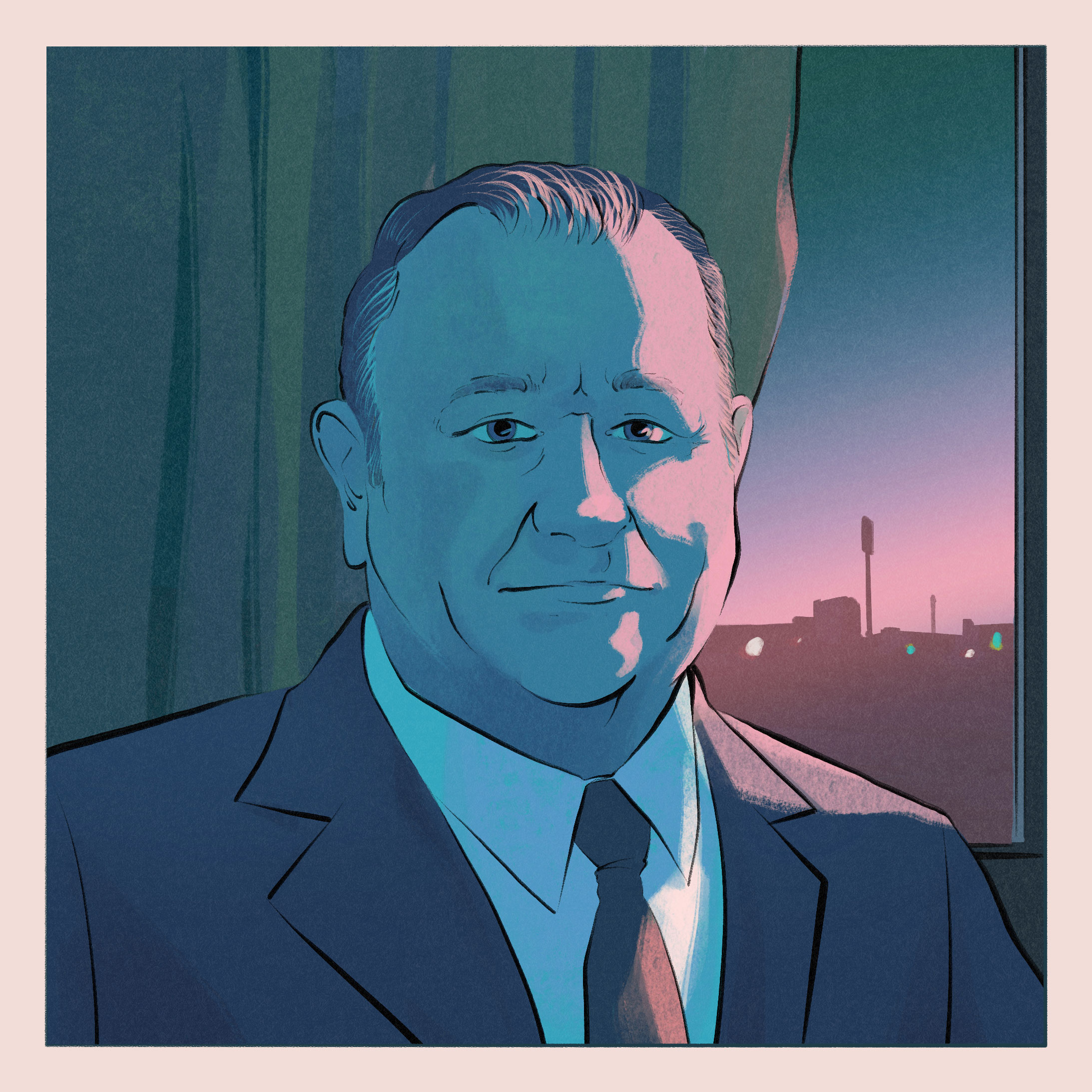
Nothing shocked the valley’s citizenry more than learning that John Morgan had been an undercover agent. The affable, bearded man had rolled into town seemingly hard on his luck, possessed of valued skills, and eager to make a new home. “He’s going around telling everybody he doesn’t have no money,” one local man recalled of the day Morgan arrived. “Well, nobody around here has any money, so the first thing everybody does is try to help him.” They fixed his truck and gathered his firewood. “We fed him and took care of him just like he was one of us,” the local continued. “That’s how he got in.” And in return, many claimed, he entrapped them. “The native people have always had a hunting ethic that frowns on the unnecessary killing of animals,” one resident wrote in a letter to President Bush. “This ethic can be easily corrupted by unscrupulous police who set up a fake business [and] offer money to cash-poor traditional hunters.”
Morrison carried out a successful operation but left scars in his wake. “It was definitely a grave sense of betrayal when they realized that this was a setup,” Shirley Romero Otero, a Chicana activist, teacher, and elder in San Luis, told me. “That was the lingering effect in this community—the betrayal, the anger, the wariness of anybody else that comes in. Because if it happens once, it can happen again.”
Robert Espinoza pleaded guilty in May 1989 to two of seven counts of conspiracy, wire fraud, and illegal sale of eagles and elk; he said he couldn’t in good conscience claim entrapment. In fact, only one case in Operation SLV was dismissed on those grounds. Espinoza forfeited his gun and his hunting privileges for five years and was sentenced to eight months in prison. He is now a Costilla County commissioner and still a respected member of the community. He declined to comment for this story, saying the events were behind him now.
Fred Carson likewise pleaded guilty, to selling a golden eagle. He received a six-month prison sentence and was ordered to pay $400 in fines and restitution. (He died in 2003.)
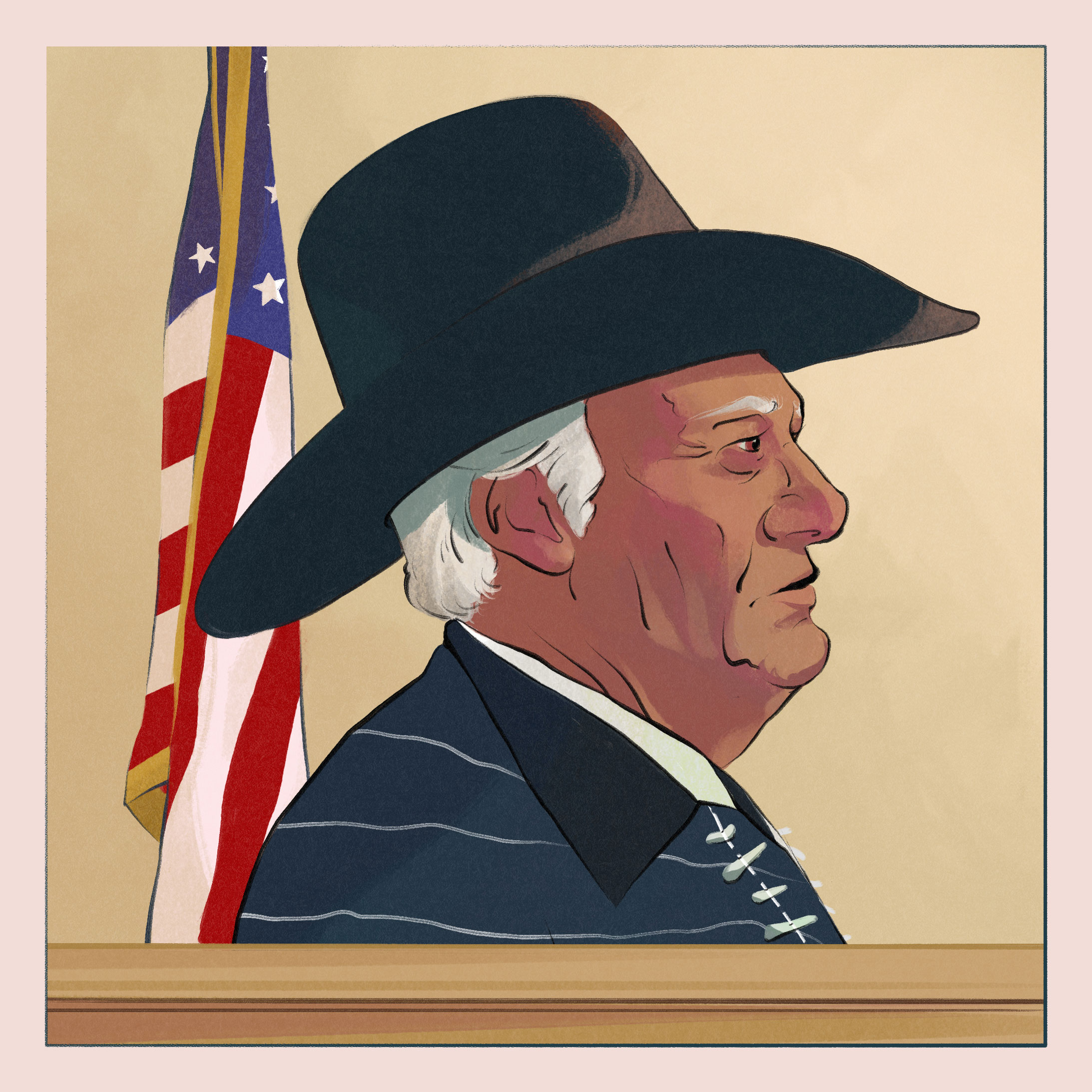
In November 1989, Chief Gallegos sat in a Denver courtroom. He was the last of the defendants to be sentenced. “I am guilty” of selling eagles, he told the court of the charges against him. “I would like to apologize to the citizens of the United States and to the nineteen Indian nations.”
Before he left the courtroom, Chief described his friendship with the man he knew as John Morgan. In their final conversation, a phone call the day before the raid, Morrison had said that he had a present to give Chief, so he should be sure he was home the next day. “I trusted him more than words can say,” Chief said. He received two concurrent eight-month sentences, the harshest judgment delivered. (Chief died in 2005.)
Morrison was in the courtroom for Chief’s sentencing. In the corridor outside, Chief’s wife confronted him in tears. He had eaten at her table and befriended her teenage son, who often hunted with Chief. “I hope you remember what you did to my husband, to my son, to my family, for the rest of your life,” she said.
Morrison remembered the men who fed him and stole from him. He remembered the cold look in their eyes when they killed and the light retreating from the eyes of the animals they slaughtered.
Morrison went on to enjoy a decorated career busting international wildlife traffickers, and he led Fish and Wildlife’s branch of special operations before retiring. But he never agreed to an interview for this story. He answered one phone call, indicated that he was willing to talk, and then went silent. In September 2024, he sent me a cryptic email that said he wasn’t allowed to talk about the case, and wasn’t sure how he’d feel about the prospect when—or if—he could.
Perhaps Morrison really couldn’t talk. Or maybe revisiting a time of his life encumbered by controversy was too difficult. I interviewed Terry Grosz before his death in 2019, and he told me that Morrison had called him after we spoke. According to Grosz, Morrison struggled with the notion of churning up the past. Grosz encouraged him to remember the “critters.”
If one thing is clear from all that Morrison said and wrote, everything he recorded and documented, it’s that he remembered plenty. He remembered the men who fed him and stole from him. He remembered the cold look in their eyes when they killed and the light retreating from the eyes of the animals they slaughtered. He remembered, too, the joy of camaraderie cut with threats of violence.
When he was undercover, Morrison and Chief drove around one morning looking for game. The land rolled by, waking and warming in the spring sunshine.
“All I know is, you want something, I’ll kill it anytime you want, however many you want, goddamn,” Chief said. “I just love to go chasing ’em. I get a kick out of it.”
“It is fun,” Morrison agreed.
“I can’t shoot like I used to,” Chief admitted. “I’d just get on my knee, let ’em run as fast as they wanted to, and I’d just pile ’em up, boy. Especially when they’re going through the air, jumping over a log, and you hit one of ’em and watch ’em slide in the snow sideways. That’s a sight you’ll never forget. Son of a bitch, that was a John Wayne shot. I had a broken arm, put the barrel over my arm and pow!”
Morrison was quiet for a moment. A high wind shimmied the piñons on the roadside. “I guess we don’t really help it, going out and poaching ’em,” he said.
“Well, fuck it,” Chief said. “We’re gonna get our share, ’cause we ain’t gonna be here forever. Let the rest of them worry about how they’re going to handle it, goddamn it.”
“I’d like to see [the animals] back in the days when you were talking about,” Morrison said.
“I’ll tell you what. In one day you’d see thirty, forty big bucks,” Chief said. But now the herds were dwindling. There were fewer deer than there used to be, fewer elk, fewer everything.
Chief sighed. “I never thought it’d end,” he said. “What a fool man is, huh? It ends. Everything ends.”
© 2026 The Atavist Magazine. Proudly powered by Newspack by Automattic.
Privacy Policy • Opt-out preferences • Privacy Notice for California Users