In the vast grasslands of North America, a remarkable ecological revival is underway. American bison, once pushed to the brink of extinction, are once again traversing ancient pathways that their ancestors followed for thousands of years. This restoration of prehistoric migration patterns represents not just a conservation success story, but a profound reconnection with the natural rhythms that shaped the American landscape long before human settlement altered these ecosystems. From Yellowstone’s expansive valleys to the tribal lands of the American West, bison are reclaiming their historic role as a keystone species through initiatives that blend cutting-edge science with indigenous knowledge. This article explores how these magnificent animals are returning to their ancestral migration routes, the challenges they face, and the profound ecological and cultural significance of their journey back across the American wilderness.
The Historic Range and Migration of American Bison
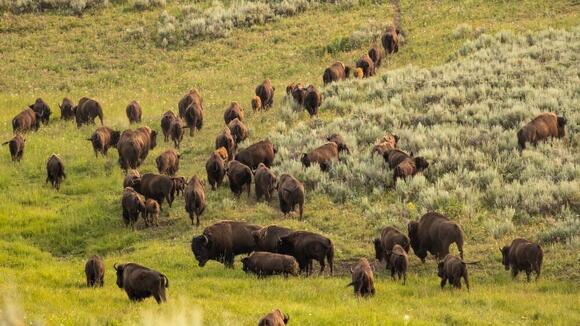
Before European colonization, an estimated 30-60 million bison roamed North America, ranging from Alaska to Mexico and from the Pacific Northwest to the eastern woodlands. These massive creatures, weighing up to 2,000 pounds, undertook seasonal migrations that could span hundreds of miles annually. Driven by innate knowledge of the landscape, weather patterns, and food availability, bison herds followed predictable routes that took them from summer grazing grounds to winter refuges. These migrations weren’t just random wanderings but sophisticated behavioral adaptations developed over thousands of years. Archaeological evidence, including bison bones found along consistent pathways and indigenous oral histories, confirms the existence of these well-established migration corridors that remained stable for centuries before the near-extinction of the species in the late 1800s.
The Near Extinction and Conservation Comeback
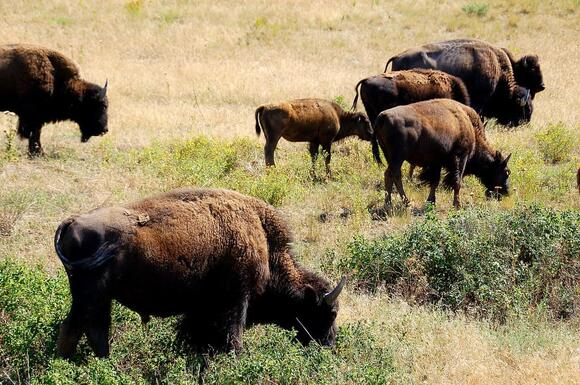
By 1889, bison populations had plummeted to fewer than 1,000 individuals across North America, the result of a government-sanctioned extermination campaign and commercial hunting that removed these animals from 99% of their historic range. This catastrophic decline not only pushed the species to the edge of extinction but erased the collective memory of migration routes that had been passed down through generations of bison. Conservation efforts began in the early 20th century with small protected herds in Yellowstone National Park and on private ranches. For decades, these conservation herds remained isolated within fenced boundaries, unable to follow their natural migratory instincts. By 2000, the species had recovered to about 500,000 individuals, though fewer than 30,000 were in conservation herds managed for ecological restoration rather than commercial production. This recovery set the stage for the more ambitious goal of restoring not just bison numbers, but their ecological role as migratory animals.
Understanding Bison Migration Through Modern Science
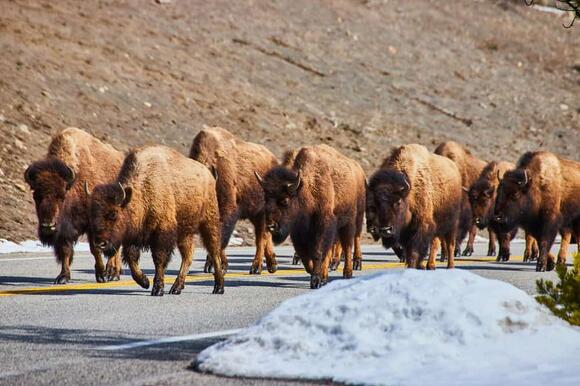
Contemporary wildlife biologists have employed sophisticated tracking technologies to understand and restore bison migration patterns. GPS collars fitted to bison in places like Yellowstone National Park have allowed scientists to map movement corridors with unprecedented precision. These studies reveal that bison possess remarkable spatial memory, returning to the same high-quality grazing areas year after year even when barriers to movement are removed. DNA analysis has further illuminated the genetic basis for migratory behavior, suggesting that migration routes may be partially encoded in bison genetics rather than solely learned behaviors. Using historical accounts, archaeological evidence, and modern tracking data, scientists have reconstructed maps of prehistoric migration corridors, creating blueprints for restoration efforts. This combination of historical research and cutting-edge science has been essential in identifying which ancient pathways might be viable for restoration in today’s fragmented landscape.
Yellowstone: Pioneer of Bison Migration Restoration
Yellowstone National Park has emerged as the flagship location for bison migration restoration. Since 2000, management policies have gradually shifted to allow limited natural movement outside park boundaries, particularly to the north and west. The Interagency Bison Management Plan, revised several times over the past two decades, has expanded the areas where bison can roam seasonally. Today, hundreds of Yellowstone bison migrate out of the park’s northern boundary each winter, following ancient routes into Montana’s Gardiner Basin—a pattern documented in prehistoric records. These migrations can span 40-60 miles, as bison move from high-elevation summer meadows to lower winter ranges where snow is less deep. Research by the U.S. Geological Survey shows that these modern migration paths closely align with routes used for thousands of years before European settlement, suggesting an innate knowledge of the landscape that has persisted despite the near-extinction of the species. The restoration of these Yellowstone migrations represents one of the most successful examples of large mammal migration recovery in North America.
Tribal Leadership in Bison Migration Restoration
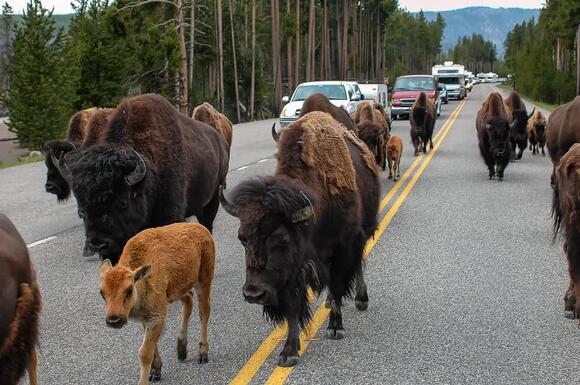
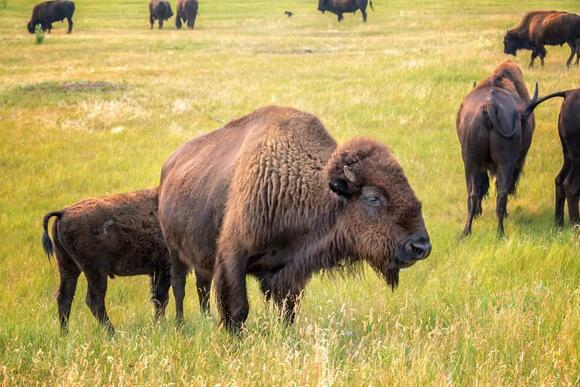
Herd of bison blocking road in Yellowstone National Park. Image via Depositphotos.
Indigenous nations have been at the forefront of efforts to restore bison migrations, reclaiming both ecological and cultural connections to these animals. The InterTribal Buffalo Council, representing more than 80 tribes, has been instrumental in returning bison to tribal lands across the American West. On the Fort Peck Reservation in Montana, the Assiniboine and Sioux tribes have established a 13,000-acre preserve where bison once again follow seasonal movements similar to their ancestors. The Blackfeet Nation along the Rocky Mountain Front has worked with neighboring landowners and Glacier National Park to create migration corridors allowing their bison herd to move seasonally between tribal lands and historic mountain grazing areas. These tribal conservation programs integrate traditional ecological knowledge with modern science, recognizing that indigenous communities maintained sophisticated understanding of bison migration patterns through generations of observation. For many tribes, the return of migratory bison represents not just ecological restoration but spiritual and cultural revitalization, reconnecting communities with practices and ceremonies tied to seasonal bison movements.
The American Prairie Reserve Model
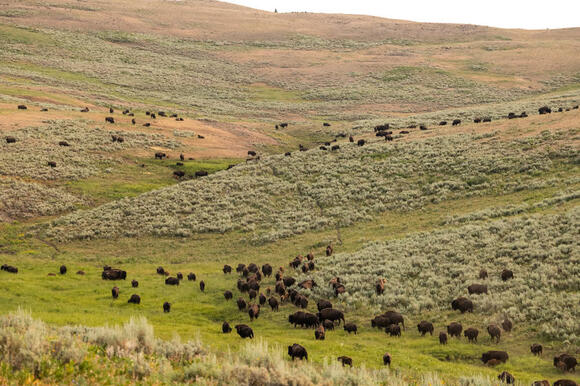
The American Prairie Reserve in Montana represents one of the most ambitious attempts to restore bison migration at a landscape scale. This private conservation initiative aims to connect over three million acres of public and private lands into a vast prairie reserve where bison can once again follow seasonal migration patterns. Since introducing their first bison in 2005, the reserve has expanded to support a herd of more than 800 animals that can move across increasingly large landscapes. Using GPS tracking data, reserve managers have documented the spontaneous return of migration behaviors as barriers are removed, with bison instinctively following topographical features and water sources that guided their ancestors. The reserve’s approach focuses on removing fences and other barriers to natural movement, allowing bison to rediscover their own migration patterns rather than imposing human-designed routes. This model demonstrates how large-scale habitat connectivity, rather than intensive management, may be the key to restoring true migration behavior in bison populations.
Ecological Benefits of Restored Bison Migration
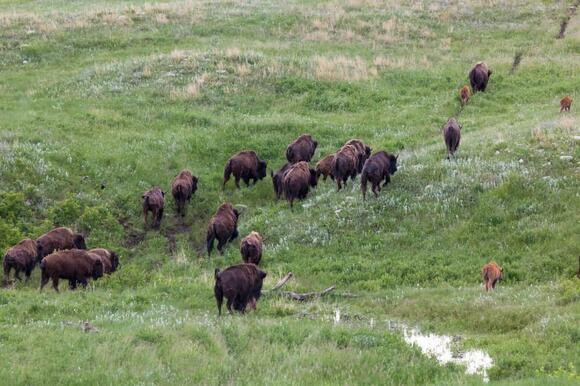
The return of migratory bison delivers cascading ecological benefits to grassland ecosystems. As bison move across landscapes, their grazing patterns create habitat diversity that benefits numerous other species. Studies in Yellowstone have documented how migratory bison create a patchwork of vegetation at different growth stages, supporting greater biodiversity than static grazing patterns. Their wallowing behavior—rolling in dirt depressions—creates microhabitats that collect water and support specialized plant communities. Additionally, seasonal movement prevents overgrazing of sensitive areas, allowing complete recovery of vegetation between grazing periods. Research published in the journal Ecosphere has shown that areas with restored bison migration support up to 30% more plant species diversity compared to areas where grazing is confined. Migratory bison also transport nutrients across landscapes through their dung and urine, and their hooves break up compacted soil, enhancing water infiltration and plant growth. These ecosystem engineering effects make bison migration restoration a powerful tool for grassland conservation and climate resilience.
Challenges of Modern Migration Restoration
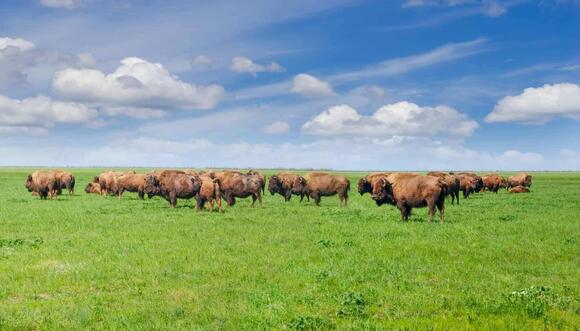
Restoring prehistoric migration routes in today’s fragmented landscape presents numerous challenges. Physical barriers including highways, railroads, fences, and urban development intersect many historical pathways, creating dangerous or impassable obstacles for bison. Legal and political hurdles also exist, as many ranchers fear disease transmission from wild bison to cattle, particularly brucellosis in the Greater Yellowstone Ecosystem. State boundaries and differing management regimes further complicate restoration efforts, as bison moving naturally may cross from protected to unprotected areas. Public perception remains another obstacle, with some communities resistant to bison reintroduction due to concerns about property damage or competition with livestock for grazing land. Additionally, climate change is altering the timing and viability of historical migration routes as seasonal patterns of snow cover and vegetation growth shift. These modern complexities require innovative approaches that adapt prehistoric migration patterns to contemporary realities while addressing legitimate concerns of diverse stakeholders.
The Role of Migration Corridors and Connectivity
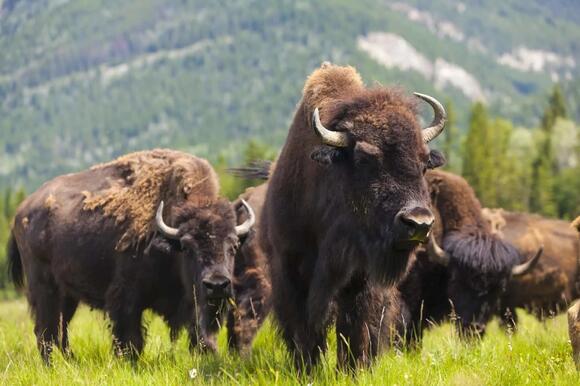
Conservation biologists increasingly recognize that simply protecting isolated reserves is insufficient for true ecological restoration of bison. Instead, the focus has shifted to establishing protected migration corridors that connect core habitat areas. The Path of the Pronghorn in Wyoming provides a model for such corridors, where development restrictions protect a 170-mile route used by pronghorn antelope—and potentially bison in the future. Land trusts and conservation organizations have been purchasing strategic easements along potential migration routes, creating protected passages through private lands. These corridors don’t require continuous public ownership but rather a network of compatible land uses that allow seasonal movement. Emerging policies like Wyoming’s Migration Corridor Executive Order demonstrate how state governments can recognize and protect these movement pathways through regulatory approaches. The most successful corridor projects involve multiple stakeholders—including private landowners, tribal governments, federal agencies, and conservation groups—working together to maintain landscape connectivity while respecting property rights and economic needs.
Technological Innovations Supporting Migration Restoration
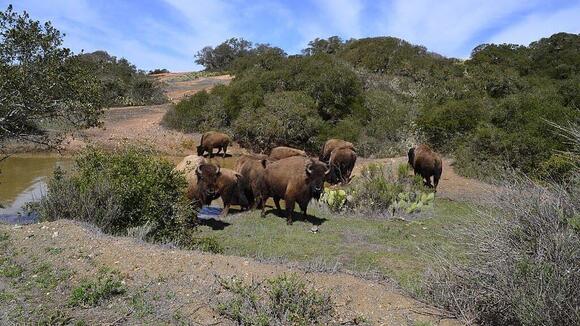
Advanced technologies are playing a crucial role in facilitating the return of bison to their prehistoric migration routes. Virtual fencing systems using GPS collars that deliver audio cues to bison approaching boundaries can create invisible barriers that contain animals without physical fences, allowing more natural movement patterns while preventing conflicts with neighboring landowners. Wildlife crossing structures, including overpasses and underpasses designed specifically for large mammals, are being incorporated into highway projects to allow safe passage across transportation corridors that intersect migration routes. Remote sensing technologies enable conservationists to identify historic pathways through subtle landscape features, vegetation patterns, and even archaeological evidence visible only through specialized imaging. Mobile apps now allow recreational users and landowners to report bison sightings, creating citizen science databases that help track expanding migration patterns. These technological innovations are helping overcome the practical challenges of restoring large mammal migrations in landscapes now shared with human infrastructure and activities.
Cultural and Economic Dimensions of Bison Migration
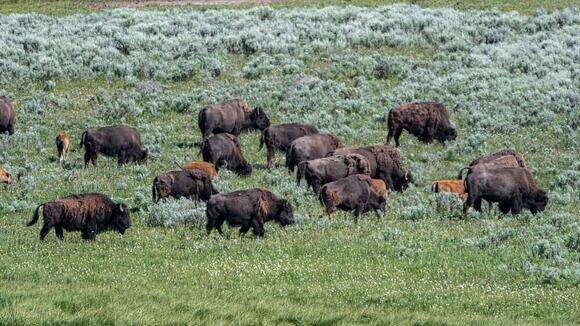
The restoration of bison migration routes carries significant cultural and economic implications beyond ecological benefits. For indigenous communities, following seasonal bison movements was central to traditional lifeways, and the return of these patterns supports cultural revitalization efforts. Tourism centered around bison viewing is emerging as an economic driver in regions with restored migrations—Yellowstone’s bison herds attract millions of visitors annually, generating substantial revenue for gateway communities. In some areas, hunting of surplus bison during migrations provides both cultural opportunities for tribal members and economic benefits through carefully managed harvests. Conservation organizations have developed programs where landowners receive payments for maintaining migration-friendly practices on their properties, creating economic incentives aligned with restoration goals. The “Where the Buffalo Roam” initiative in Montana pays ranchers who allow bison to cross their land during seasonal movements, demonstrating how migration restoration can be integrated with working landscapes rather than requiring complete land-use changes.
Future Directions and Expansion of Migration Restoration
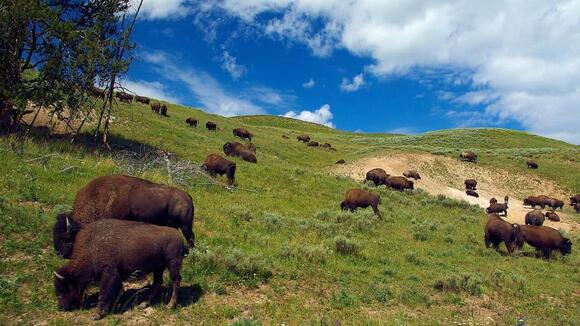
The coming decades hold promise for significantly expanded bison migration restoration across North America. Several ambitious initiatives are currently in development, including the proposed Buffalo Commons connecting multiple conservation areas across the Great Plains. The Iinnii Initiative in the transboundary region between Montana and Alberta aims to restore bison movement across the international border, reestablishing migrations that historically crossed between Canada and the United States. Technological developments in tracking and containment will likely expand the areas where bison restoration is feasible, while growing public support for wildlife conservation may reduce political opposition. Climate change adaptation strategies increasingly recognize the importance of mobility for species survival, potentially accelerating migration corridor protection. As knowledge from existing projects accumulates, restoration techniques will become more refined and effective, allowing for larger-scale efforts. Conservation organizations project that by 2050, connected migratory populations of bison could exist across several major landscapes of the American West, representing a dramatic expansion from today’s relatively limited restoration areas.
Conclusion: The Profound Significance of Bison’s Return to Ancient Pathways
The restoration of bison to their prehistoric migration routes represents far more than a conservation curiosity—it marks the healing of deep ecological wounds inflicted on the North American landscape over the past two centuries. As these magnificent animals once again traverse ancient pathways, they are reweaving ecological relationships that evolved over thousands of years, from soil microbes to prairie plants to predator-prey dynamics. For indigenous communities, the return of migratory bison offers reconnection with cultural practices and knowledge systems that were disrupted by colonization and forced removal. The scientific knowledge gained through these restoration efforts is transforming our understanding of landscape ecology, animal cognition, and conservation biology, providing insights that may help restore other displaced migratory species worldwide. Perhaps most profoundly, the sight of bison once again following the rhythms that guided their ancestors offers a powerful symbol of ecological redemption—evidence that with sufficient dedication, even our most grievous environmental mistakes can begin to be undone.