A Congressional Research Service report dated May 13, 2026, has formally documented what aviation and defence analysts had been tracking piecemeal since late February, that the United States military lost or sustained damage to more than 40 aircraft during Operation Epic Fury, the 40-day US-Israeli air campaign against Iran that began on February 28, 2026. The disclosure, amplified by a pointed Senate committee exchange on May 13 in which Pentagon leadership declined to confirm casualty figures that a Democratic congressman had drawn directly from published defence reporting, has placed the true cost of the air campaign in the sharpest focus yet, and raised uncomfortable questions about US air dominance, drone survivability, and the readiness implications of a conflict that has depleted irreplaceable aircraft and munitions at a pace not seen in decades.
What Congress Was Told and What the Pentagon Would Not Confirm
Democratic Congressman Ed Case made the statement during a Senate committee hearing on Tuesday while questioning Pentagon Chief Financial Officer Jay Hurst about the scale of US military losses in the war. "We've lost about 39 aircraft, according to a report in The War Zone, and that's an old one, almost one month old," Case said. He asked whether the Pentagon had calculated the long-term repair and replacement costs resulting from the losses.
Hurst declined to provide details, saying the Pentagon would need to conduct a "full diagnosis" before estimating the costs. "There are costs there, sir, but I want to get back to you in writing," Hurst added.
A congressional research service report lists the aircraft combat losses from Epic Fury through early April 2026. The Defense Department estimated the total cost of the losses at $2.6 billion.
The Congressional Research Service figure of 42 aircraft includes both destroyed and significantly damaged airframes. The 39 destroyed figure cited by Case represents what has been independently verified as total losses, aircraft that will not return to service. Alongside the destruction of 39 aircraft, a further 10 sustained varying levels of damage.
The Scale of the Campaign and How Losses Accumulated
The conflict began February 28, with the US Air Force flying nearly 13,000 sorties during the 40-day war. At that tempo, US aircraft were averaging more than 325 combat sorties per day, a sustained operational intensity that, combined with Iran's more capable-than-anticipated integrated air defence network, created the conditions for a loss rate that has surprised many observers.
The rapid depletion of US and Israeli beyond visual range missile arsenals was a primary factor forcing the services of both countries to operate closer to or within Iranian airspace to use lower-cost and more abundant gravity bombs, posing significantly greater risks.
The Drone Fleet: 24 MQ-9 Reapers Gone
The single most numerically significant category of US aviation losses is the General Atomics MQ-9 Reaper: the medium-altitude long-endurance drone that forms the backbone of America's unmanned surveillance and strike capability. Twenty-four of the aircraft are estimated to have been shot down during the conflict, with the drones being far from expendable at a cost of close to $150 million each.
A surprisingly high number of 17 American MQ-9 Reapers have also been lost in the conflict. The MQ-9 is a medium-altitude long-endurance unmanned aerial vehicle which forms the backbone of the US UAV fleet. Equipped with high-end intelligence-gathering, surveillance and reconnaissance capability, it has a payload of Hellfire missiles and GBU munitions for precision strikes against high-value targets. The US Air Force had also lost 10 MQ-9s in the conflict with Ansarullah Coalition forces in Yemen from October 2023 onwards.
Iranian shootdowns of MQ-9 Reaper drones accounted for the bulk of US losses in the air, with these aircraft having been deployed deep inside Iranian airspace for missions which were too high-risk for manned aircraft.
Beyond the Reapers, a $250 million unmanned reconnaissance aircraft was also lost. A US Northrop Grumman MQ-4C Triton crashed after loss of communication and falling from 52,000 feet to 9,500 feet in 15 minutes, signalling its crash somewhere in the Persian Gulf. The value of the drone was $238 million.
The F-15E Shootdown and Its Costly Rescue
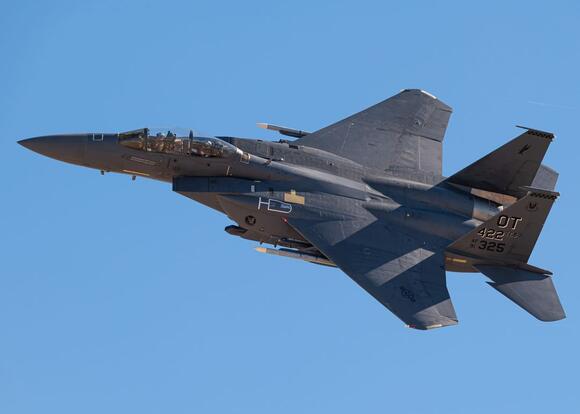
An F-15E Strike Eagle was shot down by Iranian air defenses over Iran on April 3, with both crew members ejecting safely and later recovered in separate rescue operations. The same day, an A-10 attack aircraft was also lost during operations over Iran. Two UH-60 Black Hawk helicopters were hit during rescue efforts linked to the incident.
Following the shootdown of a US Air Force F-15E Strike Eagle long-range fighter over Iranian territory in early April, US efforts to recover the two airmen who ejected and parachuted into Iran resulted in losses of nine more US aircraft and one Israeli aircraft. These included HC-130J Combat King II personnel recovery support aircraft, HH-60W combat rescue helicopters, UH-60 Black Hawk transport helicopters, an A-10 attack jet, and an MQ-9 drone.
ABC News reported that during the rescue mission inside Iran, two MC-130J Commando II aircraft became stuck at a makeshift landing site and were later destroyed by US forces.
The F-35
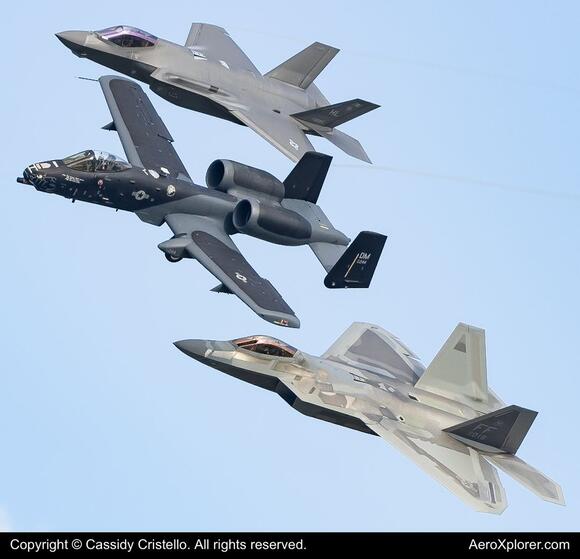
Among the most strategically significant single incidents of the campaign was the damage sustained by an F-35A Lightning II stealth fighter, the first time in the aircraft's operational history that it had been hit in combat. The damaged US aircraft fleet includes an F-35 Lightning II that was damaged in a combat mission, most likely by Iranian forces, on March 19, making it the first time that the F-35 has been damaged in action.
The E-3 Sentry
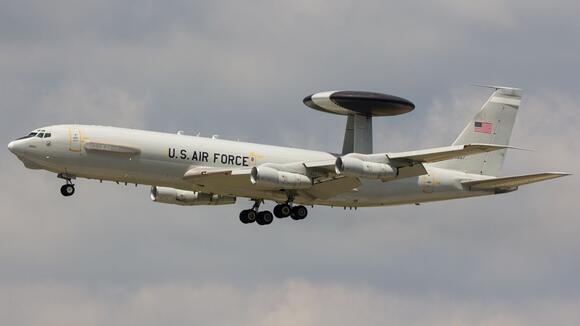
One of the most notable losses suffered by US forces was that of an E-3 Sentry airborne warning and control system, one of the most high-value aircraft in the US fleet. The E-3 Sentry, known as AWACS, is a Boeing 707-derived platform that serves as an airborne command and control hub, coordinating the actions of multiple aircraft across wide areas of airspace. Its loss removes a critical node from the US air management architecture and represents an asset that is both extraordinarily difficult to replace and no longer in production.
Iran's Underground Advantage
The aircraft losses have occurred despite the most sustained bombing campaign conducted by US forces in years, and the results of that bombardment on Iran's military infrastructure have been less comprehensive than publicly suggested. After unrelenting bombardment using some of America's biggest and heaviest bombs, the intelligence community reportedly assesses that 90% of Iran's underground missile storage and launch facilities are still active. Iran possesses hardened underground "missile cities" to compensate for a lack of air superiority. These buried bases are holding up too well under withering attacks, providing space and time for Iran to repair damaged munitions.
As a preview of what China could do to American bases and equipment, look no further than the Middle East. In the opening weeks of Epic Fury, the IRGC destroyed dozens of American aircraft, some of which are no longer in production.
The Civilian Aviation Dimension
Two of the aircraft hit while parked at airports, an Emirates Airbus A380 and a smaller Saudia Airbus A321, were struck while parked at Dubai International Airport.
The conflict's aviation consequences have extended comprehensively into the commercial sector. US carriers suspended Middle East routes entirely. Jet fuel prices doubled within days of the first strikes. Dubai International Airport, the world's busiest international hub, was effectively shut down for weeks. American, Delta, and United all halted their Israeli and Gulf services. And the destruction of commercial infrastructure at Dubai directly involved two of the most recognisable commercial aircraft types in the world, a reminder that in a conflict fought over one of the most concentrated commercial aviation regions on Earth, civilian aircraft are not insulated from military action.
The Strategic and Industrial Implications
Although the economic and strategic implications of depleting US munitions stockpiles far exceed the implications of aviation losses during the war against Iran, the conflict has posed unprecedented challenges to US air dominance, with the Iranian Islamic Revolutionary Guard Corps' ability to target aircraft at airfields across the Middle East using missiles and drones having been a central part of this.
This high loss of an expensive drone may increase calls to develop an enhanced version with superior survivability, with a lower radar cross-section and infrared signature.
The Pentagon's refusal to confirm total loss figures in an open congressional session, combined with the CRS report's documentation of 42 aircraft at a total cost of $2.6 billion, leaves a significant gap between what the public record shows and what the Defence Department has formally acknowledged. For the men and women of the US aviation community, military and civilian alike, the full accounting of Operation Epic Fury's cost in aircraft, capability, and strategic readiness is still being written.
Key US Military Aircraft Losses During Operation Epic Fury
(Feb 28 – ~Apr 8, 2026)
Note: This table reflects confirmed and reported military aircraft losses. It does not represent scheduled commercial flight operations. Sources include the May 13, 2026, Congressional Research Service report and verified defence reporting.
| Aircraft Type | Category | Quantity Lost/Damaged | Approx. Unit Cost | Incident Period | Status |
|---|---|---|---|---|---|
| General Atomics MQ-9 Reaper | Drone/UAV | 24 destroyed | ~$150M each | Feb 28 – Apr 8, 2026 | Confirmed lost |
| Northrop Grumman MQ-4C Triton | Surveillance UAV | 1 destroyed | ~$238–250M | Apr 9, 2026 | Confirmed lost |
| McDonnell Douglas F-15E Strike Eagle | Fighter/Strike | 4 lost (incl. 3 friendly fire) | ~$87M each | Mar–Apr 2026 | Confirmed lost |
| Fairchild-Republic A-10 Thunderbolt II | Ground Attack | 1 destroyed | ~$19M | Apr 3, 2026 | Confirmed lost |
| Lockheed MC-130J Commando II | Special Ops | 2 destroyed (self-destroyed in Iran) | ~$110M each | Apr 3–5, 2026 | Confirmed lost |
| Sikorsky HH-60W Combat Rescue Helicopter | Rescue | Multiple damaged/lost | ~$40M each | Apr 3–5, 2026 | Partially lost |
| Sikorsky UH-60 Black Hawk | Transport | Multiple damaged | ~$21M each | Apr 3, 2026 | Damaged |
| Boeing E-3 Sentry AWACS | Command/Control | 1 destroyed | ~$270M+ | During campaign | Confirmed lost |
| Boeing KC-135 Stratotanker | Aerial Refuelling | 7 damaged/lost | ~$35M each | During campaign | Damaged/lost |
| Lockheed Martin F-35A Lightning II | Stealth Fighter | 1 damaged (combat first) | ~$110M | Mar 19, 2026 | Damaged/ returned |
Total estimated cost per DoD: $2.6 billion. The US Air Force flew ~13,000 sorties during the 40-day conflict. Pentagon CFO declined to confirm replacement costs at the May 13 Senate hearing.