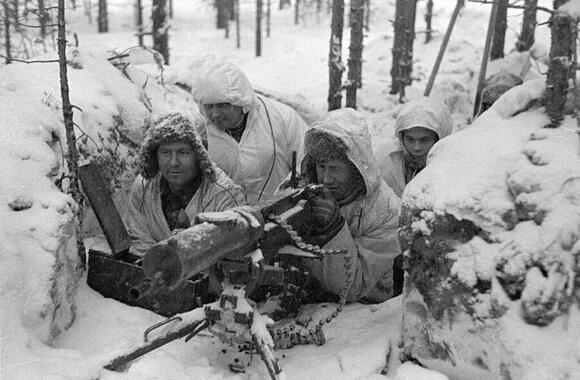
While few in the West even remember its name, the Winter War launched a chain of events that just might have brought down Adolf Hitler, handed the Allies victory during World War II, and shaped the last 75 years of world history.
It was 1938, and the Soviet Union sought to protect the city of Leningrad from a possible German attack on the eve of World War II. But there was one little thing that prevented them from creating a wide buffer around the city: the country of Finland.
To solve this dilemma, the U.S.S.R. demanded the chunk of Finnish territory along the Gulf of Finland that came closest to Leningrad. Moreover, the Soviets sought to ultimately conquer all of Finland and install a puppet government.
However, committed to neutrality, Finland refused to cede any land. Negotiations continued through 1938, but then, in 1939, an “unknown party” bombed a Soviet village near the border — and the Winter War began.
Troops Ski With Gas Masks
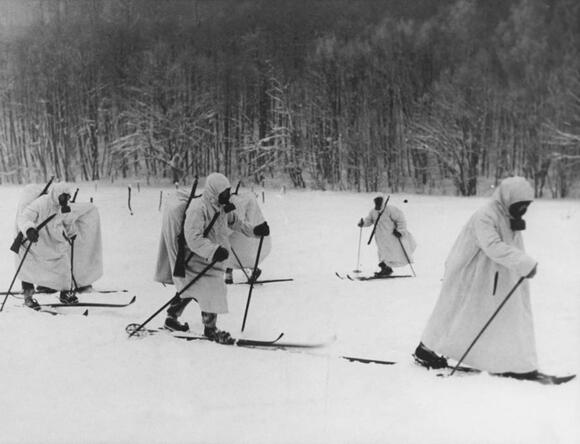
Finnish troops wear gas masks while on skis. Circa 1940.
Frozen Body In Winter War
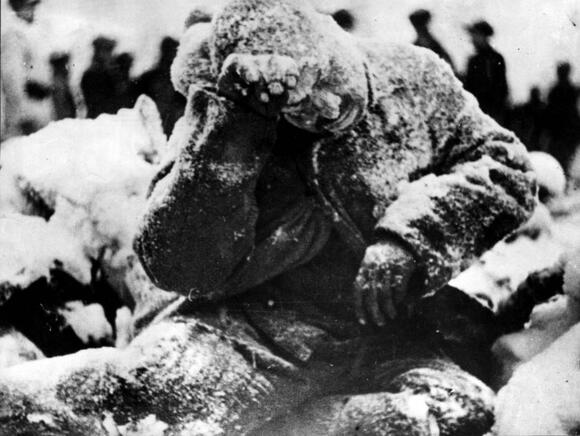
A Russian soldier sits frozen to death minutes after being shot by a Finnish sniper. 1940.
Molotov Cocktail
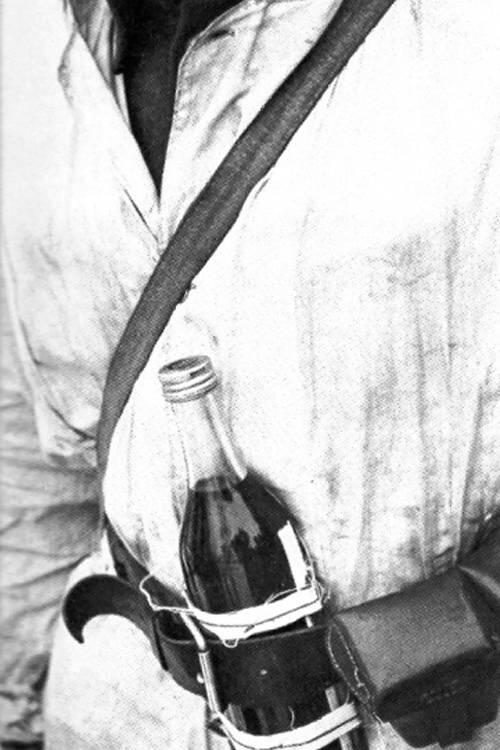
A Finnish soldier holds a Molotov cocktail. Finland's newly improvised weapon was named after Soviet Minister of Foreign Affairs Vyacheslav Molotov, who claimed that the Red Army wasn't dropping bombs on Finland but rather food and humanitarian aid. Finns nicknamed the bombs "Molotov's bread baskets" and devised this "cocktail" as a drink to accompany the "food."
Winter War Tracer Fire
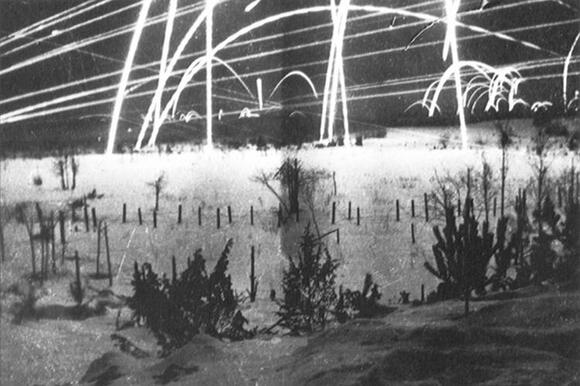
Tracer fire illuminates the night sky on the Finnish-Soviet border in 1939, during the first month of the war.
Dead Bodies Of Winter War
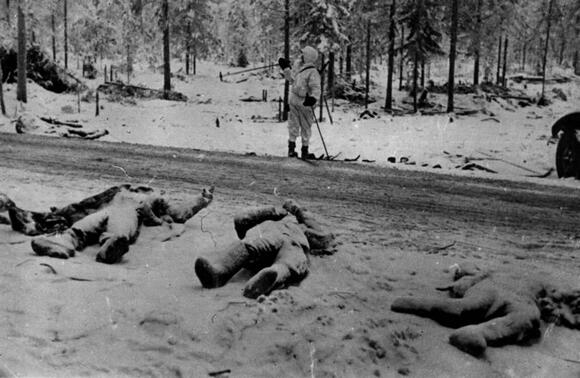
Dead Russians lie along the roadside after the Finnish victory at the Battle of Suomussalmi in Finland. Jan. 20, 1940.
Finnish Ski Troops
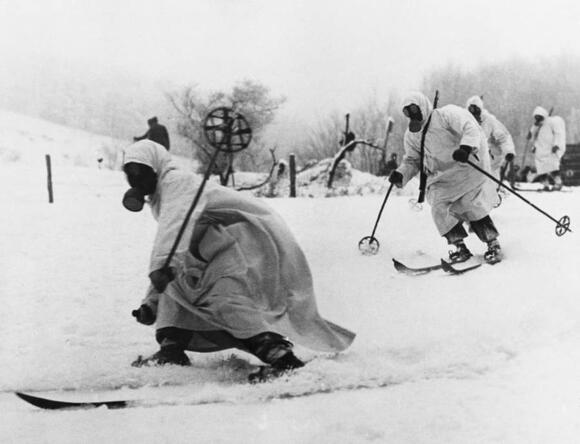
A group of Finnish alpine troops, or "ghost troops," on skis.
Frozen Bodies During The Winter War
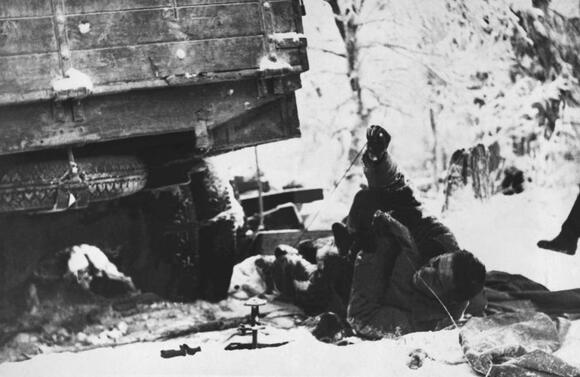
The frozen corpse of a Russian soldier lies on the ground. 1940.
Winter War Ghost Troops
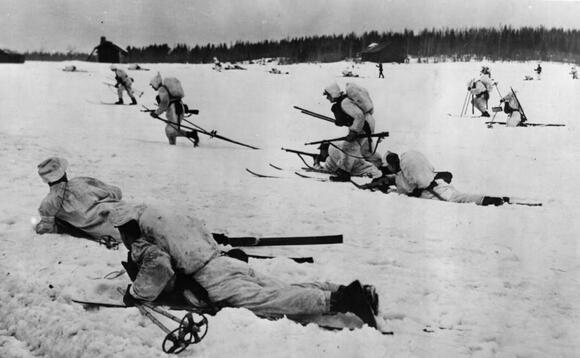
Finnish infantry on skis move through the snow. October 1939.
Winter War Soldier Simo Häyhä
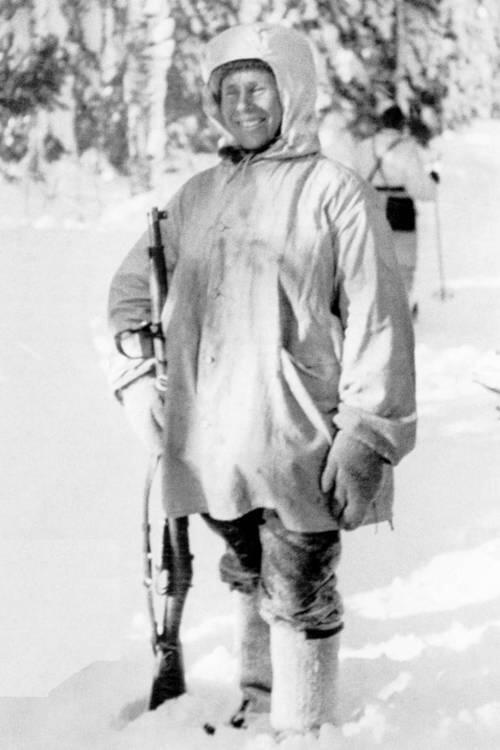
Simo Häyhä stands after being awarded the honorary rifle model 28. This Finnish soldier was dubbed "White Death" by the Soviets. He is reported to have killed 505 men during the Winter War, the highest recorded number of confirmed sniper kills in any major war in history.
Dead Russian Soldier In Winter War
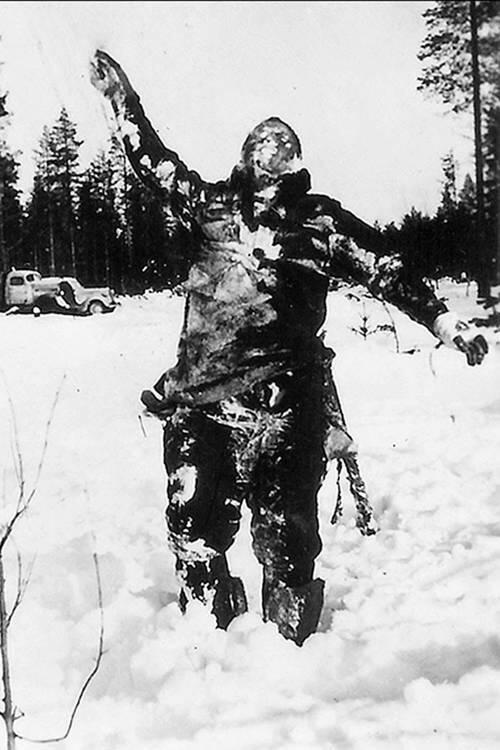
A dead Soviet soldier stands propped upright by Finnish troops during the Winter War. This was meant to serve as a warning to other Soviet troops.
Anti-Aircraft Gun
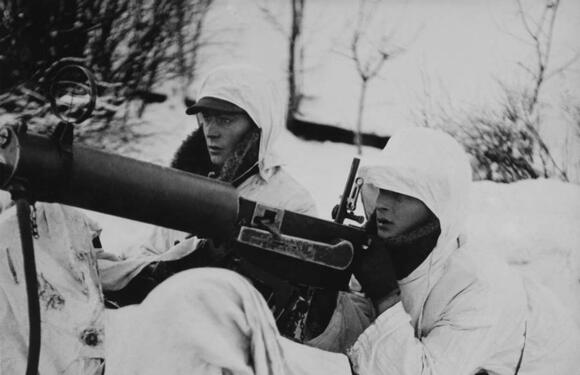
Finnish soldiers crouch behind an anti-aircraft gun. 1940.
Helsinki On Fire
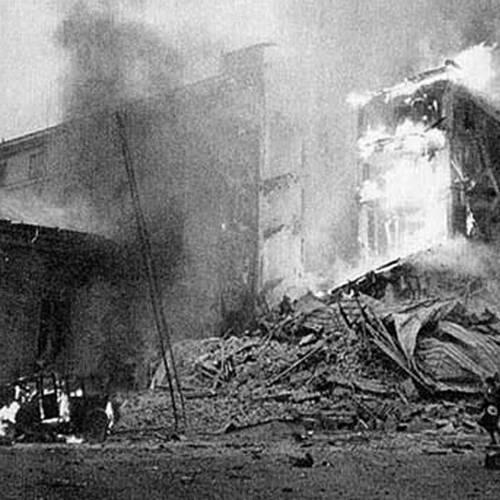
The damage after the first bombings of the Winter War in Helsinki, Finland on Nov. 30, 1939.
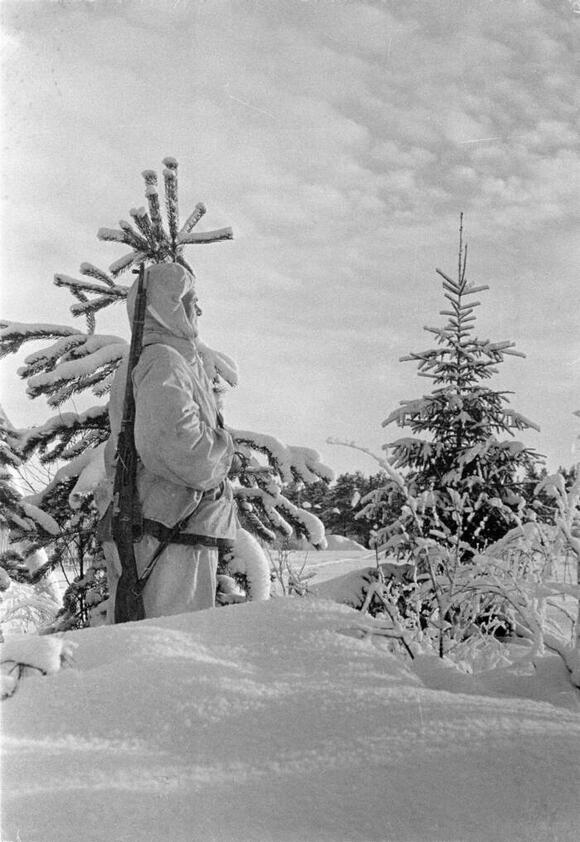
Finnish Ski Troops With Guns
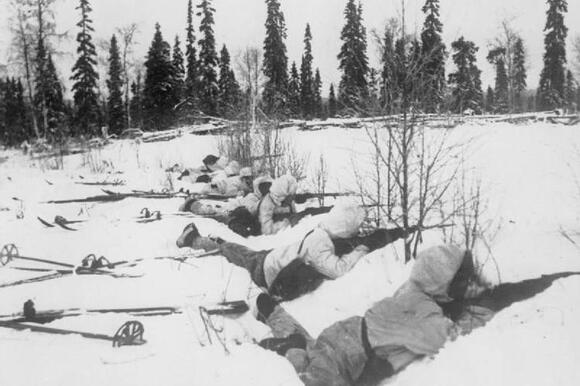
A Finnish ski patrol lies in the snow on the outskirts of wooded northern Finland, on the alert for Soviet troops. Jan. 12, 1940.
Non-Aggression Pact Of 1932
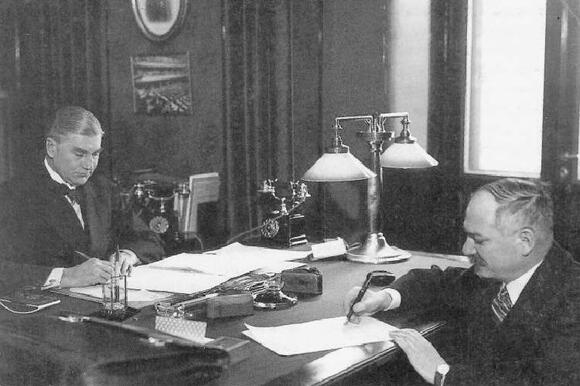
The Finnish–Soviet Non-Aggression Pact was signed in Helsinki on Jan. 21, 1932. On the left sits the Finnish foreign minister Aarno Yrjö-Koskinen and on the right sits Ivan Maisky, the Soviet envoy to Finland.
Juho Kusti Paasikivi
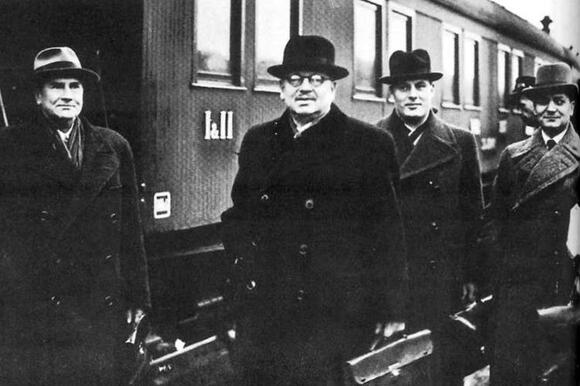
Finnish counselor of state Juho Kusti Paasikivi returns from negotiations in Moscow on Oct. 16, 1939.
Herbert Hoover Hendrik Willem Van Loon And Fiorello La Guardia
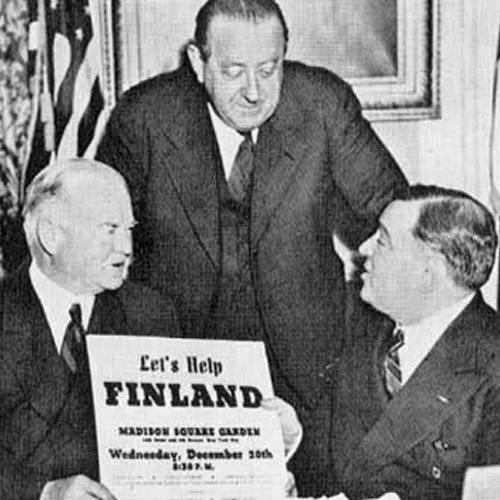
In December of 1939, a great sympathy meeting for Finland was arranged at New York's Madison Square Garden. Pictured, from left: former president Herbert Hoover (chairman of the Finland committee), journalist Hendrik Willem van Loon, and the mayor of New York, Fiorello La Guardia.
Red Army Soldiers In The Snow
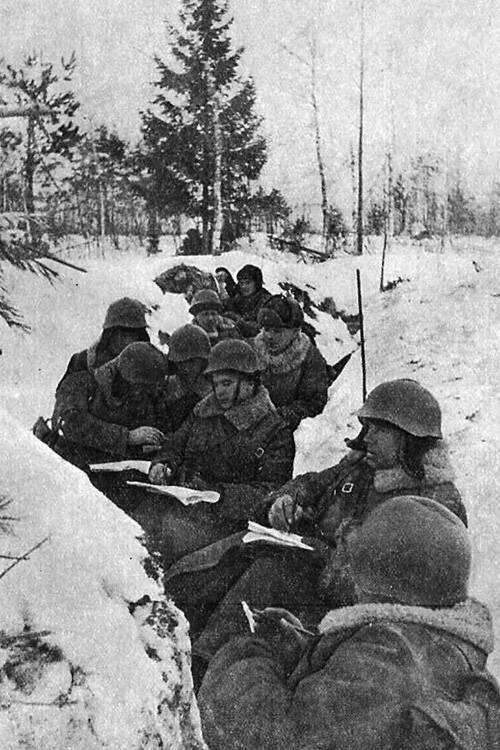
Red Army soldiers sit in their trench wearing dark green helmets and uniforms that make them stand out against the snowy background. They didn't receive snowsuits until later in the war.
Finnish Captain Aarne Juutilainen
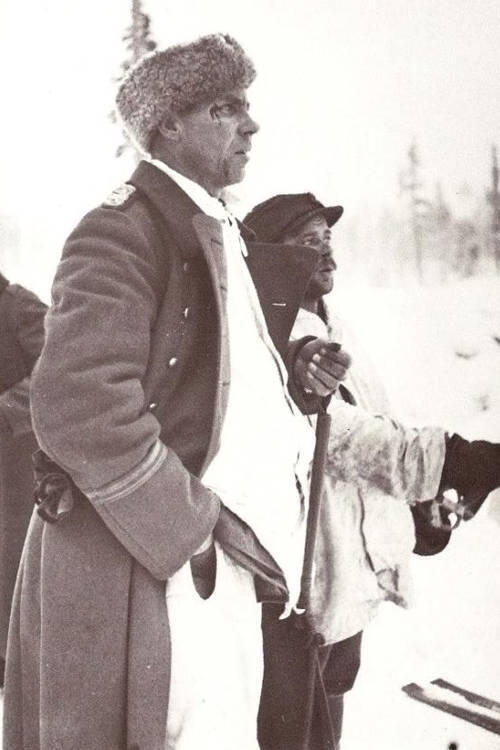
Finnish Captain Aarne Juutilainen stands at the front near Kollaa during the Winter War.
Mannerheim Line
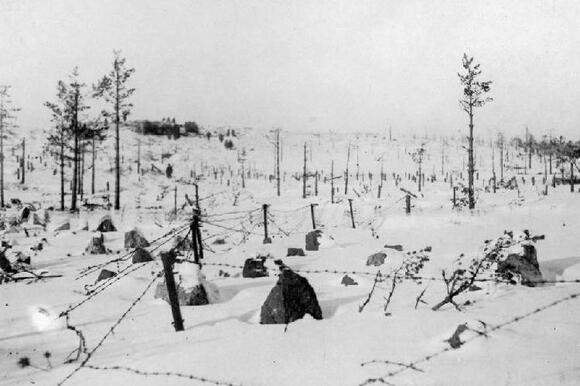
Stone barriers and barbed wire on Finland's Mannerheim Line.
Ilmarinen Ship
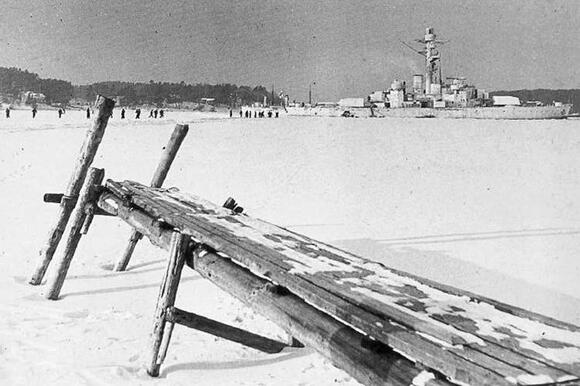
The Finnish coastal defense ship Ilmarinen sits anchored at Turku Harbor during the Winter War.
Finnish Soldier Aims Gun
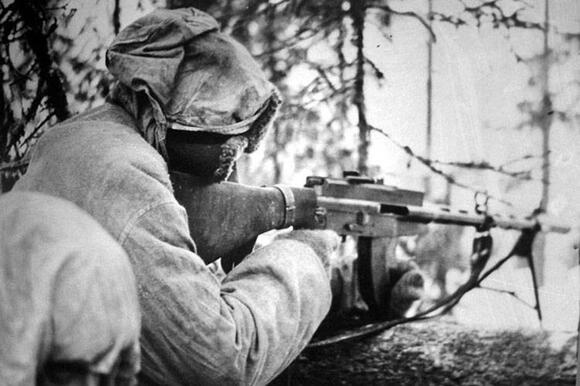
A Finnish soldier aims his Lahti-Saloranta M/26.
Finnish 234 Mm Gun
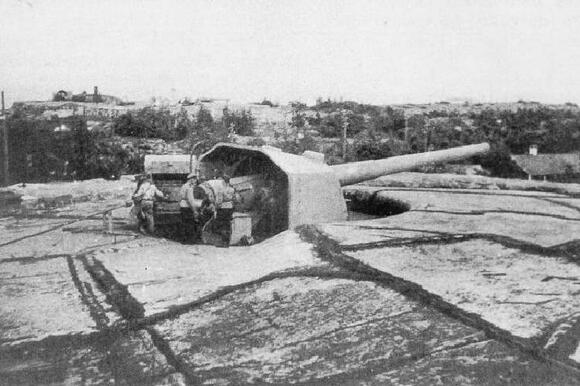
The Finnish 234 mm artillery on the island of Russarö during a military exercise before the war.
Lotta Svärd Member
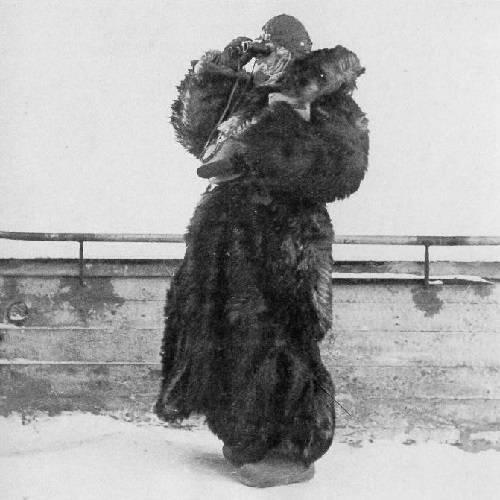
A member of the Lotta Svärd women's paramilitary organization watches the skies for Soviet aircraft over northern Finland in January 1940.
Soldiers In Trench
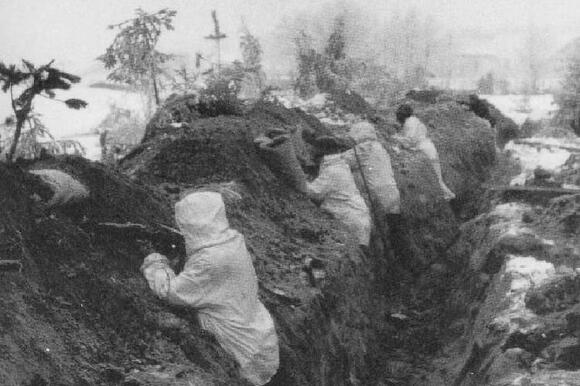
Soldiers kneel in the trenches on Finland's Mannerheim Line.
Soviet Tank
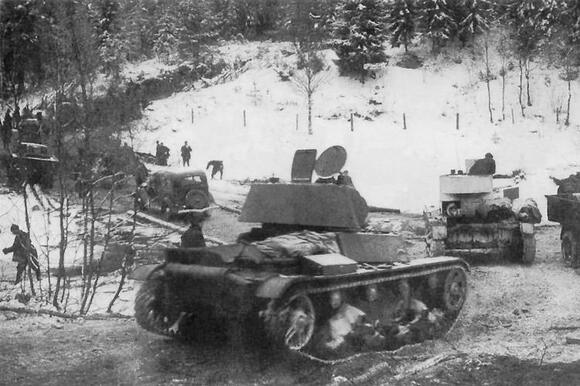
Soviet T-26 light tanks and GAZ-A trucks of the Soviet 7th Army advance on the Karelian Isthmus.
Swedish Volunteer Soldiers
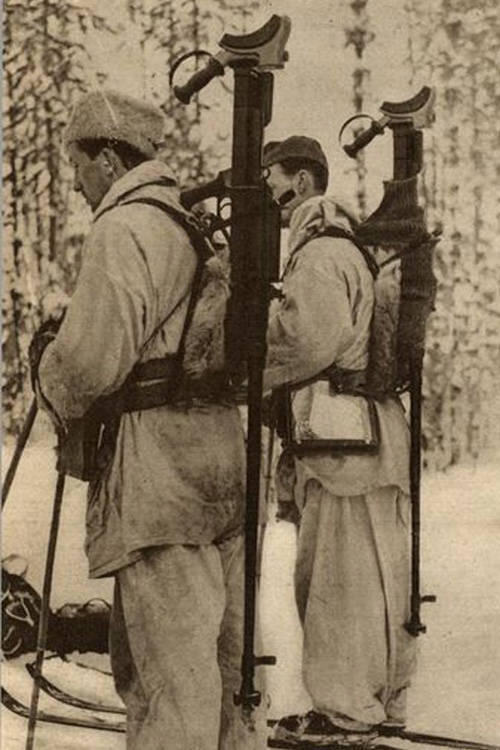
Swedish volunteers stand with their anti-tank rifles during the Winter War.
Norwegian Volunteers On Skis
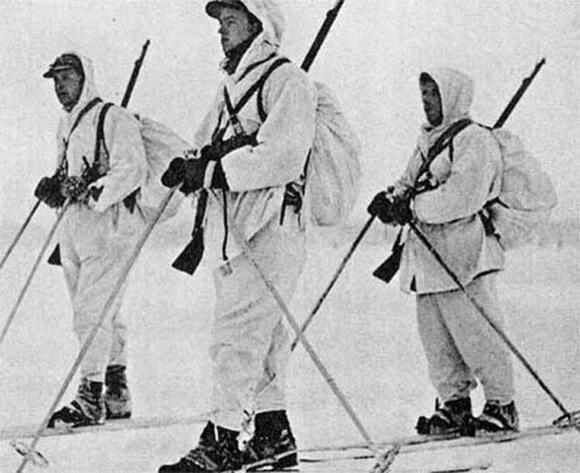
Norwegian volunteers stand in their battle gear, including skis, in northern Finland.
Finnish Artillery Gun
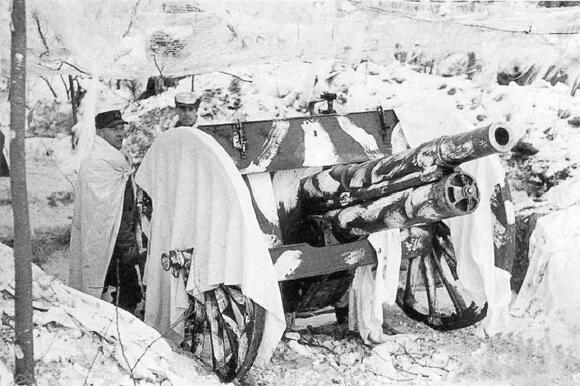
The most common Finnish artillery was a 76 millimeter gun dating back to around 1902. Pictured: One of these guns sits camouflaged in Viipuri in March 1940.
Red Army With Finnish Flag
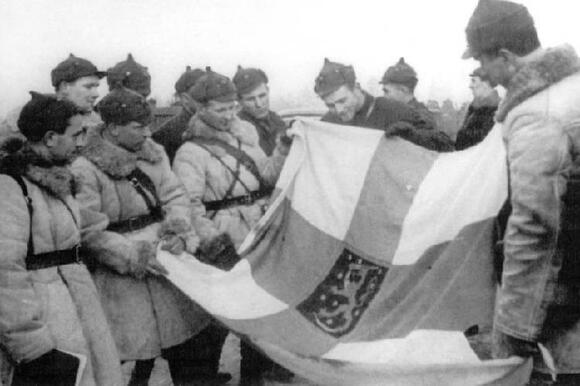
A group of Red Army soldiers display a captured Finnish state flag.
What Caused The Russo-Finnish Winter War In 1939
Leading up to World War II, tensions between Finland and the Soviet Union had already been simmering for years. Soviet leadership harbored concerns about Finland's proximity to Leningrad, fearing that it could serve as a potential route for enemy attacks. Finland was likewise wary of Soviet expansionist ambitions — anxieties that were only heightened after the signing of the Molotov-Ribbentrop Pact, or the Treaty of Non-Aggression between Germany and the Soviet Union, in August 1939.
As the name suggests, the pact was an agreement between the Soviet Union and Nazi Germany to avoid fighting. It also secretly divided Eastern Europe into smaller spheres of influence, with Finland falling within the Soviet sphere. Naturally, this made the small country even more cautious of the U.S.S.R.
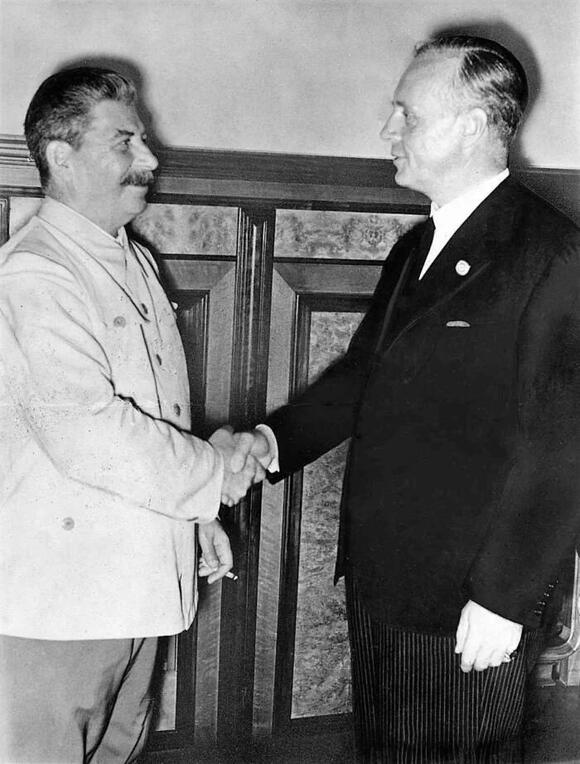
Just two months later, in October, the Soviet Union initiated negotiations with Finland, demanding territorial concessions, including parts of the Karelian Isthmus and islands in the Gulf of Finland, citing security concerns for Leningrad. Finland refused these demands.
Things escalated when, on November 26, 1939, the Soviets claimed that Finnish artillery had shelled the village of Mainila, resulting in casualties. At the time, it was unclear what had actually happened, but later research suggested that the incident was likely orchestrated by the Soviets themselves to create a pretext for war. And it worked.
How Finnish War Tactics Caused Significant Problems For The Soviets
Following the artillery strike in Mainila, Vyacheslav Molotov, the Soviet Foreign Minister, claimed that Finland was responsible and demanded an apology. When Finland denied any involvement and ordered a joint Finnish–Soviet commission to look into the matter, Molotov deemed their response hostile.
The U.S.S.R. then severed its non-aggression pact with Finland. The Winter War began four days later.
Soviet leader Joseph Stalin was sure that the conflict would be resolved within just two weeks. However, weakened by the dictator's removal of officers during the Great Purge of 1936, the Soviet army lacked leadership and strength.
What's more, the U.S.S.R. also greatly underestimated their enemy. What the Finnish army lacked in weapons (30 times fewer aircraft than the Soviets and 100 times fewer tanks) and manpower (fewer than half as many soldiers), they made up for in determination and morale.
Finland's troops also had the advantage of being very familiar with the terrain that they were defending. For starters, it was very snowy and very cold. Finnish soldiers, adept at skiing, utilized guerrilla tactics by launching surprise attacks and ambushes against the cumbersome Soviet formations. Having appropriate clothing for the conditions also gave the Finns an advantage over the ill-prepared Soviets, thousands of whom died of frostbite.
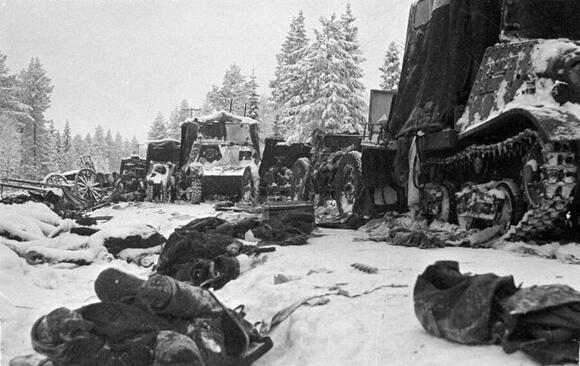
One of the most effective Finnish strategies was the "motti" tactic.
This involved using the dense forests and narrow roads to their advantage by cutting off Soviet convoys, typically by felling trees to block escape routes. Once isolated, these pockets of soldiers, referred to as "mottis" (a term for a bundle of firewood), were encircled and subjected to continuous harassment through ambushes and raids. This approach not only disrupted Soviet supply lines but also inflicted significant casualties and sapped the morale of the trapped troops.
Given such conditions, the Winter War lasted 14 weeks instead of Stalin's predicted two. The Red Army's casualties were substantial, and even more than their ranks, it was their reputation that suffered some humiliating setbacks after failing to quickly dominate an opponent with far fewer soldiers. In fact, during the first month of the war, it seemed as if Finland would emerge victorious.
Inside The Major Battles Of The Winter War
The Battle of Tolvajärvi was the first significant offensive victory for Finnish forces during the Winter War.
In early December 1939, Soviet forces advanced towards Tolvajärvi, threatening to outflank Finnish positions. Recognizing the strategic importance of the area, Finnish Commander-in-Chief Field Marshal Mannerheim appointed Colonel Paavo Talvela to lead a counteroffensive.
On Dec. 12, Finnish forces launched a surprise attack on the Soviet 139th Rifle Division. The plan involved a pincer movement aimed at encircling the Soviet forces. Despite facing challenges, including harsh winter conditions and a much smaller fighting force, the Finnish troops executed the maneuver effectively. The Soviets, caught off guard, suffered heavy casualties, and the remnants of their forces retreated in disarray. This victory halted the Soviet advance in the region and demonstrated the effectiveness of Finnish offensive operations.
The extended Battle of Suomussalmi, which lasted from Nov. 30, 1939, to Jan. 8, 1940, was also a decisive win for Finnish troops. The Soviet 163rd Rifle Division had advanced into Finland with the objective of capturing the town of Suomussalmi and subsequently cutting Finland in half by reaching the Gulf of Bothnia. Initially, the Soviets occupied Suomussalmi with minimal resistance, as Finnish forces had conducted a strategic withdrawal.
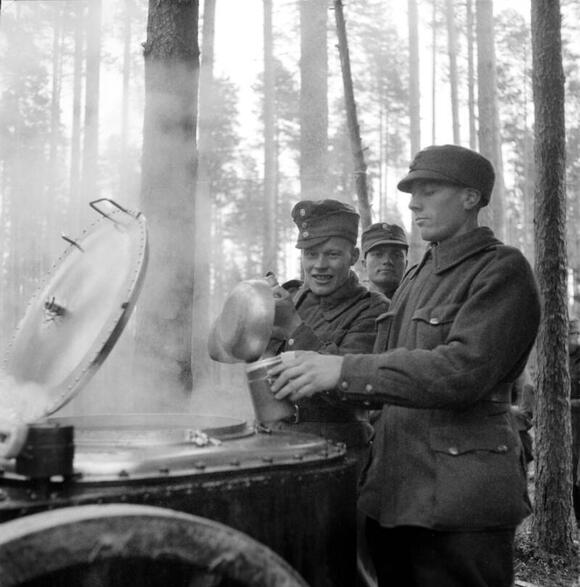
However, the Finnish 9th Division, under Colonel Hjalmar Siilasvuo, launched a series of counterattacks aimed at isolating and encircling the Soviet forces.
Through a combination of their skiing ability, knowledge of the forested terrain, and guerrilla tactics, they managed to sever Red Army supply lines and isolate units, resulting in significant Soviet casualties and the seizure of military equipment, including tanks, field guns, and trucks.
Another prolonged battle, the Battle of Kollaa, also proved just how adept the Finnish forces were. The Soviet 56th Rifle Division aimed to break through Finnish defenses along the Kollaa River to advance into central Finland.
Finnish forces, though significantly outnumbered, established defensive positions along the river, utilizing the challenging terrain to their advantage. The battle commenced with Soviet forces launching repeated assaults, often supported by artillery and armor. Despite the intensity of these attacks, however, Finnish defenders held their ground, employing effective small-unit tactics and leveraging their familiarity with the environment.
In the wake of the battle, the phrase "Kollaa kestää" ("Kollaa will hold") became a symbol of Finnish determination. The battle also produced a legendary fighter among the Finnish ranks: Simo Häyhä.
Häyhä was an experienced hunter and marksman prior to the war, but when the fighting commenced, his skills earned him the nickname "White Death." Serving under Lieutenant Aarne Juutilainen in the 6th Company of Infantry Regiment 34 during the Battle of Kollaa, he utilized his exceptional shooting skills to deadly effect.
Preferring iron sights over telescopic ones to maintain a lower profile and avoid the risk of lens glare revealing his position, Häyhä would arrive at his carefully selected sniping spots before dawn, often constructing a compacted snow embankment to provide cover and reduce muzzle flash. He also kept snow in his mouth to prevent his breath from giving away his position in the freezing air. With over 500 confirmed kills during the war, Häyhä is considered one of the most prolific snipers in history.
Nevertheless, the Soviets did prevail, taking the territory they sought on March 5, 1940. Their sheer numbers made it all but impossible for the Finnish troops to oppose them, and, as the National World War II Museum acknowledges, the tactics used by new Soviet commander General Semyon K. Timoshenko turned the tide in the Soviet Union's favor.
Soviet Victory And The Aftermath Of The Winter War
Facing what was soon to be a clear victory for the Soviets, the Finns then immediately proposed an armistice — but the U.S.S.R. declined. Instead, the Soviets kept the pressure on as they made further territorial demands of the Finns.
Finally, on March 12, 1940, the Finns had little choice but to accept the Soviets' new terms and sign the Moscow Peace Treaty. Ultimately, Finland lost 11 percent of its land and a sizable chunk of its economic strength. Even with volunteer soldiers from other countries and most of the world on its side, Finland lost the Winter War.
However, the consequences for the U.S.S.R. may have been even worse. Based in part on the surprising amount of trouble that the weakened Soviets had with the small Finnish force, Adolf Hitler decided to break his own non-aggression pact with the Soviets and invade the U.S.S.R. in June 1941.
It's this decision, many scholars claim, that brought the downfall of the Third Reich.
After this look at the Winter War, see some of the most powerful World War II photos ever taken. Then, discover the most pervasive World War II myths that we all need to stop spreading.
The post 30 Photos Of The Winter War, Finland’s Courageous Defense Against The Soviet Invasion Of 1939 appeared first on All That's Interesting.