In August 1945, the United States used atomic weapons against the Japanese cities of Hiroshima and Nagasaki, the only instances in history in which nuclear weapons have been employed in warfare. The attacks caused catastrophic destruction, and plans were being made for the possible use of a third bomb. Japan's decision to surrender, however, eliminated the need for an additional strike.
The plutonium core that had been designated for that potential third weapon later gained notoriety for a different reason. In the months that followed, it was involved in two separate criticality accidents at Los Alamos Laboratory, each of which proved fatal to a physicist. Because of its association with these deadly incidents, the core eventually became known as the “Demon Core.”
A third bomb
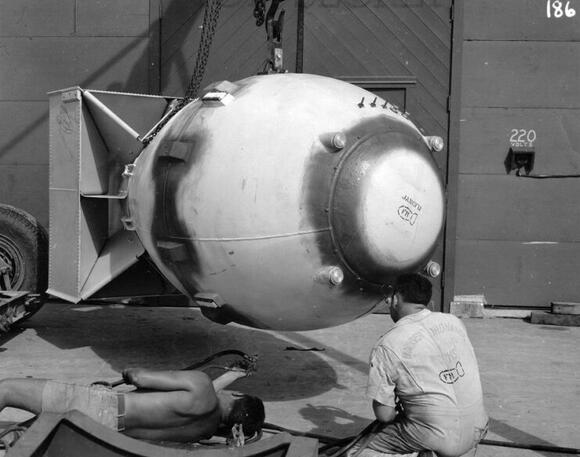
It’s a common misconception that the Manhattan Project—the U.S. effort to develop atomic weapons—was intended to produce just two bombs. However, this wasn't the case. In reality, the initiative grew into a massive production program focused on creating multiple nuclear weapons. The vast majority of its multi-billion-dollar budget was devoted to the difficult task of enriching uranium and producing plutonium, materials critical to building the bombs.
By mid-1945, enough fissile material had been gathered to construct three bombs, with a fourth in development. These supplies were allocated for the Trinity Test and the eventual deployment of the Little Boy and Fat Man bombs. When Japan did not immediately surrender after the first two bombs were dropped, efforts to prepare a third bomb were underway, scheduled for August 19.
However, Japan announced its surrender on August 16.
Most scientists and military personnel involved in the Manhattan Project anticipated the need for more than just two bombs to secure Japan’s capitulation. Some even feared the conflict might reignite despite a surrender. Ultimately, the third bomb was never used, leaving the U.S. with a 6.2 kg, nine-cm wide plutonium core. This core was later utilized for further testing and incorporated into subsequent projects.
Demon Core
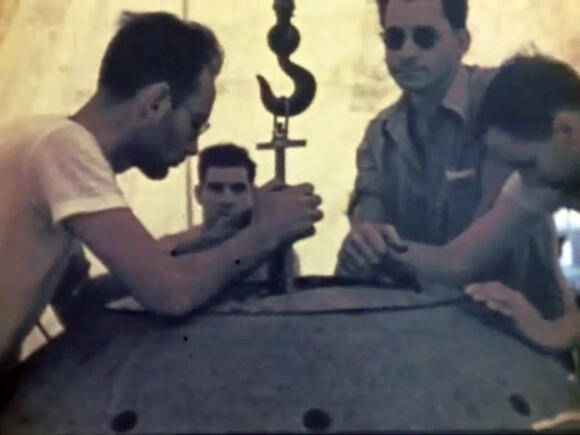
Before it was ultimately retired, the plutonium core originally designated for a third atomic bomb was used in a series of hazardous experiments conducted between 1945 and 1946. Because the core existed within a very narrow range below supercriticality, even a slight increase in reactivity could push it into a self-sustaining nuclear chain reaction.
One of the most important tests aimed to identify the precise point at which the core would become critical. To do this, researchers positioned neutron-reflecting materials around the plutonium, allowing escaping neutrons to be redirected back into the core and raise its reactivity. If the reflectors had completely enclosed the core, even for an instant, they would have caused an immediate supercritical event.
Safety standards during these experiments were limited by modern expectations, and much of the work was performed manually. As a result, the scientists conducting the tests were exposed to huge personal dangers throughout the process.
First accident
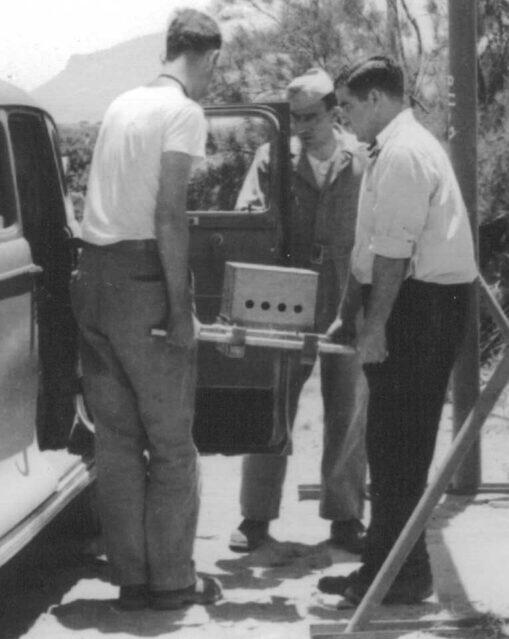
In 1945, physicist Harry Daghlian was conducting this experiment when it took a tragic turn. While positioning neutron-reflecting tungsten carbide blocks around the core to bring it close to criticality, he accidentally dropped one of the blocks onto it. Although Daghlian quickly removed the block, the damage was already done. In that brief moment, the core became supercritical, emitting a deadly burst of radiation.
Daghlian suffered through three weeks of intense radiation sickness before succumbing to his injuries. Following his death, stricter safety protocols were implemented to prevent similar incidents.
The following year, Daghlian’s colleague, Louis Slotin, carried on with the experiments. Slotin was a brilliant physicist, though his approach to safety was known to be relaxed.
In Slotin’s version of the experiment, two half-sphere neutron reflectors were carefully brought closer around the core to increase its activity. Metal spacers were used to keep the half-spheres from fully covering the core, minimizing the risk of another accident.
Second incident
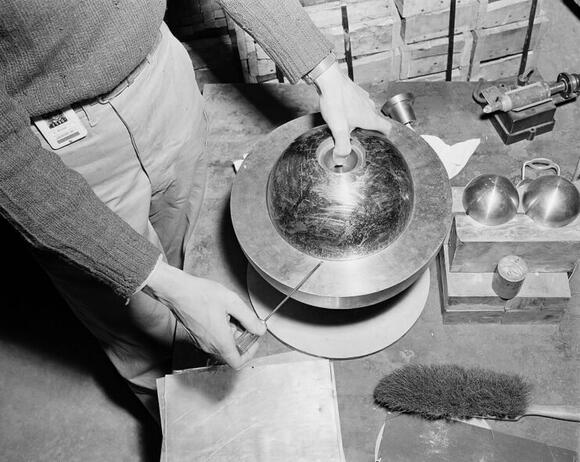
Louis Slotin had a reputation among his colleagues for disregarding established laboratory safety practices in favor of quicker but significantly riskier techniques. Instead of employing approved spacers, he used a flathead screwdriver to keep two neutron-reflecting plutonium hemispheres separated. Because he had conducted the procedure successfully on numerous occasions, he had grown accustomed to the method despite its obvious hazards. Within the laboratory, the experiment earned the ominous nickname “tickling the dragon’s tail.”
Although concerns about the procedure had been raised repeatedly, Slotin continued to perform it. On May 21, 1946, while conducting a demonstration at Los Alamos Laboratory, he once again carried out the experiment. As he lowered the upper hemisphere toward the plutonium core, the screwdriver remained the only barrier preventing the two pieces from fully closing.
The situation changed in a fraction of a second when the screwdriver slipped from its position. The hemispheres came together, driving the core into a supercritical state. Witnesses observed a brilliant blue flash, immediately followed by an intense burst of radiation, signaling that a catastrophic accident had occurred.
End of the 'Demon Core'
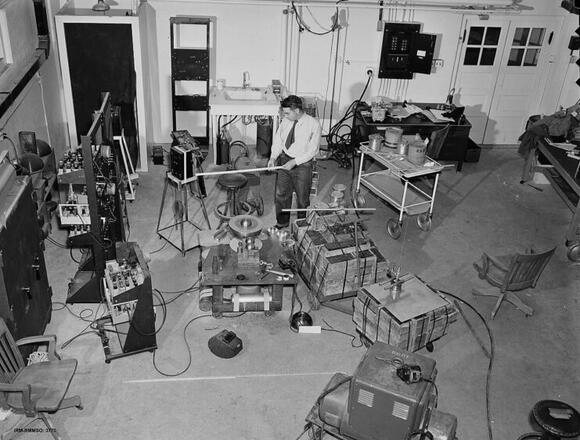
Slotin quickly pulled the neutron reflectors apart, but like Daghlian before him, the damage was already done. He received an extremely high dose of radiation. Because he had been leaning directly over the core during the accident, he absorbed most of it, likely sparing the others in the room from fatal exposure.
Within minutes, Slotin showed severe symptoms of radiation poisoning and died just nine days later.
After causing two deadly accidents, the plutonium sphere earned the nickname the “Demon Core.” It was originally intended for the Operation Crossroads nuclear tests, but that never happened. Instead, it was eventually melted down and reused to create other nuclear cores.