On July 24, 1847, an exhausted group of Mormon pioneers entered the Salt Lake Valley after months of hardship, ending one of the most significant migrations in American history. Led by Brigham Young, the travelers had crossed more than 1,000 miles of plains, rivers, and mountains in search of a place where they could practice their faith without persecution. Their arrival marked the founding of what would become Salt Lake City and is still celebrated every year in Utah as Pioneer Day.
The journey was driven by painful experience. Members of The Church of Jesus Christ of Latter-day Saints had endured years of hostility in states including Missouri and Illinois. Their founder, Joseph Smith, had been killed by a mob in Carthage, Illinois, in 1844, leaving the movement facing uncertainty and renewed violence. Brigham Young emerged as Smith's successor and concluded that the only path to lasting security was to move far beyond the settled boundaries of the United States.
The migration officially began in 1846. Thousands of men, women, and children traveled in covered wagons across unfamiliar territory, dealing with disease, harsh weather, food shortages, and dangerous terrain.
Finding a New Home in the West
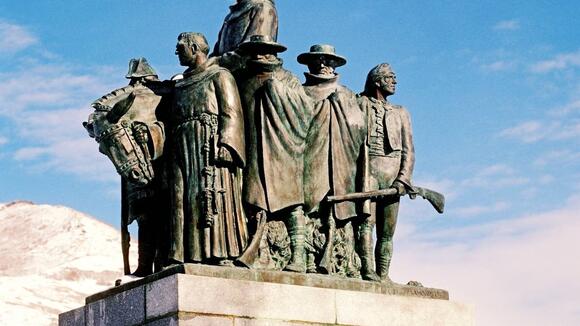
Brigham Young was ill with mountain fever during the final stretch of the expedition and rode into the Salt Lake Valley several days after the advance party arrived. Tradition holds that after surveying the broad valley surrounded by mountains, he declared, "This is the right place."
The choice seemed unusual. The valley appeared dry, isolated, and difficult to farm. Yet those same conditions made it less attractive to others, giving the pioneers the opportunity to establish a permanent settlement. They immediately laid out streets, built irrigation systems, and planted crops, demonstrating remarkable organization despite their difficult circumstances.
At the time, the region was still part of Mexico. Only months later, the Mexican-American War would end with the Treaty of Guadalupe Hidalgo, transferring the territory to the United States in 1848.
A Legacy That Lives On Every Pioneer Day
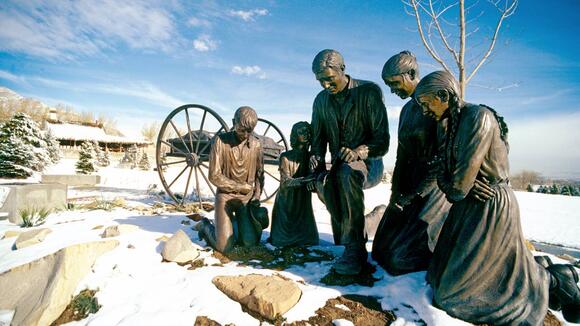
The settlement founded that July day grew into the capital of Utah and the spiritual headquarters of the Latter-day Saint movement. More wagon companies followed, bringing tens of thousands of additional settlers during the following decades.
Today, Pioneer Day remains one of Utah's most distinctive holidays. Celebrated with parades, fireworks, concerts, rodeos, and historical reenactments, it honors not only the arrival of Brigham Young and the first pioneers but also the resilience, sacrifice, and determination that transformed an isolated valley into one of the American West's most influential cities.
Nearly two centuries later, the events of July 24, 1847, continue to shape Utah's identity and preserve the story of a people who crossed a continent in pursuit of religious freedom and a new beginning.