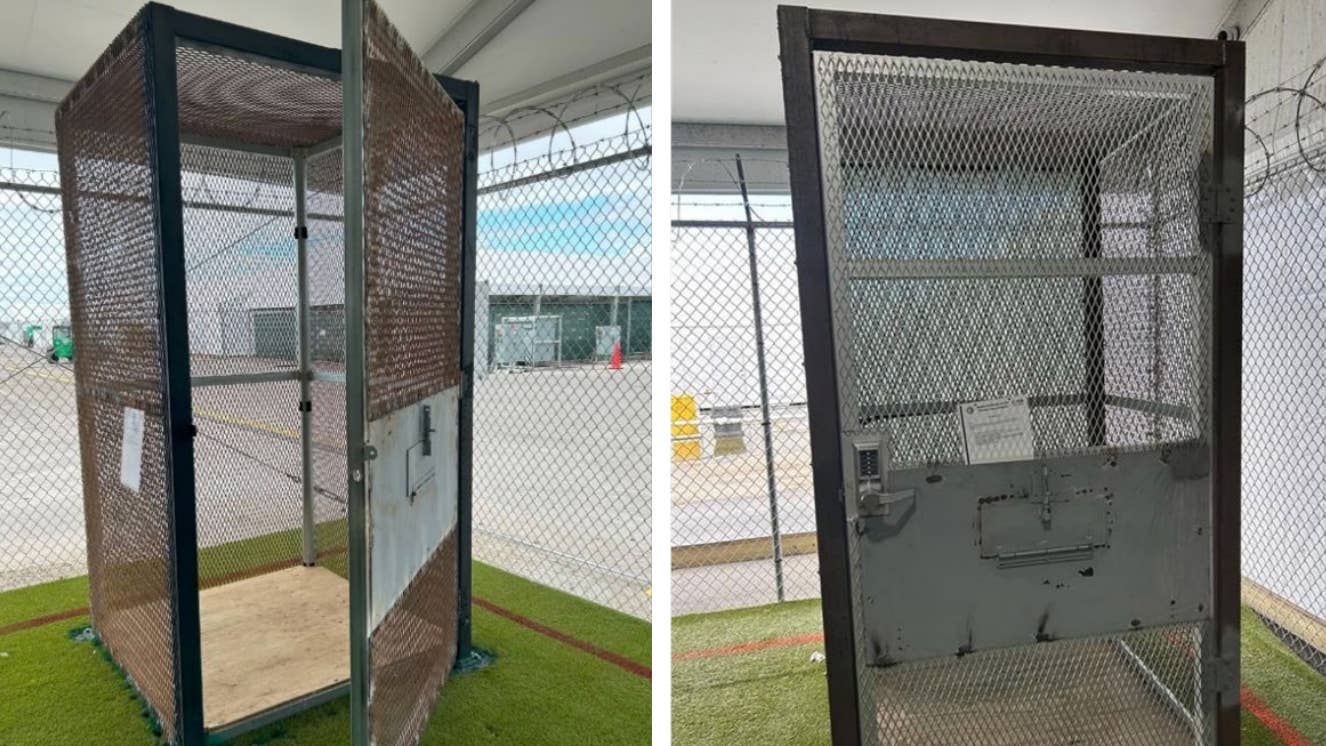
A new report from the Department of Homeland Security’s independent inspector general has revealed that the now-shuttered Florida detention center known as Alligator Alcatraz confined migrants inside small metal enclosures, some offering just 18 square feet of floor space, and referred to them internally as “calming areas.” Investigators found the practice unprecedented among facilities the watchdog has previously inspected, warning it created “significant risks” to detainees’ health and safety.
Detainees were held inside these enclosures for periods ranging from just a few minutes to nearly two hours. Facility staff claimed detainees sometimes asked to be placed inside them, but investigators uncovered at least one case where the cages were used purely as punishment, deploying one on a detainee who “failed to comply with a lawful command.” The inspector general’s report did not mince words about what this amounted to, stating plainly, “The use of such restrictive spaces is highly unconventional and does not align with standards for humane treatment.”
The cages were far from the only violation investigators uncovered. National detention standards require at least 75 square feet of floor space per detainee, but at maximum capacity, the housing units at Alligator Alcatraz provided just 28 square feet per person, less than half the federal minimum. The facility passed muster on intake procedures and use of force standards, but failed to comply with a wide range of national standards covering medical care, food service, personal hygiene, and recreation.
Alligator Alcatraz became one of the most visible symbols of the administration’s immigration enforcement approach after Florida rushed to build it on a rural training airport between Miami and Naples in July of last year, branding it as the state’s contribution to the president’s crackdown. Officials even put up a sign reading “Alligator Alcatraz” on the road leading to the facility, a move critics called deliberately cruel. President Trump himself joked about the site’s remoteness, saying detainees would have to learn “how to run away from an alligator.”
The facility drew sustained criticism over both its conditions and its cost, running more than a million dollars a day to operate, including expenses for trucking in water and disposing of wastewater. Florida officials closed it this past summer, citing the approaching hurricane season, despite the fact that detainees had already been held there through the entirety of the 2025 hurricane season without the facility closing then.
Neither the Department of Homeland Security, the office of Florida Governor Ron DeSantis, nor the Florida Division of Emergency Management, which ran the facility before its closure, responded to requests for comment on the new findings. The report leaves unresolved questions about accountability for a detention site that operated for months under conditions federal investigators are now calling categorically outside the norms for how detainees should be treated in this country.
About the author