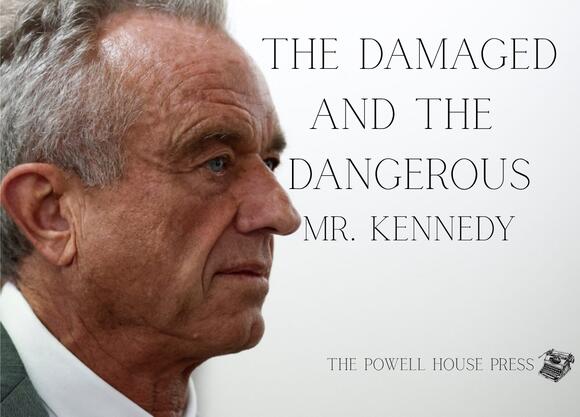
Photo byThe Powell House Press
A lot has been discussed about RFK Jr.’s brain. There were the years of drug use. There was, of course, the worm. By his own admission, during his divorce he shared, “I have cognitive problems, clearly. I have short-term memory loss, and I have longer-term memory loss that affects me.” And those of us who have watched him for year chip away at the public’s trust around vaccines have noticed there is something profoundly wrong with this man. It’s not his lack of knowledge around science that’s the problem. It’s his lies about it in the face of evidence. It’s taking out a mortgage on public health and safety to fill some troubling gap in his life that problematic.
Months ago I watched him on a podcast claiming he doesn’t take anabolic steroids only to go on that he takes testosterone, an anabolic steroid and I thought to myself is this the nexus between ignorance and power or is it something more sinister. Is this just a man who picks up a pen and writes a version of truth and when seeing there in black and white believes it? Or is it a man who just doesn’t care. I’ve come to believe it is the latter. But identifying psychopathy does little to understand it’s origins. For most of us, our lives are somewhat sequestered from the public, but a Kennedy, let alone the child of a slain one, is on display for all to see. We know about Robert F. Kennedy Jr.’s childhood. And now we are also beginning to understand what trauma does to any brain let alone a child’s. This maybe an explanation for Mr. Kennedy’s anti-social behaviors, but it does understanding does little in terms of buffering the nation from a man in his position.
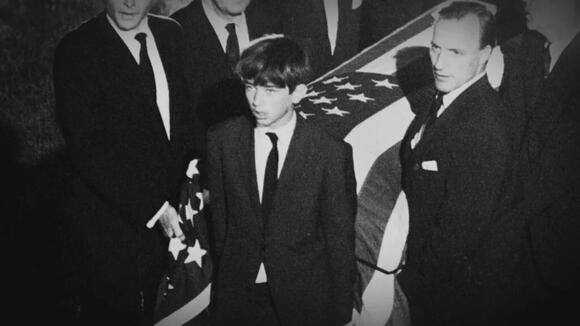
RFK Jr. carrying his father's casketPhoto byPBS
Robert F. Kennedy Jr. Lived a lived through an early life filled with trauma that few Americans can comprehend. He was nine years old when his uncle, President John F. Kennedy, the most powerful man in the country, was shot and killed in Dallas. Five years later, Kennedy was a fourteen-year-old student at Georgetown Prep when his father was assassinated, this time in the kitchen of a Los Angeles hotel after winning the California Democratic primary.
Young Bobby was flown west aboard Vice President Hubert Humphrey's plane. When he arrived, his father was still alive. He was there when Robert F. Kennedy died, and days later the fourteen-year-old helped carry his father's coffin as a pallbearer at Arlington National Cemetery.
These events are usually recounted as chapters in the history of the Kennedy family and the country. For Robert F. Kennedy Jr., however, they were something much more intimate. They occurred while his brain was still developing, at an age when a boy is constructing basic assumptions about safety, authority, trust, and the predictability of the world.
The human brain at fourteen is far from finished. More so in males than females. The prefrontal cortex, which plays a central role in executive decision-making, impulse control, and complex reasoning, does not fully mature until the mid-twenties. When development takes place against a background of repeated and severe trauma, the brain can adapt to that environment in ways that persist long after the immediate danger has disappeared. In short, RFK’s Jr.’s brain was changed forever.
But there is more to it. By fourteen, he had survived the murder of his uncle and his father, but in his family system the extraordinary loss would continue. His brother David died of an overdose in 1984. His brother Michael died in a skiing accident in 1997. His former wife, Mary Richardson Kennedy, died by suicide in 2012.
Taken together, these losses represent what is sometimes described as compound trauma, in which multiple severe experiences can produce cascading psychological and neurological effects. Each new loss does not necessarily exist independently of the ones that came before it. For someone already conditioned to anticipate catastrophe, another tragedy can reinforce the expectation that catastrophe is always approaching.
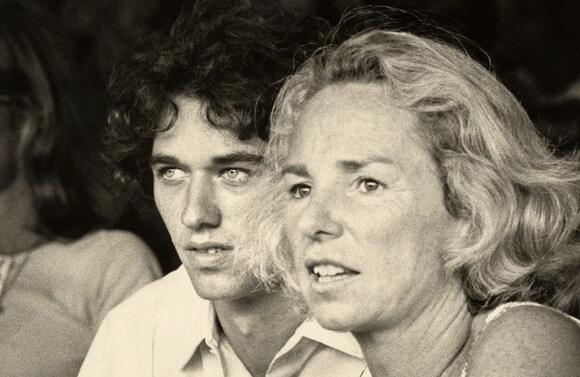
Widowed with 11 children, Ethel Kennedy was said to be a woman who could be physically abusive, distant and drink too much. Seen with RFK JrPhoto byThe Economist
A brain made hypervigilant by trauma can become increasingly sensitive to perceived threats. They do no need to be real. Neural pathways established by an initial tragedy may influence how subsequent experiences are interpreted. A developing mind can begin absorbing a bleak set of assumptions: Safety is temporary. Trusted figures can disappear without warning. Institutions cannot necessarily protect you. Forces beyond your control can suddenly reorder your life. That is a scary lens to look through.
Researchers sometimes use the term "kindling" to describe a related phenomenon in which previous traumatic experiences can increase susceptibility to powerful reactions to later stressors. Kennedy's adolescence unfolded in the aftermath of two political assassinations. Those experiences inevitably became part of the framework through which he encountered everything that followed, including questions involving violence, institutional failure, and conspiracy.
Kennedy himself has been remarkably candid about what happened next. Within months of his father's assassination, he began using heroin. "I started using heroin when I was 15," he has said, directly connecting his addiction to his father's death. For fourteen years, he lived with opioid dependency during years that included crucial stages of brain development and early adulthood.
His description of his addiction is particularly striking because Kennedy has said that heroin initially seemed to improve his academic performance. He has described himself as having a "restless and turbulent" mind and has speculated that today he might be diagnosed with ADHD. He recalled being unable to sit still before discovering that heroin seemed to allow him to concentrate. After he began using it, he has said, he went to the top of his class because suddenly he could sit still, read, and focus.
The account demonstrates considerable self-awareness or more likely a rationalization. But it undeniably illustrates the complicated relationship that can develop between trauma, drugs, and problem-solving. A teenager who discovers that an illegal narcotic appears to provide the cognitive stability he otherwise lacks is learning an extraordinary lesson about how distress can be managed. The behavioral and neural patterns established during such periods do not necessarily disappear simply because a person eventually becomes sober.
Had Kennedy's neurological history ended with addiction and recovery, his life might be understood principally as an extraordinary story of resilience. But decades later, in 2010, another problem emerged. Kennedy began experiencing memory loss and mental fog. Doctors initially feared that he had brain cancer.
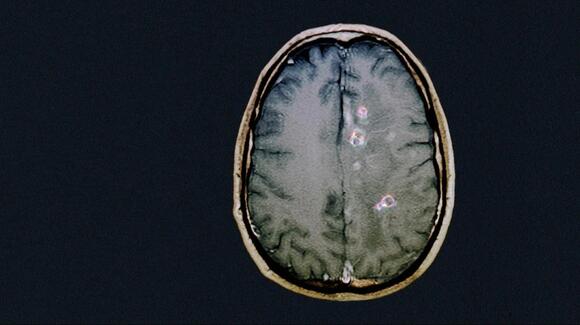
A brain scan of a person with neurocysticercosis typically reveals fluid-filled cysts, ring-enhancing inflammatory lesions.Photo byNational Institutes of Health
The eventual explanation was considerably stranger. A parasitic worm had apparently lodged in his brain. Kennedy later described the episode in a 2012 deposition by saying that a worm had entered his brain, "ate a portion of it and then died."
The condition was believed to be neurocysticercosis, an infection associated with the pork tapeworm that can affect the central nervous system. During roughly the same period, Kennedy was also diagnosed with mercury poisoning and said that testing showed "sky high" levels of the toxic metal in his blood. Kennedy has said that he fully recovered from both conditions. Even so, his medical history raises an obvious question about whether neurological injuries of this kind can leave subtle residual effects, particularly in cognitive functions demanded under unusual levels of stress.
That question becomes more consequential when considered in relation to the job Kennedy now holds. Leading the Department of Health and Human Services requires absorbing streams of conflicting scientific information, coordinating decisions across multiple agencies, and making choices capable of affecting millions of people, sometimes with incomplete evidence and under enormous political pressure.
The person occupying that office must be able to distinguish legitimate scientific disagreement from misinformation. He must preserve public trust while admitting uncertainty. He must revise decisions when evidence changes. And during an emergency, he must perform all of these tasks rapidly, often while political, economic, and public pressures are pulling in opposite directions.
These responsibilities rely heavily on some of the cognitive systems that trauma research has examined most closely. The prefrontal cortex is involved in weighing complicated trade-offs, controlling impulses, and maintaining attention among competing demands. The hippocampus plays an essential role in forming and retrieving memories and can be affected by prolonged exposure to stress hormones. The amygdala can become unusually reactive following trauma, contributing to fight-or-flight responses in circumstances in which deliberate analysis may be more useful.
Kennedy's history adds another variable because his neurological problems were not solely psychological. He experienced an actual brain infection. He says he recovered fully, and recovery from neurocysticercosis is certainly possible. But neurological infections can sometimes produce lingering changes in areas such as processing speed, memory, or tolerance for stress. Effects subtle enough to escape notice during ordinary life can become more important when a person is required to make complicated decisions during an extreme crisis.
No single event in Kennedy's history establishes that he is cognitively impaired. That is not the point. The more complicated question concerns accumulation. Kennedy experienced multiple severe traumas during critical developmental periods, followed by years of neurochemical disruption associated with addiction, and later by a parasitic infection involving his brain. Each circumstance considered independently may be manageable. Taken together, they create an unusually complicated neurological and psychological history for someone entrusted with the nation's public-health apparatus.
Repeated trauma can also produce consequences extending beyond the symptoms most commonly associated with post-traumatic stress, such as flashbacks and hypervigilance. Severe experiences during adolescence can affect what psychologists sometimes describe as epistemic trust, the ability to regard information supplied by other people or institutions as reliable enough to learn from.
Kennedy's biography provides an unusually stark example of how such perceptions might develop.
At nine, he learned that the president of the United States could be murdered in broad daylight. Five years later, his own father, then pursuing the presidency himself, was shot in a hotel kitchen. For a child, the lesson could hardly have been more brutal. People who challenge powerful interests, attempt to change institutions, or embody hope can suddenly be destroyed. The institutions surrounding them may be unable to prevent it.
Experiences like these can contribute to anticipatory grief, a state of chronic vigilance in which the mind searches for signs of the next loss. A person who has learned through experience that safety can disappear instantly may become unusually attentive to hidden threats and unusually skeptical of explanations that appear straightforward. When death repeatedly enters a family through assassination, addiction, accidents, and suicide, the suspicion that visible events conceal something darker can acquire an emotional logic of its own.
Such adaptations can persist even after the original trauma has been processed. Psychologists sometimes describe cognitive schemas, automatic interpretive patterns that operate largely outside conscious awareness. When a trauma-shaped schema encounters information that conflicts with an established expectation, the disagreement can become more than intellectual. It can produce an emotional and physiological response that makes detached evaluation more difficult.
Here lies one of the paradoxes of neuroplasticity. The brain's ability to change is what makes recovery from trauma possible. But the same adaptability means that years of experience can create deeply embedded patterns. A developing mind that repeatedly learns that the world is unsafe, institutions cannot be trusted, and unseen forces can destroy the people it loves may carry some version of those lessons long after the immediate wounds have healed.
Even successful recovery does not necessarily return a brain to some untouched original state. Researchers have identified persistent changes associated with severe trauma in the ways people process information, assess threats, and respond to stress. During an extraordinary emergency, those patterns can become particularly important. A crisis can weaken the influence of deliberate prefrontal processing while activating systems designed for immediate survival.
For a health secretary, the practical questions are difficult to avoid. When confronted with contradictory evidence about a new pathogen, will the decision-maker gravitate toward the explanation best supported by available evidence, or toward theories involving institutional concealment? When pharmaceutical companies present vaccine-safety data, can those claims be evaluated on their merits, or does longstanding distrust of institutions create an automatic presumption of malevolence?
Asking these questions does not require arguing that addiction recovery, psychological trauma, or mental-health struggles should disqualify anyone from public service. History would make such a standard both unjust and absurd. Abraham Lincoln's depression did not prevent him from becoming one of America's greatest presidents. John F. Kennedy governed while concealing significant health problems. Recovery from addiction can itself demonstrate resilience, discipline, and self-awareness, qualities that are valuable in public life.
The issue is not moral fitness. It is functional fitness for a particular responsibility.
Society already accepts this distinction in other professions. Commercial pilots must meet specific vision requirements, not because poor eyesight reflects a character defect but because aviation demands particular capabilities. Surgeons may be evaluated for conditions such as hand tremors because extraordinary precision is inherent to their work. Air traffic controllers must possess the reaction time and cognitive abilities necessary to manage multiple aircraft safely. These standards are practical assessments of whether an individual can perform a particular job under particular conditions.
Health leadership deserves the same seriousness. If severe trauma can affect cognitive systems necessary during public-health emergencies, and if an individual has experienced repeated loss of authority figures, years of substance dependence, and a neurological infection involving actual brain tissue, then asking whether those experiences have any continuing effect on the person's ability to process complex scientific information under pressure is not inherently an act of stigma. It is a question about capacity.
The stakes attached to that capacity are enormous. The Department of Health and Human Services oversees agencies responsible for drug approval, disease surveillance, emergency response, and medical research. Mistakes at this level do not remain confined to policy papers or ideological arguments. They can affect millions of lives.
COVID-19 demonstrated the importance of sound scientific judgment during a health emergency. Questions about conspiracy theories, distrust of institutions, and alternative medical treatments ceased to be abstract political disagreements once people were making decisions about vaccination, treatment, and disease prevention in the middle of a pandemic.
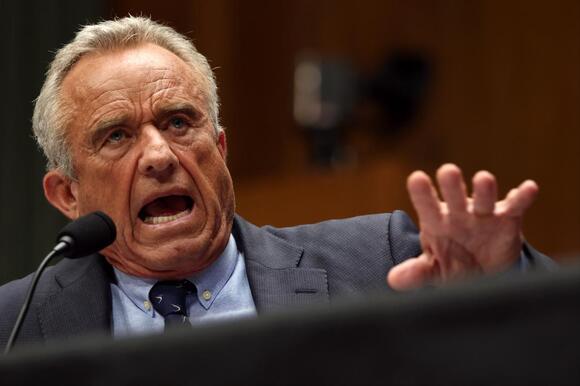
RFK Jr. testifying in congress.Photo byNew York Times.
That history gives Kennedy's own public record additional significance. His documented attraction to conspiracy theories involving vaccines and his promotion of unproven treatments raise questions about his approach to evidence-based decision-making. Positions that can be debated at leisure during ordinary political life take on a different character when a new pathogen is spreading and government officials must make rapid decisions using incomplete but evolving scientific evidence.
None of this means that Kennedy lacks intelligence or dedication. His legal career provides considerable evidence of both. The narrower question is whether the particular combination of experiences that shaped his life may also have produced cognitive and emotional frameworks poorly matched to the specific demands of twenty-first-century public-health leadership.
When millions of lives can depend upon decisions made during an emergency, personnel choices cannot rest entirely on sympathy, political calculation, or inspirational narratives about overcoming adversity. They must also involve a rigorous assessment of whether the person occupying the office can perform its essential functions under pressure.
The weight of history Robert F. Kennedy Jr. carries has unquestionably helped shape the person he became. The assassinations, addiction, recovery, family deaths, illness, and decades spent challenging institutions are not separate chapters that can easily be detached from one another. Together they form a life.
The question for the country is not whether those experiences shaped him. Of course they did. The harder question is what they shaped him into, and whether that particular combination of experiences has prepared him to protect the nation's health or has left vulnerabilities that matter precisely because the responsibilities of his office are so consequential.
Ultimately, this question extends beyond Robert F. Kennedy Jr. It concerns whether a democracy can examine the relationship between personal history and public responsibility without turning that examination into either stigma or sentimentality, and whether it can judge those entrusted with enormous power according to evidence about their capacity to exercise it.